Event 1
1977 Ohio State campus rape series
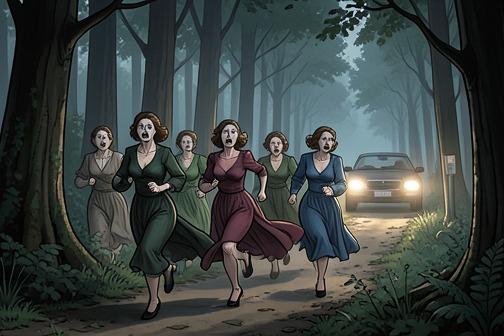
The [1977 Ohio State campus rape series](entity:event-recall-event-1977-ohio-state-campus-b724fecd7ce1) brought three women into a repeated pattern of abduction, sexual assault, and financial coercion. In the span described by the book, two women were seized from the campus area in eight days, and a third was abducted several days later. The victims’ accounts and the police response establish a recognizable pattern; later, disputed claims about their supposed cooperation reveal how readily an assailant’s interpretation could compete with the women’s accounts of what had happened.
## Background and pattern
The first two attacks took place between seven and eight in the morning, and both women were taken from the university campus into the countryside. Each was sexually assaulted, made to cash checks, and robbed. The recurrence quickly became a public and institutional crisis. [Ohio State University](entity:location-recall-location-ohio-state-universit-dacbff6636b2) placed the medical-school area under heavy security: armed officers patrolled in cruisers, armed observers watched from rooftops, and women were warned against walking alone and urged to be cautious when getting into cars.
Police photographic composites produced hundreds of calls from the public, but none yielded a significant lead or suspect. As pressure mounted from students and community groups, the press began calling the assailant the Campus Rapist. [John Kleberg](entity:character-recall-character-john-kleberg-97956b1f5d28) assigned [Eliot Boxerbaum](entity:character-recall-character-eliot-boxerbaum-9ca0f4d4c670) to lead the manhunt. The two victims’ accounts appeared to describe one man: a white American male in his twenties, of a similar build, wearing a brown jogging top, jeans, and white sneakers. One had described a neatly trimmed mustache; the other, several days’ beard growth and no mustache. The discrepancy briefly seemed striking, but it did not undo the larger pattern.
## Victims’ accounts and investigative clues
[Carrie Dryer](entity:character-recall-character-carrie-dryer-133610000af6), a twenty-five-year-old optometry student and the first victim, recalled that her assailant wore gloves and carried a small revolver. She recognized the side-to-side drift of his eyes as a symptom of nystagmus. He handcuffed her to the inside door of her car and drove her to an isolated area, where he assaulted her. He threatened consequences if she went to the police and took names from her address book, turning the threat toward people who might be close to her as well as toward Carrie herself.
[Donna West](entity:character-recall-character-donna-west-e8f6baa8a466), a twenty-four-year-old nurse and the second victim, described a different set of details. Her assailant carried an automatic pistol, wore brown-tinted sunglasses that kept her from seeing his eyes, and had an oily stain on his hands. He gave the name Phil and invoked a supposed brotherhood that would harm her or her relatives if she identified him. Donna and the police initially took this as a claim of terrorist or criminal-organization connections. During the abduction, when Donna understood that she faced sexual violence, she cried and told him that she was afraid; his response did not make the threat disappear. Her account documents fear and intimidation, not agreement.
The third victim, twenty-one-year-old [Ohio State](entity:organization-recall-organization-2a796f26ae37) student Polly Newton, was abducted behind her apartment on October 26 after parking her boyfriend’s blue Corvette. Her assailant forced her back into the car and made her drive to an isolated countryside location, then back to [Columbus](entity:location-recall-location-columbus-a9199669be39) to cash two checks. He later suggested that she cash another check, stop payment, and keep the money. During the journey, he proposed sex; Polly began to cry, and he assured her that he would not hurt her. That reassurance sits within the circumstances of her abduction and cannot turn the demand into consent.
The investigation produced physical and geographic leads, though not an immediate identification. Police found three partial fingerprints on Polly’s car with enough ridge detail for comparison with a future suspect. After she had spent hours with detectives and reviewed hundreds of photographs without recognizing anyone, she returned to the countryside in daylight and led investigators to the assault location in Delaware County. There they found 9-millimeter casings near a pond. Polly said her assailant had fired at beer bottles he had thrown into the water.
## The assailant and the contested account
The book connects the October 14 journey toward campus to [Ragen Vadascovinich](entity:character-recall-character-ragen-vadascovinich-fcdca11a3fe5). Concerned that the group had no income from work and that the younger ones needed winter clothes and food, [Ragen](entity:character-recall-character-ragen-7ec95942e9d1) decided to commit robbery. Before dawn he armed himself with a Smith & Wesson in a shoulder holster, took Biphetamine and vodka, and jogged west toward Ohio State University. His brown jogging jacket, brown turtleneck, jeans, white running shoes, and windbreaker closely echo the clothing described by the victims. The narrative places his journey alongside the attacks’ pattern of armed abduction and financial demands.
Later, [Arthur](entity:character-recall-character-arthur-2e33b65bbe57) presented a sharply different account of the three women’s experiences, attributing it to [Adalana](entity:character-recall-character-adalana-613e361d2280). He said the women had cooperated, had not been injured, and had opportunities to escape; he also claimed that Adalana had returned some money so that they could benefit from insurance payments. [Judy Stevenson](entity:character-recall-character-judy-stevenson-d6ee40291eb6) and [Gary Schweickart](entity:character-recall-character-gary-schweickart-dca91f26dd6e) did not accept this account of cooperation. They understood that Arthur was conveying Adalana’s perception, not firsthand knowledge of his own, and Arthur refused to let them speak with her: he said she had been permanently banished from the spot for what she had done. The episode leaves the disagreement visible rather than resolving it in favor of the perpetrators’ version. The women’s documented abductions, threats, fear, and forced financial transactions remain central to understanding the event.
## Consequences and significance
The attacks changed the campus from a place where women were being abducted in the morning into a heavily guarded search zone. Yet the visible response—patrols, rooftop observers, warnings, composites, and a growing public outcry—did not by itself produce a suspect. The recurring clothing and circumstances connected the cases, while the contrast between the victims’ descriptions of weapons and identifying details complicated the investigation.
The series also matters to the wider narrative because it places concrete acts of coercion beside competing accounts of what they meant. A claim that victims could have fled, were not injured, or received money does not erase the conditions in which they were taken, threatened, and directed to cash checks. The book preserves both the victims’ accounts and the later internal dispute about Adalana’s interpretation, making the distinction between a participant’s explanation and the victims’ experience essential to reading the events.
Event 2
Billy Milligan's 1977 arrest

The 1977 arrest of [William Stanley Milligan](entity:character-recall-character-william-stanley-mil-d057ecbb22fc) followed a gradual accumulation of identification and forensic evidence, not a single unambiguous recognition. [Donna West](entity:character-recall-character-donna-west-e8f6baa8a466) selected him from an old mug shot, Polly Newton said the same photograph resembled her attacker but could not identify him with certainty, and prints from Newton’s car matched Milligan. The arrest brought police to an apartment where they found items belonging to victims and a painting signed with his name; it also opened a legal dispute over how the women’s experiences should be understood.
## Identification and the decision to act
At the Detective Bureau, Donna West was asked to review three trays of mug shots. The process was not a direct march toward a suspect: among the faces she recognized a former classmate, whose arrest for indecent exposure surprised her, before she reached a photograph of a young man with muttonchop whiskers and staring eyes. She reacted decisively, nearly knocking over her chair, and identified him as the man who had raped her. The photograph was an old one. After she signed its back, [Nikki Miller](entity:character-recall-character-nikki-miller-648d789d6d26) checked its identification number and recorded the name William S. Milligan.
The photograph was placed in a tray Polly Newton had not yet examined. Miller watched as Newton moved carefully through the cards. Newton first passed Milligan’s picture, then returned to it, saying that the man looked like her attacker but stopping short of certainty. The contrast between West’s positive identification and Newton’s reservation mattered: Miller wanted to proceed, but the investigators could not treat the second victim’s response as a confirmation.
Fingerprint evidence gave the case a firmer basis. Detective Brush took Milligan’s identification information to the Bureau of Criminal Identification, where prints were compared with those lifted from Newton’s Corvette. The right index-finger print on the outside glass of the passenger door, along with a right ring-finger print and a right palm print, matched Milligan’s. The report described the impressions as fair-value prints and recorded a ten-point match. Even then, Chief [John Kleberg](entity:character-recall-character-john-kleberg-97956b1f5d28) and [Eliot Boxerbaum](entity:character-recall-character-eliot-boxerbaum-9ca0f4d4c670) asked for an outside expert to evaluate them before they proceeded, preferring further certainty over an immediate arrest.
Miller was frustrated by the delay and wanted to act on the identification and fingerprint results. She decided to seek charges of kidnapping, robbery, and rape, with a warrant that would allow Milligan to be brought in for a lineup with Newton. Boxerbaum, however, identified the limits of university-police jurisdiction: the kidnapping had occurred on campus, while the rape had taken place elsewhere. He therefore decided to file for kidnapping as the campus offense. The outside expert confirmed the fingerprints at eight that evening, ending the wait for that evaluation.
## The approach and arrest
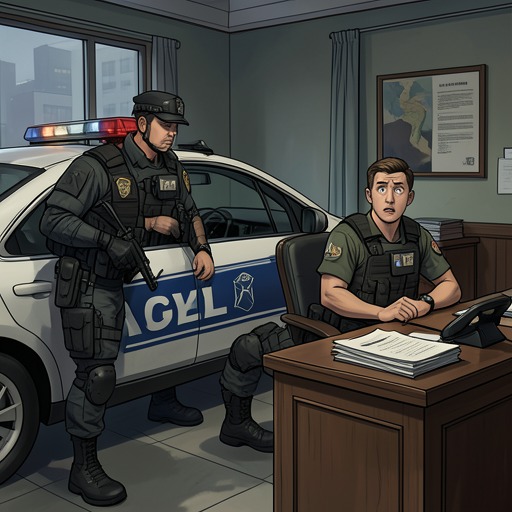
The planning reflected the officers’ concern that Milligan might be armed. Two victims had reported that he presented himself as a terrorist and hit man, and Newton had seen him fire a gun. Miller called a SWAT team, whose members discussed how many people might be in the apartment and how to approach it. Officer Craig proposed a deception: he would carry a dummy Domino’s pizza box and act as though a delivery had been ordered from the address, hoping to draw someone to the door.
When the operation reached Milligan’s apartment, Craig used the pizza-box ruse and then arrested him at gunpoint. He identified Milligan and handcuffed him. Milligan appeared dazed and protested that he had done nothing. The arrest thus moved the investigation from identification and comparison of evidence to the immediate control of a suspect whom police had approached as potentially dangerous.
## The apartment and material evidence
Inside, an officer began to turn over a chair near the television and reached toward a bullet clip and a plastic bag of ammunition. Dempsey stopped him, explaining that the officers had an arrest warrant, not a search warrant, and asked Milligan whether they could search. Milligan stared blankly. That distinction marked the limits of what the officers could do under the authority they had brought with them; John Kleberg separately entered the other rooms to check whether anyone else was there.
In the bedroom, Kleberg saw a brown jogging suit on an unmade bed, laundry scattered across the floor, and, neatly stacked on a shelf in the open walk-in closet, credit cards belonging to Donna West and [Carrie Dryer](entity:character-recall-character-carrie-dryer-133610000af6). He also saw scraps of paper taken from the women, as well as brown-tinted sunglasses and a wallet on the dresser. These objects gave the arrest scene a material dimension: the investigation’s earlier accounts and comparisons now met items inside Milligan’s living space. The arrest itself did not settle every question about how the objects came to be there, but their presence added to the evidence officers were encountering.
In a dinette converted into an artist’s studio, Boxerbaum drew attention to a large, carefully detailed painting of a woman in a blue gown, seated beside a piano and holding sheet music. It bore the signature Milligan. The work presented a striking contrast to the disorder in the bedroom and to the evidence being gathered in the apartment. It was not a fingerprint or an identification, but it was a distinctive object connected to the arrested man and to the creative activity visible in his home.
## Aftermath and contested accounts
The charges brought the victims’ experiences into a later dispute over interpretation. During discussion of trial strategy, [Arthur](entity:character-recall-character-arthur-2e33b65bbe57) proposed changing the plea: [Ragen](entity:character-recall-character-ragen-7ec95942e9d1) would accept punishment for three robberies, but not plead guilty to rape. Arthur argued from [Adalana](entity:character-recall-character-adalana-613e361d2280)’s account that the three women had cooperated, had not been injured, could have run away, and had received some money back. Judy rejected that version on the ground that it was not what the women said. Gary and Judy understood that Arthur was describing Adalana’s perceptions, rather than offering his own firsthand knowledge of the events.
That difference is central to the arrest’s longer significance. Milligan’s defense discussion did not erase the gap between a perpetrator-side account of apparent cooperation and the women’s reports of what had happened to them. In Donna West’s account of an abduction, she sat at the wheel crying and thinking about her life and what might happen; in Polly Newton’s account, she began to cry when Adalana expressed a sexual demand. Those reactions do not support the later assertion that the women’s participation was voluntary. The arrest secured a suspect and brought physical evidence into view, but the question of whose account would define the events remained contested.
Event 3
Discovery of Milligan's multiple personalities
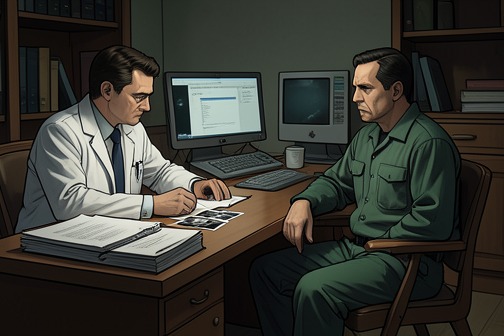
The discovery of [William Stanley Milligan](entity:character-recall-character-william-stanley-mil-d057ecbb22fc)’s multiple personalities began not with a confession or a formal diagnosis, but with a sequence of interviews in which the person before psychologist [Dorothy Turner](entity:character-recall-character-dorothy-turner-789b7eef9ebb) seemed to change in identity, manner, and memory. What first looked to Turner like a series of puzzling encounters became a disclosure that altered the defense strategy: [Judy Stevenson](entity:character-recall-character-judy-stevenson-d6ee40291eb6) and [Gary Schweickart](entity:character-recall-character-gary-schweickart-dca91f26dd6e) had to consider whether their client’s shifts reflected a mental condition rather than calculated behavior, and the court eventually confronted the consequences of that distinction.
## Clinical and Legal Background
Before Turner’s interviews, Stevenson and Schweickart had continued visiting Milligan in prison despite receiving a letter dismissing them. The public defender’s office funded a psychological evaluation, and clinical psychologist [Willis C. Driscoll](entity:character-recall-character-willis-c-driscoll-2c641a575251) administered tests on January 8 and 13, [1978](entity:time-recall-time-1978-9747f157067f). The intelligence tests yielded a score of 68, which Driscoll said had been lowered by depression. His report diagnosed acute schizophrenia and described a severe disturbance of identity, difficulty distinguishing the self from the environment, and an inability to understand events or assist adequately in his defense. He urged hospitalization for further examination and possible treatment.
On January 19, Stevenson and Schweickart presented Driscoll’s report to Judge [Jay C. Flowers](entity:character-recall-character-jay-c-flowers-d413ea2912fa) as evidence that Milligan could not assist in his own defense. Flowers directed the [Southwest Community Mental Health Center](entity:organization-recall-organization-f5971c42288a) in [Columbus](entity:location-recall-location-columbus-a9199669be39) to assign its forensic psychiatry unit to examine him. This referral created a legal problem alongside the clinical one. Schweickart wanted anything Milligan said during the examination treated as privileged and unavailable for use against him; the prosecutors objected, and the public defenders considered advising Milligan not to speak with the court-appointed clinicians. The compromise limited questioning about potentially incriminating statements to a circumstance in which Milligan took the stand in his own defense. The defense accepted the risk and permitted the evaluation to proceed.
## Turner’s Interviews and the Emerging Evidence
Turner’s first interview at the [Franklin County Jail](entity:location-recall-location-franklin-county-jail-64fed6b99e09) was scheduled for January 31, 1978. Milligan entered in a blue jumpsuit, appearing to Turner to be a tall, handsome young man whose eyes showed fear. Once seated, he smiled and folded his hands. Asked where he lived, he could not answer. When Turner supplied a number, he rejected it as belonging to Billy, then identified himself as [David](entity:character-recall-character-david-a0465b0b2f3d) and said Billy was asleep. The exchange gave Turner more than an unexplained lapse: Milligan distinguished himself from Billy and spoke of Billy as someone absent from the immediate conversation.
The next day, Turner saw a different manner and heard a different voice. Milligan initially gave no sign of recognizing her, sat with his knees drawn up, and then spoke in a boyish Cockney accent. He identified himself as [Christopher](entity:character-recall-character-christopher-97efa92fe28a) rather than David. When asked about siblings, he said that he had a three-year-old sister named [Christene](entity:character-recall-character-christene-481e5bbf56fb). Turner noted how open, earnest, and happy Christopher seemed in contrast with the person she had interviewed the day before. The changes in accent and bearing were observable; at this point, Turner was still trying to understand what they meant.
On February 4, the young man who entered the interview room sat slouched and looked at Turner arrogantly. He denied ever having seen her, although she had interviewed him two days earlier, and gave his name as [Tommy](entity:character-recall-character-tommy-6e67d140947b). When Turner tried to draw him out, he remained sullen and refused to talk to a stranger. After leaving the jail, Turner was caught between a promise to David not to reveal the secret and her conviction that Milligan’s attorneys needed to know. She telephoned Stevenson and suggested that she read Sybil, a book that would help her understand the kind of possibility Turner was trying to communicate.
## Disclosure to the Defense
Stevenson had previously been allowed to meet [Allen](entity:character-recall-character-allen-c770d3fec6b8) under a strict condition: she could tell no one except Judy, and Judy in turn could tell no one else. Turner went directly from the prison to the public defender’s office and explained the limits Milligan had set. Stevenson recognized the difficulty of keeping the information from Schweickart, but she had given her word. The discovery therefore entered the defense cautiously, as information Turner believed essential but was not free to circulate without Milligan’s consent.
After Stevenson met the different personalities, she concluded that she had encountered two different people, not simply one person in changing moods. She understood why Milligan’s behavior had seemed so variable, but Turner warned that Milligan might not permit the secret to be shared more widely. Stevenson argued that she could not carry the knowledge alone. [Arthur](entity:character-recall-character-arthur-2e33b65bbe57) later agreed to let her tell Schweickart only if the others agreed as well. Three days later, Stevenson obtained permission and returned to the office to explain that she had something important to tell him about Billy.
Schweickart initially rejected the idea as a con, despite his confidence in Stevenson’s judgment. The following day he accompanied her to the jail expecting a brief visit. Instead, he saw what he understood as a succession of personalities. The frightened David changed into the shy [Danny](entity:character-recall-character-danny-318bc697472f), who remembered the day Milligan had been brought in and booked. For Schweickart, the change transformed an abstract report into direct experience. His skepticism gave way to curiosity, and the defense now had to reckon with a condition that could affect both Milligan’s present ability to participate in proceedings and the legal interpretation of the charged acts.
## Recognition, Evaluation, and Legal Consequences
The disclosure did not immediately produce agreement among all the personalities. When Schweickart asked to meet [Ragen](entity:character-recall-character-ragen-7ec95942e9d1), Arthur moved his chair to the far end of the interview room, became distant, and shifted from a stiff-backed posture into a wary crouch. The new speaker used a low, harsh voice and a Slavic accent, and opposed revealing the secret even after David had disclosed it by mistake. The scene made the internal disagreement part of what the lawyers had to understand: disclosure was not simply a fact supplied by one consistent speaker, but a contested decision among identities with different positions.
Other encounters supplied further observable contrasts. Allen took a final drag from a cigarette before Arthur appeared; Arthur did not smoke. His eyes went blank, his eyelids fluttered, and he leaned back, joined his fingertips into a pyramid, and spoke with an upper-class British accent. Attorney [Bernie Yavitch](entity:character-recall-character-bernie-yavitch-77389c320267) perceived a distinct difference in eye contact and body language. These details did not by themselves settle a diagnosis, but they accumulated as behavioral evidence that the defense could not easily reconcile with an ordinary change of mood. Turner’s early impression of Christopher and the lawyers’ later observations of Arthur and Ragen extended the pattern beyond the first three interviews.
The legal consequences must be distinguished from the initial discovery. The January evaluation concerned Milligan’s condition at the time and whether he could understand proceedings or assist his lawyers. At trial, Judge Flowers separately considered his mental state when the charged acts occurred. The judge dismissed the first rape count for lack of corroborating evidence and a similar pattern of conduct. On counts two through ten, the medical evidence was stipulated; Flowers found that Milligan had been mentally ill at the time, unable to distinguish right from wrong, and unable to refrain from the acts, and therefore found him not guilty by reason of insanity.
The later court findings made the diagnostic significance of the discovery explicit. On December 10, [1979](entity:time-recall-time-1979-e4dd6858fb61), the court described Milligan as mentally ill, identified his condition as multiple personality, and ordered hospitalization on the grounds that he posed substantial risks to himself and others and needed treatment. The finding did not erase the earlier distinction between present competence and responsibility at the time of the offenses; it showed how the emerging account of his identity became central to both legal questions and the disposition that followed.
## Significance of the Discovery
The sequence also changed how Milligan’s behavior could be read. Before Turner’s interviews, his shifting conduct could be attributed to depression, manipulation, or instability. Her questions elicited a more disruptive possibility: the names and voices were accompanied by failures of recognition and claims that Billy was asleep or absent. Stevenson’s realization and Schweickart’s eventual observation show how the discovery moved from clinical encounter to shared knowledge within the defense team, despite the secrecy and legal risks surrounding it.
The account later connects this recognition to family memory. During a visit, Milligan’s mother recalled that he had seemed able to sense things, and [Kathy](entity:character-recall-character-kathy-cb914b1b0058) called this ESP; their mother also remembered that the two siblings could sometimes know what was happening in each other’s minds without speaking. This recollection does not establish a clinical explanation for the personalities. It does, however, place the new diagnosis beside earlier experiences that the family had noticed but understood differently. The discovery thus reorganized the meaning of behaviors that had previously appeared disconnected, while leaving the clinical judgment, the legal findings, and the family’s interpretations distinct.
Event 4
Milligan's March 12, 1978 psychiatric examination
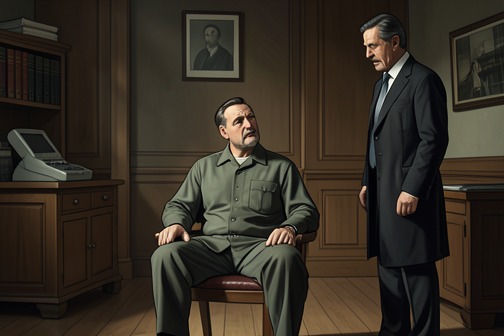
The March 12, [1978](entity:time-recall-time-1978-9747f157067f) psychiatric examination of [William Stanley Milligan](entity:character-recall-character-william-stanley-mil-d057ecbb22fc) at the [Franklin County Jail](entity:location-recall-location-franklin-county-jail-64fed6b99e09) became a pivotal demonstration in the dispute over whether he could assist in his own defense. In front of lawyers and mental-health professionals, the person answering questions appeared to change from [Danny](entity:character-recall-character-danny-318bc697472f) to [Allen](entity:character-recall-character-allen-c770d3fec6b8), [Arthur](entity:character-recall-character-arthur-2e33b65bbe57), and [Ragen](entity:character-recall-character-ragen-7ec95942e9d1); later, Billy surfaced in acute distress, and [Tommy](entity:character-recall-character-tommy-6e67d140947b) was identified after the others had left the room. For prosecutor [Bernie Yavitch](entity:character-recall-character-bernie-yavitch-77389c320267), the examination transformed an account he had regarded as implausible into something he could no longer dismiss as an act. It did not, however, produce an immediate consensus: [Dr. George Harding](entity:character-recall-character-dr-george-harding-043cbdedd4cb) reserved judgment and said he would report to the judge the following day.
## Legal and Clinical Background
The examination followed an earlier evaluation by clinical psychologist Dr. [Willis C. Driscoll](entity:character-recall-character-willis-c-driscoll-2c641a575251). On January 8 and 13, 1978, Dr. Driscoll had administered psychological tests to Milligan. The intelligence testing produced a score of 68, which Dr. Driscoll considered depressed by Milligan’s depression, and his report diagnosed acute schizophrenia. He described severe difficulty distinguishing self from surroundings, voices experienced as commanding and tormenting him, and an inability at that time to understand events or counsel adequately in his own defense. He recommended hospitalization for further examination and possible treatment.
On January 19, [Judy Stevenson](entity:character-recall-character-judy-stevenson-d6ee40291eb6) and [Gary Schweickart](entity:character-recall-character-gary-schweickart-dca91f26dd6e) presented Dr. Driscoll’s report to Judge [Jay C. Flowers](entity:character-recall-character-jay-c-flowers-d413ea2912fa) as evidence that Milligan could not assist in his defense. Judge Flowers proposed an examination by the forensic psychiatry unit of [Southwest Community Mental Health Center](entity:organization-recall-organization-f5971c42288a) in [Columbus](entity:location-recall-location-columbus-a9199669be39). That prospect troubled Stevenson and Schweickart because they regarded the center as usually aligned with the prosecution. Schweickart insisted that anything Milligan disclosed during the examination be protected from use against him. The prosecutors objected, and the dispute came close to a contempt finding before the parties reached a compromise: questioning about incriminating statements would be permitted only if Milligan later took the stand in his own defense. The defense ultimately allowed the interview to proceed on those terms.
The March examination therefore took place amid both clinical uncertainty and legal caution. Yavitch had reread the Southwest report and the police reports, but he did not know what he would encounter. He doubted that multiple personalities could explain Milligan’s condition. [Dr. Cornelia Wilbur](entity:character-recall-character-dr-cornelia-wilbur-53c5b32908c4)’s willingness to take that possibility seriously did not persuade him; the opinion he especially awaited was that of Dr. Harding, whose standing Yavitch respected. The scene was not simply a private consultation: the range of professionals present, and the lawyers’ concern about what the examination might establish or disclose, made the encounter consequential to the defense as well as to treatment.
## The Examination at the Jail
March 12 was a bright, cold Sunday. Yavitch entered the Franklin County Jail knowing it was the first time he had attended a psychiatric examination of a defendant as a prosecutor. Once the others arrived, the interview was arranged in the lower-level sheriffs’ squad room, a large workroom with folding chairs, blackboards, and a desk used by officers at shift changes. [Dr. Stella Karolin](entity:character-recall-character-dr-stella-karolin-97aa6cb0f7f2), Sheila Karolin, social worker Sheila Porter, Dr. Wilbur, and Dr. Harding were among those introduced there.
Milligan arrived with Judy Stevenson beside him, holding his hand; [Dorothy Turner](entity:character-recall-character-dorothy-turner-789b7eef9ebb) walked ahead, and Schweickart followed behind. Faced with the assembled group, he hesitated. Turner introduced those present and seated him near Dr. Wilbur, identifying him as Danny. Wilbur addressed him reassuringly and began asking questions. Danny spoke about Arthur, Ragen, and Allen, but not about what had happened to him. Wilbur explained to Yavitch that this pattern—speaking about the experiences of others while avoiding his own—was characteristic, in her view, of multiple personality. She later described what she was seeing to Dr. Harding as a dissociative state of the hysterical neurotic.
When the discussion turned to Billy, Danny said he could not bring him out: Billy was asleep, and only Arthur and Ragen could wake him. The distinction mattered in the room. The request was not followed by an ordinary answer from the same speaker; instead, observers watched Milligan’s eyes go blank, his lips move, and his body jerk upright. He looked dazed and asked for a cigarette. Stevenson told Yavitch that Allen was the only one who smoked cigarettes.
Allen then answered questions in a manner that Yavitch perceived as markedly different from Danny’s shy, boyish presentation. He was relaxed and outgoing, and spoke fluently about playing piano and drums, painting portraits, being eighteen, and liking baseball—a preference that contrasted with Tommy’s dislike of the game. Allen also took several quick puffs from the cigarette before yielding the foreground. The small act became part of the examination’s accumulating evidence for Yavitch: it connected a concrete preference to the person who had just displayed it, while the next change brought a contrasting speaker who did not smoke.
## The Changes in the Room
After Allen, Milligan’s eyes went blank again. He leaned back, joined his fingertips into a pyramid, and began speaking with an upper-class British accent. This was Arthur. Yavitch registered more than a change of voice: Arthur’s eye contact and body language also differed from Allen’s. Yavitch compared the accent with that of a British accountant he knew and was struck by its resemblance to an authentic speech pattern. Arthur said he had not met the people in the room, treating them as strangers rather than as participants in an interview already under way.
The examination then turned toward Ragen. Wilbur pressed Arthur to persuade Ragen to let Billy speak with the group. Milligan’s face went blank once more; his eyes stared ahead, his lips moved as if in an unheard exchange, and his jaw tightened. The next voice was deep and Slavic. Ragen refused. The sequence made the limits of the gathering plain: the clinicians could ask for Billy, but, as the people presenting themselves in the room described it, access to him depended on other personalities’ willingness to allow it.
Yavitch and Schweickart stepped into the corridor while the examination continued. Schweickart said he had never met the core personality and did not know whether Billy would appear. Yavitch acknowledged that he had begun as a skeptic; by then, he no longer thought the presentation was an act, although he still did not know what to make of it. His change was an evidentiary response to what he had watched, not a settled clinical diagnosis. Dr. Harding, for his part, remained noncommittal and took time to consider what he had seen and heard.
## Billy’s Appearance and the Examination’s Aftermath
Those remaining in the room watched Milligan grow pale and turn his gaze inward. His lips twitched, as if he were speaking in his sleep. When his eyes opened, he cried out that he thought he was dead. Seeing the people around him, he leapt from his chair onto the floor, moved on all fours to the far side of the room, squeezed between the armrests of two chairs, and cowered and sobbed. He asked what he had done. The scene was a sharp break from the fluent, socially responsive Allen and the controlled, formal Arthur: Billy’s return was accompanied by fear, confusion, and no apparent recognition of the preceding exchange.
Dr. Wilbur identified the speaker as the original Billy, also called the host or core personality, and asked who he was. The answer came from Tommy, who said he had not known Billy was allowed out and that no one had told him. Gary Schweickart and Yavitch were then permitted back into the room. Tommy was introduced, asked a few questions, and returned to his cell. Yavitch heard what had happened while he was out and remained astonished, but he told Stevenson and Schweickart that Milligan did not seem to be faking. The examination had not made the personalities’ existence a unanimous medical conclusion; it had changed what one previously skeptical prosecutor was prepared to believe.
Dr. Harding alone explicitly withheld judgment. He said he needed to think about the encounter and would give Judge Flowers his opinion the next day. Two days after the examination, on March 16, Milligan was transferred ahead of schedule from the jail to [Harding Hospital](entity:location-recall-location-harding-hospital-cb8626b12e1f), where Dr. Harding had assembled a therapy team. The examination thus stood between the earlier dispute over Milligan’s ability to participate in his defense and a new period of hospital observation and treatment. Its lasting force lay in the contrast between the legal question asked of the experts and the event they had witnessed: not a single, continuous interview, but a succession of sharply differentiated presentations, ending with Billy’s frightened return.
Event 5
Milligan's pretrial commitment to Harding Hospital

[Milligan's pretrial commitment to Harding Hospital](entity:event-recall-event-milligan-s-pretrial-com-22eeb4c6ce0e) was a legal and clinical turning point: it shifted William Milligan from the [Franklin County Jail](entity:location-recall-location-franklin-county-jail-64fed6b99e09) into psychiatric care after doctors questioned whether he could participate in his defense. The move did not decide whether he was responsible for the charged offenses. Instead, it brought the immediate question of competency—his present ability to work with counsel and take part in court—to the foreground, while placing him in an institution expected to examine and treat him before trial.
## From jail evaluation to a competency dispute
While Milligan was in jail, [Gary Schweickart](entity:character-recall-character-gary-schweickart-dca91f26dd6e) and [Judy Stevenson](entity:character-recall-character-judy-stevenson-d6ee40291eb6) continued visiting him despite a letter from Milligan dismissing them. The public defenders’ office released funds for a psychological evaluation, and on January 8 and 13, [1978](entity:time-recall-time-1978-9747f157067f), clinical psychologist [Willis C. Driscoll](entity:character-recall-character-willis-c-driscoll-2c641a575251) administered a battery of tests. Milligan received an IQ score of 68, which Driscoll attributed in part to depression. Driscoll diagnosed acute schizophrenia and described a severe disturbance in Milligan’s sense of identity and ability to distinguish himself from his surroundings. He reported that Milligan heard voices directing and berating him, and that Milligan described both tormenting figures and benevolent people who entered his body to oppose them. Driscoll concluded that Milligan could not then assist in his defense or adequately understand events, and recommended hospitalization for further examination and possible treatment.
On January 19, Schweickart and Stevenson presented Driscoll’s report to Judge [Jay C. Flowers](entity:character-recall-character-jay-c-flowers-d413ea2912fa) as evidence that Milligan could not help prepare his defense. Flowers ordered an examination by the forensic psychiatry unit at [Southwest Community Mental Health Center](entity:organization-recall-organization-f5971c42288a). The order brought a new difficulty: the public defenders feared that information Milligan disclosed to the court-appointed clinicians might later be used against him, while Gary Schweickart and Judy Stevenson were concerned that Southwest generally supported the prosecution’s position.
The disagreement became a dispute over confidentiality as well as clinical access. Schweickart insisted that disclosures during the examination remain privileged. Prosecutors [Terry Sherman](entity:character-recall-character-terry-sherman-7c61cf855916) and [Bernie Yavitch](entity:character-recall-character-bernie-yavitch-77389c320267) objected, and the defense threatened to tell Milligan not to speak with the Southwest clinicians. Judge Flowers came close to holding the lawyers in contempt. The parties ultimately agreed that prosecutors could question Milligan about incriminating statements made during the examination only if he testified in his own defense. With that limited protection in place, the defense allowed the forensic unit to interview him.
## Harding’s assessment and the admission decision
In a letter dated March 13, 1978, [Dr. George Harding](entity:character-recall-character-dr-george-harding-043cbdedd4cb), Jr., concluded that Milligan was not competent to stand trial. The stated grounds were his inability to cooperate with his attorney and his lack of the emotional integration Harding considered necessary for testifying, confronting witnesses, and maintaining an effective psychological presence in court. The assessment concerned Milligan’s ability to participate in proceedings; it was not itself a finding about his mental state when the alleged offenses occurred.
Harding then had to decide whether to recommend admission to the hospital he directed. Schweickart and Yavitch had asked him to go beyond a competency evaluation and seek examination and treatment at [Harding Hospital](entity:location-recall-location-harding-hospital-cb8626b12e1f). Harding weighed the unusual involvement of a prosecutor in the interview against the assurances from both sides that he would not be cast as an advocate for either party. They agreed in advance that his report would enter the trial record by stipulation. Harding presented the admission request to the hospital administrator and finance officer, arguing that the hospital should take on difficult cases and that the evaluation could contribute to staff learning and psychiatric knowledge. On his recommendation, the committee agreed to admit Milligan for the three months mandated by the court.
## Transfer to a locked hospital unit
The transition began under restraint. On March 14, officers came to take Milligan from jail, and a guard said the sheriff required him to go in a straitjacket. Milligan did not resist as it was fastened and he was led from his cell to the elevator. He arrived at Harding Hospital on the morning of March 16, two days ahead of schedule. Dr. Harding had assembled and briefed a treatment team but was away at a psychiatric meeting in [Chicago](entity:location-recall-location-73935e623d95). Dr. Shoemaker, a staff physician, agreed to take personal charge until Harding returned, and the deputy transferred custody of the prisoner to the hospital.
Judy Stevenson and [Dorothy Turner](entity:character-recall-character-dorothy-turner-789b7eef9ebb) had followed the police car to Harding Hospital. They understood that returning [Danny](entity:character-recall-character-danny-318bc697472f) to jail would be a severe setback, and accompanied him to [Wakefield Cottage](entity:location-recall-location-wakefield-cottage-30b4060d2291), a locked psychiatric unit designed for fourteen difficult-to-manage patients requiring constant observation and personal attention. Staff prepared a bed in one of its two special-care rooms. Heavy oak doors had peepholes for continuous observation; a psychiatric aide brought lunch, and Stevenson and Turner stayed with him while he ate. The details of the placement made the change in setting tangible: Milligan was no longer in a jail cell, but neither was he in an open ward. He entered a closely supervised hospital unit under a court-ordered period of evaluation and treatment.
After lunch, Dr. Shoemaker and three nurses joined the women. Turner believed it important for staff to observe the reported multiple-personality syndrome directly, so she suggested that Danny bring [Arthur](entity:character-recall-character-arthur-2e33b65bbe57) forward to meet some of the people who would work with him. Nurse Adrienne McCann, the unit coordinator, had already been briefed as part of the treatment team; two other nurses were taken by surprise. The scene introduced a practical tension that would shape treatment: clinicians needed to understand the identities Milligan described, while staff also had to decide how those accounts would fit within a shared ward and its routines.
## The clinical label and the legal questions
The hospital admission placed Milligan’s reported experiences within a clinical setting, but it did not settle the case’s legal questions. During later proceedings, Judge Flowers dismissed the first rape count for lack of corroborating evidence and a similar pattern of conduct. For counts two through ten, he relied on stipulated medical evidence that Milligan had been mentally ill at the time of the offenses, unable to distinguish right from wrong, and unable to refrain from the acts. The resulting finding of not guilty by reason of insanity addressed criminal responsibility at the time of the acts, a question distinct from the earlier determination that Milligan could not assist in his defense at the time of evaluation.
That distinction gives the commitment its place in the larger sequence: Driscoll’s and Harding’s evaluations supported the need for hospitalization and raised the competency issue; Harding Hospital supplied a supervised setting for examination and treatment; and the later trial addressed responsibility for the charged conduct under a different legal standard. The hospital’s clinical description also followed Milligan beyond the pretrial period. In a later court-ordered hospitalization proceeding, a judge identified multiple personality as his diagnosis and required that treatment be consistent with it. The label thus moved among clinical reports, courtroom decisions, and institutional plans, changing how Milligan’s condition was described and how care was arranged without collapsing those separate decisions into one.
Event 6
Adalana's confession to the rapes

[Adalana's confession to the rapes](entity:event-recall-event-adalana-s-confession-to-00a929199995) is the May 1 videotaped therapy session in which she identified herself as the person responsible for the October assaults attributed to [Ragen Vadascovinich](entity:character-recall-character-ragen-vadascovinich-fcdca11a3fe5). Her disclosure resolved one question within [Billy Milligan](entity:character-recall-character-billy-milligan-7ed9a40572a9)’s inner group, while opening another: the account [Adalana](entity:character-recall-character-adalana-613e361d2280) offered of the women’s responses did not match the account accepted by the people treating the case. The scene makes confession both a revelation of responsibility and a partial, contested explanation of what occurred.
## A session designed to bring Adalana forward
The confession took place during the first videotaped session, after [Dr. George Harding](entity:character-recall-character-dr-george-harding-043cbdedd4cb) had proposed recording the personalities’ speech and behavior so that they could communicate with one another and with Billy Milligan. [Dorothy Turner](entity:character-recall-character-dorothy-turner-789b7eef9ebb) attended because Billy felt comfortable with her and because Dr. Harding wanted to try to bring out Adalana. Although he had initially resisted introducing additional personalities, he concluded that understanding this female aspect of Milligan’s personality mattered to the treatment.
Dr. Harding asked several times for Adalana to appear. After a series of switches among the personalities, Billy Milligan’s expression changed, and Adalana began to speak. The recording therefore served more than as a record of a conversation: it gave the treatment team a means of observing a personality whose significance they had not yet understood. Dr. Harding had expected the switch, but its actual occurrence still surprised him.
The session followed Milligan’s transfer to [Harding Hospital](entity:location-recall-location-harding-hospital-cb8626b12e1f) and took place within an intensive treatment setting. He had been assigned to a special-care room in [Wakefield Cottage](entity:location-recall-location-wakefield-cottage-30b4060d2291), where heavy oak doors with peepholes allowed continuous observation. The clinical circumstances matter to the disclosure: Adalana was being asked to speak before a small group of clinicians and staff, with Turner present as a familiar person, rather than recounting the events in court. Her account emerged in the course of an effort to understand the personalities and their communication, even as the crimes and trial remained pressing concerns.
## What Adalana disclosed
Adalana described the subject as painful to discuss and said that she had got the men into trouble. She connected her conduct to a desire for love, care, warmth, and physical closeness, and said she had been lonely. These explanations were hers; the session records them as her account of her actions, not as an independent finding about why the assaults occurred. Her admission was accompanied by guilt and by fear that further discussion would harm the other personalities.
She described having taken time from [Ragen](entity:character-recall-character-ragen-7ec95942e9d1) and said that [Arthur](entity:character-recall-character-arthur-2e33b65bbe57) had not placed her on the spot. In her telling, she had wanted Ragen removed from that position. When Dr. Harding asked whether she had known what was being planned during the October incidents, she said that she had known, including things Arthur did not know, but had been unable to stop what was happening. She also referred to the effects of pills and alcohol. The distinction she drew was stark: awareness, in her account, did not amount to control over events.
Adalana’s disclosure gave the inner group a specific explanation for why Ragen had been blamed for rapes he denied committing. It also exposed the limits of that explanation. Her statements about loneliness, the substances, and her inability to prevent the incidents came from the personality describing her own experience; they did not independently establish every circumstance of the offenses. The videotape preserves the difference between a confession to responsibility and a complete, externally verified account.
## Arthur tells Ragen
The next morning, Arthur decided to share what he had learned from the recording. He paced in the special-care room and told Ragen that the mystery of the rapes had been solved. Speaking in Ragen’s voice, Arthur then explained that a female personality called Adalana existed, although Ragen had never met her. He described her as gentle and associated her with cooking, cleaning, and flower arrangements, details that contrasted with the accusation he was about to disclose.
Arthur told Ragen that Adalana had raped the women during the incidents for which Ragen had been blamed. He explained that when a male personality occupied the spot, some of them had the physical ability to perform sex, and that Adalana had used Ragen’s body. Arthur also invoked the group’s rule of celibacy, making the disclosure an account not only of the crimes but of a breach of their internal order. Ragen responded with anger and threatened Adalana, while Arthur urged him to be reasonable and asked him to speak with her.
The exchange transformed the confession into an internal crisis. Ragen had understood the rape allegations as a charge against himself; now Arthur presented them as acts by another personality using his body. That explanation separated responsibility among the personalities in the group’s own account, but it did not undo the harm to the women or settle the external case. Arthur’s effort to redirect Ragen toward a conversation with Adalana was also curtailed by his decision about access to the spot.
## A disputed account and a lasting exclusion
When trial strategy was discussed, Arthur relied on Adalana’s story to claim that the three women had cooperated, had not been injured, and had been given back part of the money. [Judy Stevenson](entity:character-recall-character-judy-stevenson-d6ee40291eb6) challenged that account, and neither she nor [Gary Schweickart](entity:character-recall-character-gary-schweickart-dca91f26dd6e) accepted the claim that the victims had cooperated. They understood, however, that Arthur was describing Adalana’s perception of what had happened. The distinction is essential: the group’s account of who acted and the victims’ accounts of the encounters were not interchangeable, and Adalana’s confession did not make Arthur’s additional claims established fact.
Arthur refused to let the clinicians speak with Adalana about those disputed events. He said she had been banished from the spot forever for what she had done and that there would be no further exceptions. The sentence turned disclosure into a rule with a consequence: Adalana’s emergence helped explain the October crimes to the inner group, but Arthur’s response permanently barred her from taking control. Her confession thus brought a hidden actor into view while deepening the group’s internal conflict over blame, authority, and the reliability of its competing accounts.
Event 7
First complete fusion of Billy Milligan
[Billy Milligan](entity:character-recall-character-billy-milligan-7ed9a40572a9)’s first complete fusion was a decisive turning point in the account of his life: for the first time, a single fused individual could recall the histories of all his personalities. The change opened a path from Milligan’s scattered, amnesia-marked recollections to a far more comprehensive record of his past.
## Before the Breakthrough
In their earlier conversations at the mental hospital, Milligan appeared markedly different from the poised young man [Daniel Keyes](entity:character-recall-character-daniel-keyes-d39bf31839c6) had first met. Speaking alone with Keyes during visiting hours, he hesitated, his knees jiggling nervously. Long stretches of his memory were blank, and what he could remember came back only vaguely. He could generalize about parts of his past, but painful memories made his voice quaver and he could not supply many details. Keyes tried to draw out his experiences until he was ready to give up.
That difficulty made the subsequent change striking. Milligan’s problem was not simply an unwillingness to recount events: his access to his own history was fractured by amnesia. Before the fusion, even a patient and sustained effort to elicit details had yielded little.
## The First Complete [Fusion](entity:concept-recall-concept-fusion-844bc322b3c0)
Then, one day, Billy Milligan fused completely for the first time. The fusion revealed a new individual, an amalgam of all his personalities, with clear and almost total recall of them. His memory encompassed their thoughts and actions, their relationships, and both their tragic experiences and comic adventures.
The event therefore changed what Milligan could know and communicate about his life. What had been divided among different personalities became accessible to the fused Milligan as a broad, connected body of recollection. The account presents this not as an ordinary improvement in conversational ease, but as the emergence of a new identity with an unusually comprehensive grasp of the personalities’ shared history.
## The Fusion as a Source for the Book
Keyes identifies the breakthrough at the outset to explain how he could record Milligan’s past events, private feelings, and solitary conversations. The book’s material came from the fused Milligan, Milligan’s other personalities, and sixty-two people whose paths crossed his at different stages of his life. Scenes and dialogue were recreated from Milligan’s recollections, while therapy sessions were drawn directly from videotapes.
The fusion thus became essential to the book’s method of reconstruction: it made a much fuller account possible, but it did not stand alone as the sole source. Milligan’s multiple perspectives, the testimony of people who knew him, and recorded therapy each contributed to the narrative. The first fusion marks the moment when his inaccessible past could be related with striking breadth, while the account also makes clear that this record was assembled from more than one kind of evidence.
Event 8
Billy Milligan's trial and acquittal by reason of insanity
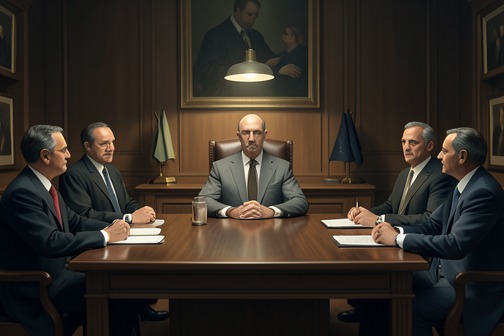
[William Stanley Milligan](entity:character-recall-character-william-stanley-mil-d057ecbb22fc)'s trial and acquittal by reason of insanity transformed a psychiatric account of fractured identity into a legal finding about criminal responsibility. The court ruled that mental illness had prevented him from distinguishing right from wrong or refraining from the charged acts, making Milligan the first person in U.S. history found not guilty of major crimes on this basis because of multiple personalities. The outcome rested on stipulated medical evidence, while the judge separately dismissed one rape count for lack of corroboration and a similar pattern of conduct.
## Background and the Question of Competency
Before the trial, the defense had to address whether Milligan could understand the proceedings and assist in his own defense. His public defenders, [Gary Schweickart](entity:character-recall-character-gary-schweickart-dca91f26dd6e) and [Judy Stevenson](entity:character-recall-character-judy-stevenson-d6ee40291eb6), continued to visit him in prison even after he had sent them a letter firing them. The [Public Defender’s Office](entity:organization-recall-organization-public-defender-4da565e97d59) funded a psychological evaluation, and clinical psychologist [Willis C. Driscoll](entity:character-recall-character-willis-c-driscoll-2c641a575251) tested Milligan on January 8 and 13, [1978](entity:time-recall-time-1978-9747f157067f).
Driscoll recorded an IQ score of 68, which he believed was lowered by Milligan’s depression, and diagnosed acute schizophrenia. His report described profound difficulty distinguishing self from environment, voices directing or berating Milligan, and an inability at that time to understand events or counsel in his own defense. These were clinical conclusions about Milligan’s present condition and capacity to participate—not, by themselves, a determination of his responsibility when the alleged offenses occurred.
On January 19, Stevenson and Schweickart presented the report to [Judge Jay Flowers](entity:character-recall-character-judge-jay-flowers-05c6b41465c8) as evidence that Milligan could not assist in his defense. Flowers proposed an examination by the forensic psychiatry unit at [Southwest Community Mental Health Center](entity:organization-recall-organization-f5971c42288a). The defense was concerned that the center generally supported the prosecution, and Schweickart sought assurance that statements made during its evaluation would remain privileged. The parties eventually agreed that prosecutors could question Milligan about incriminating statements from the examination only if he testified in his own defense. The defense accepted that compromise and allowed the evaluation to proceed.
## Trial and Ruling
At the trial, the judge first dismissed the first rape count, citing the absence of corroborating evidence and of a similar modus operandi. The remaining decision turned on the insanity defense. Both sides waived closing arguments, and the medical evidence was stipulated rather than presented as a dispute requiring the judge to choose between competing accounts.
The doctors’ testimony, as summarized by Judge Flowers, established that Milligan had been mentally ill at the time of the charged acts, could not distinguish right from wrong, and could not refrain from committing them. With no contrary evidence before him, Flowers found Milligan not guilty by reason of insanity on counts two through ten. The ruling thus concerned criminal responsibility at the time of the offenses; it was distinct from the earlier question of whether Milligan could take part in the proceedings.
## Consequences and Significance
The acquittal established a landmark: Milligan became the first person in U.S. history found not guilty of major crimes by reason of insanity because of multiple personalities. His case was already unusually public. His face had appeared on newspaper front pages and magazine covers, while reports of his examinations had reached television news and headlines around the world. The court’s decision brought the diagnosis and its legal consequences into wider public view.
Acquittal did not mean that the court considered Milligan well or that hospitalization was unnecessary. On December 10, [1979](entity:time-recall-time-1979-e4dd6858fb61), a later court finding described his condition as a substantial disorder of thought, mood, perception, orientation, and memory that impaired judgment, behavior, and recognition of reality; it identified the condition as multiple personality and ordered hospitalization. That later finding belongs to the continuing legal and treatment history, not to the trial’s verdict itself. The distinction clarifies the ruling’s scope: the trial resolved whether Milligan was criminally responsible for the charged acts, while subsequent proceedings addressed his illness, risk, and need for hospital treatment.
Event 9
Billy First Learns About and Meets Arthur
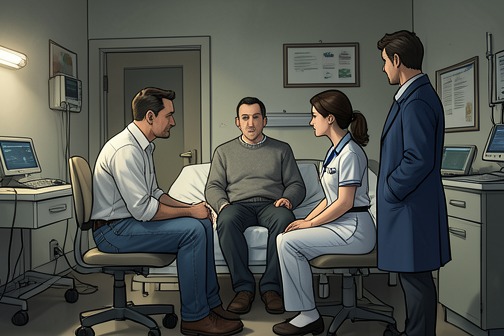
[Billy First Learns About and Meets Arthur](entity:event-recall-event-billy-arthur-da1b79d3218e) is a turning point in [Billy Milligan](entity:character-recall-character-billy-milligan-7ed9a40572a9)’s treatment at [Harding Hospital](entity:location-recall-location-harding-hospital-cb8626b12e1f): the secret that other personalities had been protecting from him becomes knowledge shared between Billy, [Arthur](entity:character-recall-character-arthur-2e33b65bbe57), and his therapist. The meeting does more than identify Arthur. It gives Billy a first explanation of the inner system and makes gradual fusion—the process of bringing the separate minds together—the stated aim of treatment.
## The Secret and the Clinical Context
Before the meeting, the personalities’ shared use of Billy’s name had helped keep their existence from outsiders. [Allen](entity:character-recall-character-allen-c770d3fec6b8) explained that people such as [Judy Stevenson](entity:character-recall-character-judy-stevenson-d6ee40291eb6) and Gary knew them only as Billy Milligan; the group answered to that name so the secret would not get out. Allen also said that Billy was asleep and had been for a long time. The concealment was therefore not simply a matter of others failing to recognize a change: the personalities themselves maintained a common identity in their dealings with the outside world.
The clinical setting was already strained by this discrepancy between what staff observed and what Billy or the personalities acknowledged. Staff reported difficulty when Milligan denied actions they had witnessed, and worried that discussion of the different names confused other patients. [Dr. George Harding](entity:character-recall-character-dr-george-harding-043cbdedd4cb) proposed dealing with the personalities only in therapy and asked staff not to discuss their names on the unit. On March 28, nurse [Helen Yaeger](entity:character-recall-character-helen-yaeger-740126f7dce1) recorded a goal that Milligan accept responsibility for acts he denied, with a plan to respond matter-of-factly to denials and to remind him that his name was Billy when he referred to himself as another personality. The approach treated acknowledgment of the personalities as a clinical problem to contain, not a subject for general conversation.
That policy sits in tension with the therapeutic decision that follows. Dr. George Harding had to consider both the potential value of telling Billy and the danger he believed the revelation might pose. A patient of a colleague had died by suicide after learning of a multiple-personality diagnosis, and Harding feared that Billy might react similarly. The information had been withheld because Billy was considered very suicidal; in the session, disclosure became possible only after Harding judged the timing appropriate.
## Billy Learns Who Arthur Is
Two days before [Dr. Cornelia Wilbur](entity:character-recall-character-dr-cornelia-wilbur-53c5b32908c4)’s visit, Dr. George Harding recognized Billy as the core personality in therapy. Billy had heard the names Arthur and [Ragen](entity:character-recall-character-ragen-7ec95942e9d1) and wanted to know who they were. Harding told him that Arthur was one of his names and offered the possibility of meeting him. Billy trembled and said he wanted to sleep, making clear that the information was difficult for him to face. Harding did not force the transition at once. He asked Billy to trust him and explained that Billy could move away from the consciousness spotlight—the spot—without losing awareness or memory of what Arthur said.
The explanation established a distinction Billy had not previously understood: another personality could take control of the spot while Billy remained conscious but outside it. When Billy agreed to step aside, Harding called Arthur into the session, describing the meeting as essential to Billy’s therapy. Arthur appeared, and Billy’s expression changed. Speaking directly to him, Arthur identified himself and assured Billy that the place was safe and that the people there were trying to help. Billy immediately returned to the conversation, startled to realize that he had not known Arthur before.
Arthur gave Billy a reason for the delay. He said it had been his judgment that Billy would not benefit from knowing until he was ready, and that the other personalities had waited because Billy was suicidal. The scene makes the secret more complicated than a simple withholding by clinicians: within the account, Arthur too had participated in deciding when Billy could be told. Billy’s question and Arthur’s answer turn hidden knowledge into a relationship between them, with Arthur explaining the protective logic that had governed the silence.
## From Recognition to a Treatment Plan
Arthur spoke with Billy for nearly ten minutes, telling him about Ragen and the other personalities. He also explained that Dr. George Harding’s role was to bring the minds together so that Billy could become whole again. Billy then asked the therapist whether that could be done. Harding named the process fusion and set out a gradual sequence rather than promising an immediate resolution: Allen and [Tommy](entity:character-recall-character-tommy-6e67d140947b) were to be brought together first because they had much in common; [Danny](entity:character-recall-character-danny-318bc697472f) and [David](entity:character-recall-character-david-a0465b0b2f3d) would follow, with substantial therapy needed; the remaining personalities would be merged one at a time.
This plan gives the meeting its practical consequence. Billy has not merely been told that other identities exist; he has heard a framework for what treatment is intended to do and how it might proceed. The sequence also acknowledges difference within the group. Similarity makes Allen and Tommy the first proposed pairing, while Danny and David are described as needing more therapy. [Fusion](entity:concept-recall-concept-fusion-844bc322b3c0) is presented as staged work, not an instant erasure of the personalities.
## Public and Legal Consequences of the Diagnosis
At the time, the multiple-personality diagnosis remained private. It was known to those treating Milligan, the prosecutors, and the judge, while the public defenders and prosecutor agreed that revealing it could turn the case into a media event and complicate both treatment and trial. That privacy ended when the [Columbus Citizen-Journal](entity:organization-recall-organization-columbus-citizen-399d9467eabf) published the story on September 27. The contrast with Billy’s therapy session is sharp: what had been a carefully timed disclosure to the patient became public information outside the treatment room.
The diagnosis later acquired formal legal force. On December 10, [1979](entity:time-recall-time-1979-e4dd6858fb61), a court found Milligan mentally ill, identified the condition as multiple personality, and found that his illness substantially impaired thought, mood, perception, orientation, and memory. The findings also cited risks of harm to himself and others, stated that hospitalization and treatment were needed, and directed that his treatment be consistent with the diagnosis. The court ordered his commitment to [Lima State Hospital](entity:location-recall-location-lima-state-hospital-9bcc092ced20). These later actions do not alter the intimate scale of the first meeting, but they show how a concealed clinical understanding moved into public reporting and then into an official basis for treatment. Billy’s encounter with Arthur stands at the hinge: knowledge first becomes speakable within therapy, before the diagnosis reshapes how the case and its subject are understood beyond it.
Event 10
Personality-Fusion Therapy at Harding Hospital
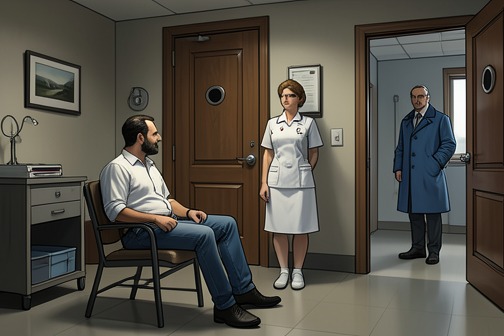
[Personality-Fusion Therapy at Harding Hospital](entity:event-recall-event-harding-a4a255bb14ad) was a court-mandated effort to combine [Billy Milligan](entity:character-recall-character-billy-milligan-7ed9a40572a9)’s separate personalities into the core Billy. Its method was gradual rather than instantaneous: personalities were encouraged to communicate, compatible pairs were fused first, and those pairings were then meant to merge further. The process yielded real but unstable periods of integration, exposing a central conflict in the treatment: the hoped-for unity could also seem to threaten the distinct abilities and protections on which Billy depended.
## From observation to fusion
Billy Milligan arrived at [Harding Hospital](entity:location-recall-location-harding-hospital-cb8626b12e1f) on March 16, two days ahead of schedule, and was placed in [Wakefield Cottage](entity:location-recall-location-wakefield-cottage-30b4060d2291), a locked unit for fourteen patients requiring constant observation and personal attention. He occupied one of two special-care rooms, whose heavy oak doors had peepholes for around-the-clock monitoring. [Judy Stevenson](entity:character-recall-character-judy-stevenson-d6ee40291eb6) and [Dorothy Turner](entity:character-recall-character-dorothy-turner-789b7eef9ebb) stayed with him while he ate; later, Turner suggested that [Arthur](entity:character-recall-character-arthur-2e33b65bbe57) meet members of the treatment staff so they could see the multiple personalities for themselves.
The staff’s response to the personalities soon became a point of tension. Some complained that Billy denied actions they had witnessed, and they worried that his references to other identities confused patients or influenced staff. On March 28, [Helen Yaeger](entity:character-recall-character-helen-yaeger-740126f7dce1) recorded a nursing goal that Billy should stop denying such behavior. The accompanying plan directed staff to remind him that his name was Billy when he referred to another personality, and to answer denials of piano-playing or writing notes by stating what staff had seen. This institutional effort to treat him as one patient under one name sat uneasily beside the treatment team’s recognition of distinct inner personalities.
The strategy shifted after [Dr. Cornelia Wilbur](entity:character-recall-character-dr-cornelia-wilbur-53c5b32908c4)’s visit. [Dr. George Harding](entity:character-recall-character-dr-george-harding-043cbdedd4cb) then concentrated on fusion, while [Dr. Marlene Kocan](entity:character-recall-character-dr-marlene-kocan-d4ca8650e5a3) arranged regular sessions in which the personalities recalled and worked through memories of abuse and torture associated with the major dissociation at age eight. The approach was not uncontested. Kocan warned that fusing [Ragen](entity:character-recall-character-ragen-7ec95942e9d1) with the others could remove Billy’s means of defending himself if he were sent to prison, where she feared he could be assaulted. Harding replied that fusion was the hospital’s charge from the court. The disagreement made clear that integration was not simply a clinical goal: it could also alter Billy’s ability to survive a hostile environment.
## The staged method
The treatment plan asked the core Billy to listen and respond to the other personalities, acknowledge their existence, and become able to remain on the consciousness spot for progressively longer periods. Compatible personalities would be paired first; the resulting combinations would then be fused through intensive suggestion until they were merged into the core. [Allen](entity:character-recall-character-allen-c770d3fec6b8) and [Tommy](entity:character-recall-character-tommy-6e67d140947b) were selected as the first pair because they were considered most alike.
Their similarities did not erase their different histories. Allen liked baseball, while Tommy feared playing it because, as a boy, he had made mistakes at second base and been beaten for them. Dr. George Harding suggested that [Nick Cicco](entity:character-recall-character-nick-cicco-5c7e3deca430), Allen, and others help Tommy confront that fear by talking with him and encouraging him to play. Art therapy, including oil painting, continued alongside the work on fusion. The pairing thus depended not only on suggestion but on helping one personality approach experiences another could already tolerate.
Arthur translated the abstract idea of fusion for the younger personalities through an analogy to Kool-Aid. Separate crystals dissolved when water was added; if the mixture stood and the water evaporated, a solid mass remained. In Arthur’s explanation, nothing had been added or lost, only changed. The analogy gave the younger personalities a way to understand why joining did not necessarily mean that their qualities would vanish. Yet the fear of loss persisted: Allen told [Donna Egar](entity:character-recall-character-donna-egar-74c3c75f82af) that Billy worried fusion might cause the others to die or weaken their talents and strengths.
## Partial fusion and instability
The first reported fusion was tentative. On June 5, Billy said that he had been fused for an hour as Tommy and Allen and that the experience felt strange. On June 14, [Rosalie Drake](entity:character-recall-character-rosalie-drake-86e348ad432f) watched Tommy play drums in the music building, a skill previously associated with Allen. In the fused state, the playing was not as accomplished as Allen’s had been alone. The episode gave the concern about diminished abilities a concrete form: fusion could combine identities while changing how a particular talent was expressed.
[Fusion](entity:concept-recall-concept-fusion-844bc322b3c0) proceeded unevenly. At different times and for varying durations, seven alternate personalities fused into one; Arthur, Ragen, and Billy remained outside that combination. Arthur proposed Kenny as a name for the fused personality, but the name did not take, and people returned to calling him Billy. The return to the familiar name made the composite easier to address, but it did not mean that the process had reached a final or complete fusion.
There were signs of increasing stability alongside serious setbacks. After a note found in Billy’s wastebasket looked like a suicide note, he was placed on special precautions. Yaeger later recorded that he continued to fuse and unfuse, but seemed fused for longer stretches; by July 14 he was fused for most of the day and appeared peaceful. Even then, the partial fusions did not hold continuously. Brief blank periods occurred in which he could not control the spot at all. The treatment therefore produced longer intervals of integration without eliminating disruptions or suicide-related concern.
## Court mandate and lasting limits
The court extended Billy’s observation and treatment at Harding Hospital by at least three months, giving the team more time to pursue fusion. The diagnosis itself had been kept from the public by the people treating him, the prosecutors, and the judge; the public defenders and prosecutor had agreed that disclosure could turn the case into a media event and complicate treatment. That privacy ended when the [Columbus Citizen-Journal](entity:organization-recall-organization-columbus-citizen-399d9467eabf) broke the story on September 27. By late August, Judy Stevenson and [Gary Schweickart](entity:character-recall-character-gary-schweickart-dca91f26dd6e) had already warned Billy that Dr. George Harding’s report to the judge was due in about three weeks. If the report found him fused and competent, Judge Flowers could set a trial date, linking the clinical assessment directly to the legal timetable.
Later events showed the distance between a period of fusion and a durable resolution. A December [1979](entity:time-recall-time-1979-e4dd6858fb61) court order diagnosed Billy’s condition as multiple personality and required that treatment be consistent with that diagnosis. After Billy was sent to the maximum-security [Lima State Hospital](entity:location-recall-location-lima-state-hospital-9bcc092ced20) in October 1979, and later moved to the [Dayton Forensic Center](entity:location-recall-location-dayton-forensic-cent-33c07b481e75), the account described worsening communication among the personalities and uncertainty about who was on the spot. Billy said that he hoped [Dr. David Caul](entity:character-recall-character-dr-david-caul-122ae399791f) could treat him, fuse him again, and bring back [The Teacher](entity:character-recall-character-the-teacher-f37b54f9229c). Harding’s fusion work thus remained a consequential but unfinished intervention: it offered stretches of calm and greater continuity, yet neither the court’s mandate nor the partial fusions themselves settled the problem of how Billy’s inner lives could be joined without losing what each supplied.
Event 11
First Public Disclosure of Milligan's Multiple-Personality Diagnosis
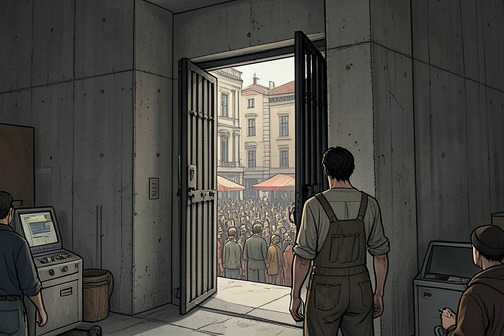
The [First Public Disclosure of Milligan's Multiple-Personality Diagnosis](entity:event-recall-event-milligan-5a6cf7de8417) transformed a confidential clinical and legal fact into a public account of the rape case. Until September 27, the diagnosis had been known only to those treating [Billy Milligan](entity:character-recall-character-billy-milligan-7ed9a40572a9), the prosecutors, and the judge; that morning, the [Columbus Citizen-Journal](entity:organization-recall-organization-columbus-citizen-399d9467eabf) broke the story with banner headlines describing personalities as fused and reporting that ten people existed in the rape suspect. The disclosure made secrecy impossible and brought the diagnosis into the hospital’s daily life, the public record, and the way the case was discussed beyond the courtroom.
## Confidentiality Before the Story
The diagnosis had been kept from the public while Milligan was receiving treatment and his case proceeded. The public defenders argued that a media event would make it difficult both to treat him and to try the case. Prosecutor [Bernie Yavitch](entity:character-recall-character-bernie-yavitch-77389c320267) agreed that, because the diagnosis had not been presented in court testimony, he could ethically avoid revealing it. Their agreement made nondisclosure a deliberate choice shared across adversarial roles: lawyers on opposing sides treated the same private information as something that should not yet become public.
The news broke after [Judy Stevenson](entity:character-recall-character-judy-stevenson-d6ee40291eb6) filed a motion to amend Milligan’s plea to include not guilty by reason of insanity. The diagnosis was therefore not simply a personal disclosure; it was already entangled with the legal question of how responsibility for the charged crimes should be understood. The newspaper’s account brought that disputed relationship between diagnosis and trial into public view before the court had heard testimony about it.
## The Newspaper Disclosure
On the morning of September 27, the Columbus Citizen-Journal published the story under banner headlines announcing that personalities had fused for a court trial and that ten people existed in the rape suspect. The headline language made the diagnosis immediately legible as a sensational public claim, while the facts behind it had previously circulated among clinicians and legal officials. The shift was abrupt: what had been withheld to protect treatment and the trial became a newspaper story available to the wider community.
The disclosure also altered the hospital’s immediate communications problem. Staff at [Harding Hospital](entity:location-recall-location-harding-hospital-cb8626b12e1f) learned of the story from the morning paper and encouraged Milligan to tell the other patients himself, before they heard about it from outside sources. Their response did not restore the lost privacy, but it gave him an opportunity to address the news within the group where he was living. The institution’s action thus placed Milligan, rather than the newspaper alone, in the position of explaining what the public report meant to him.
## Milligan’s Response and the Hospital
Milligan told the mini-group that he had been charged with the crimes but was not sure that he had committed them, because he had been defused at the time. His explanation held together two realities that the news story placed in tension: he was the person charged, yet his own account of his state at the time did not provide him certainty about what had happened. The diagnosis had become public, but publication did not settle the underlying question of responsibility or resolve his uncertainty.
That evening, the television news carried the story. After watching it, Milligan went to his room in tears. The sequence matters: the morning disclosure was followed first by a staff-supported conversation with other patients, then by a broadcast that carried the story beyond the hospital and into his private space. The account records his distress without suggesting that the publicity itself changed the diagnosis or answered the legal questions surrounding the charges.
The hospital’s earlier arrangements give this public exposure a concrete institutional contrast. When Milligan had been transferred to Harding Hospital ahead of schedule on March 16, he was taken with Judy Stevenson and [Dorothy Turner](entity:character-recall-character-dorothy-turner-789b7eef9ebb) to [Wakefield Cottage](entity:location-recall-location-wakefield-cottage-30b4060d2291), a locked unit for fourteen difficult patients requiring constant observation and personal attention. He was placed in a special-care room with a heavy oak door and a peephole for around-the-clock observation. At that stage, staff were being asked to observe the multiple-personality syndrome directly; months later, a newspaper and television audience were being told about it. The movement from a closely monitored room to public reporting did not mean that the hospital’s practical concerns had disappeared. It meant that the diagnosis now had an audience outside the treatment setting.
## The Diagnosis After Publication
The disclosure did not end debate over how Milligan should be treated or identified. On March 28, nurse [Helen Yaeger](entity:character-recall-character-helen-yaeger-740126f7dce1) entered a treatment goal stating that he should accept responsibility for acts he denied. The accompanying plan instructed staff to respond matter-of-factly when he denied playing piano or writing notes, and to remind him that his name was Billy when he referred to himself as another personality. This record shows a clinical approach that continued to manage the personalities through staff practice, even after the diagnosis itself had become public.
After Milligan was found not guilty, [Dr. David Caul](entity:character-recall-character-dr-david-caul-122ae399791f) told him that he was not considered a criminal at the hospital and that his future depended on how he worked with Billy and brought himself together. The reassurance framed recovery as a continuing process rather than a result guaranteed by the trial. Later, in December [1979](entity:time-recall-time-1979-e4dd6858fb61), a court found that Milligan had a mental illness diagnosed as multiple personality and ordered treatment consistent with that diagnosis. The legal finding gave formal force to the category that the newspaper had disclosed more than a year earlier, but it came through a separate court process rather than as an immediate consequence of the headline.
Publicity also remained an institutional pressure. At Athens, staff members upset by publicity and Milligan’s reaction demanded changes to his treatment plan; a contract imposed restrictions on visitors, telephone calls, money, painting supplies, and contact with other patients. In 1979, Milligan was handcuffed and belt-shackled and taken to [Lima State Hospital](entity:location-recall-location-lima-state-hospital-9bcc092ced20) for the Criminally Insane, where he was held pending further proceedings. Much later, at the [Dayton Forensic Center](entity:location-recall-location-dayton-forensic-cent-33c07b481e75), he hoped to return to Athens and resume treatment with Caul. These later events belong to a longer struggle over treatment, security, and liberty, not to the September newspaper story alone. The disclosure’s decisive significance lies in the boundary it crossed: a diagnosis once confined to clinical and legal circles had become part of Milligan’s public identity, while neither the newspaper nor the publicity could settle what treatment, responsibility, or future that identity required.
Event 12
Milligan's Competency-to-Stand-Trial Hearing
[Billy Milligan](entity:character-recall-character-billy-milligan-7ed9a40572a9)’s competency-to-stand-trial hearing separated a question about his present ability to face court from the distinct question of his mental state when the charged acts occurred. On October 6, [1978](entity:time-recall-time-1978-9747f157067f), [Judge Jay Flowers](entity:character-recall-character-judge-jay-flowers-05c6b41465c8) ruled that Milligan was capable of standing trial, relying on an extensive hospital examination. The ruling moved the case toward trial, but it did not decide criminal responsibility for the earlier offenses or settle which version of Ohio law would govern the insanity defense.
## Background and the first evaluation
In January 1978, [Gary Schweickart](entity:character-recall-character-gary-schweickart-dca91f26dd6e) and [Judy Stevenson](entity:character-recall-character-judy-stevenson-d6ee40291eb6) arranged for a psychological evaluation while continuing to represent Milligan despite his letter dismissing them. The [Public Defender’s Office](entity:organization-recall-organization-public-defender-4da565e97d59) released funds for the assessment, and Dr. [Willis C. Driscoll](entity:character-recall-character-willis-c-driscoll-2c641a575251) administered a battery of tests on January 8 and 13. The intelligence tests produced an IQ score of 68, which Driscoll said had been lowered by Milligan’s depression. He diagnosed acute schizophrenia and described severe difficulty distinguishing self from surroundings, experiences of voices, and an inability at that time to understand events well enough to assist in his defense. Driscoll recommended hospitalization for further examination and possible treatment.
On January 19, Schweickart and Stevenson presented Driscoll’s report to Judge Jay Flowers as evidence that their client could not assist in his own defense. Flowers directed the forensic psychiatry unit of [Southwest Community Mental Health Center](entity:organization-recall-organization-f5971c42288a) to examine Milligan. The defense worried that the center usually supported the prosecution, and Schweickart argued that anything Milligan disclosed in the examination should remain privileged. Prosecutors [Terry Sherman](entity:character-recall-character-terry-sherman-7c61cf855916) and [Bernie Yavitch](entity:character-recall-character-bernie-yavitch-77389c320267) objected; the dispute came close to a contempt finding. The eventual compromise allowed prosecutors to question Milligan about incriminating statements to the court-appointed clinicians only if he later took the stand. The defense accepted those terms and allowed the examination to proceed.
## The hospital study and competency ruling
By October, the basis for the competency decision was no longer Driscoll’s short series of tests alone. Judge Flowers had before him [Dr. George Harding](entity:character-recall-character-dr-george-harding-043cbdedd4cb)’s report, produced after a hospital study of more than seven months and consultation with numerous psychologists and psychiatrists. Sherman and Yavitch considered the report unusually thorough, including because it addressed positions they might ordinarily have challenged in psychiatric testimony. After a brief competency hearing on October 6, Flowers ruled on the basis of that report that Milligan could stand trial and scheduled the trial for December 4.
The ruling concerned Milligan’s capacity at the time of the hearing to proceed through the criminal case; it was not a finding that he had been mentally well when the offenses occurred. Nor did the diagnosis, by itself, determine the legal outcome. The narrative keeps clinical assessments and legal standards distinct: the initial report described serious impairment and inability to assist, while the later hospital study supported a finding of present competency.
## Public disclosure and the dispute over applicable law
The diagnosis had been kept from the public while treatment and the legal case proceeded. The defense feared that public attention would make it harder both to treat Milligan and to try the case. The prosecutors also agreed not to disclose the diagnosis before it had been presented in court. That privacy ended on September 27, when the [Columbus Citizen-Journal](entity:organization-recall-organization-columbus-citizen-399d9467eabf) broke the story. The newspaper disclosure preceded the competency hearing and changed the diagnosis from information held by clinicians and court participants into a public matter.
At the competency ruling, Schweickart accepted a trial date on one condition: that the case be tried under the law in effect when the crimes occurred. Ohio’s law was due to change on November 1, shifting the burden of proving insanity from the prosecution’s burden to prove sanity to a burden on the defendant to prove insanity. Yavitch disagreed with the defense’s position. Flowers took the question under advisement; the competency ruling itself therefore did not resolve which law would apply.
## Separate findings at trial and afterward
The subsequent trial addressed the offenses and Milligan’s mental condition at the time they occurred. Judge Flowers dismissed the first rape count for lack of corroborating evidence and a similar pattern of conduct. On counts two through ten, the stipulated medical evidence stated that Milligan had been mentally ill during the offenses, could not distinguish right from wrong, and could not refrain from the acts. Flowers found him not guilty by reason of insanity on those counts. That later judgment answered a different legal question from the October competency decision: ability to stand trial in 1978 was not the same as responsibility for conduct at the time of the offenses.
A later court order further demonstrates how diagnosis and legal disposition remained connected but distinct. On December 10, [1979](entity:time-recall-time-1979-e4dd6858fb61), the court found Milligan mentally ill, identified his condition as multiple personality, and ordered hospitalization at [Lima State Hospital](entity:location-recall-location-lima-state-hospital-9bcc092ced20) for treatment consistent with that diagnosis. The order cited risks to himself and others and the need for hospital treatment. Read alongside the competency ruling, the sequence shows how the case moved through separate judgments about present trial capacity, responsibility at the time of the offenses, and the treatment and security required afterward.
Event 13
Milligan's Stipulated-Evidence Trial and Insanity Acquittal
[Billy Milligan](entity:character-recall-character-billy-milligan-7ed9a40572a9)'s stipulated-evidence trial ended with a divided legal result: Judge [Jay C. Flowers](entity:character-recall-character-jay-c-flowers-d413ea2912fa) dismissed the first rape count, then found Milligan not guilty by reason of insanity on the remaining counts. The proceeding turned not on a contest over whether the charged acts had occurred, but on the medical evidence concerning Milligan's mental condition when they did. Its outcome also sent him into court-supervised care rather than simply ending the case with an acquittal.
## Background and Preparation
The trial followed an earlier dispute over whether Milligan could assist in his own defense. His public defenders, [Gary Schweickart](entity:character-recall-character-gary-schweickart-dca91f26dd6e) and [Judy Stevenson](entity:character-recall-character-judy-stevenson-d6ee40291eb6), continued visiting him in prison even after he sent them a letter firing them. With funds released by the [Public Defender’s Office](entity:organization-recall-organization-public-defender-4da565e97d59), clinical psychologist [Willis C. Driscoll](entity:character-recall-character-willis-c-driscoll-2c641a575251) examined Milligan on January 8 and 13, [1978](entity:time-recall-time-1978-9747f157067f). The tests produced an IQ score of 68, which Driscoll said depression had lowered, and a diagnosis of acute schizophrenia. He described severe difficulties with identity and reality-testing, reported that Milligan heard voices, and concluded that Milligan could not adequately understand proceedings or counsel in his own behalf at that time. Driscoll recommended hospitalization for further examination and possible treatment.
On January 19, Schweickart and Stevenson presented Driscoll’s report to Judge Flowers as evidence that Milligan could not assist with his defense. Flowers ordered an examination by the forensic psychiatry unit at [Southwest Community Mental Health Center](entity:organization-recall-organization-f5971c42288a). The defense worried that the center usually sided with prosecutors and sought protection for anything Milligan told its clinicians. After a dispute over whether such statements could later be used against him, the parties reached a compromise: prosecutors could question him about incriminating statements only if he took the stand. The defense accepted the examination on those terms. This earlier competency dispute concerned Milligan’s capacity to participate in proceedings then; the eventual insanity decision addressed his mental state at the time of the offenses.
The record also contained sharply different accounts of the alleged offenses. In a discussion of trial strategy, [Arthur](entity:character-recall-character-arthur-2e33b65bbe57) argued that the women had cooperated, had not been injured, and had opportunities to leave; he further claimed that [Adalana](entity:character-recall-character-adalana-613e361d2280) had returned some money to them. Stevenson and Schweickart did not accept that account, recognizing it as Adalana’s perception rather than a shared or established version of events. The women’s accounts contradicted it. The episode exposes a central tension in the case: an internal account of events could not simply replace the testimony and experience of the women involved.
## Stipulated Proceedings
When Milligan entered the courtroom, sketch artists began erasing the mustache they had drawn on him. The visual correction preceded a hearing in which neither side called witnesses or put Milligan on the stand. Schweickart told the judge that prosecution and defense had agreed to read the facts into the record as stipulations. Flowers confirmed that the defense was not contesting the charges or denying that Milligan had committed the charged crimes, except for the first count of sexual assault. The defense’s position on the remaining counts was a plea of not guilty by reason of insanity.
The prosecution likewise agreed not to contest the psychiatric findings from Southwest Community Mental Health Center and [Harding Hospital](entity:location-recall-location-harding-hospital-cb8626b12e1f). Those findings were presented as supporting Milligan’s mental condition at the time of the offenses. Judy Stevenson read the defense testimony, taken by deposition, into the record. Among the accounts was evidence from Milligan’s mother, [Dorothy Milligan](entity:character-recall-character-dorothy-milligan-f474d70681be), that she had found him in trance-like states and that he later could not remember what had happened during them. She also described his unusual manner of walking and speaking on one occasion. Her testimony linked those episodes to a wider family history: she said she had remained in her marriage to [Chalmer Milligan](entity:character-recall-character-chalmer-milligan-d7318823b5a7) to keep the family together, and left only after her children gave her an ultimatum.
The record also included the deposition of Milligan’s brother, [James Milligan](entity:character-recall-character-james-milligan-c8cffbcd88ff). He described trips with Milligan and their stepfather to family property where James was sent to hunt rabbits while Milligan remained behind with Chalmer. James said that Milligan was crying when he returned and told him that his stepfather had hurt him. According to the deposition, Chalmer then pressured Milligan to deny that anything had happened and invoked the need not to upset their mother. These accounts were part of the evidence read into court; the proceeding itself did not subject the witnesses to live examination.
## Ruling and Legal Basis
Before deciding the insanity defense, Flowers dismissed the first count of rape. He cited the lack of corroborating evidence and the absence of a similar modus operandi. That ruling was distinct from the decision on the other counts: the judge did not extend the insanity finding to the dismissed count, but removed it because its evidentiary support was insufficient.
For counts two through ten, Flowers relied on the agreed medical evidence. The doctors’ findings, as he summarized them, established that Milligan was mentally ill when the offenses occurred, that his illness prevented him from distinguishing right from wrong, and that he lacked the ability to refrain from the acts. With no contrary evidence before him, Flowers found Milligan not guilty by reason of insanity on those counts. The judgment was therefore a legal determination about criminal responsibility at the time of the offenses, not a finding that the acts had not happened. Nor was the diagnosis alone the verdict: the judge connected the medical evidence to the questions of understanding and control relevant to the insanity plea.
## Aftermath and Significance
Flowers placed Milligan under the authority of the [Probate Court of Franklin County](entity:organization-recall-organization-probate-court-of-652720147bbb) and adjourned. Judy Stevenson held back tears and hurried him toward the holding cell to avoid the crowd. [Dorothy Turner](entity:character-recall-character-dorothy-turner-789b7eef9ebb), [Stella Karolin](entity:character-recall-character-stella-karolin-397a40ad3bb3), and others came to congratulate him; several were crying. Schweickart stood apart, reflecting on a long legal fight that had brought sleepless nights and severe strain to his marriage. The courtroom response marked relief, but the order made clear that the result was not an ordinary release from legal supervision.
A later court finding further illustrates the distinction between acquittal and disposition. In December [1979](entity:time-recall-time-1979-e4dd6858fb61), a court described Milligan as mentally ill, identified his condition as multiple personality, and found grounds for hospitalization, including substantial risks of harm to himself and others. That later ruling was not the trial verdict, but it shows the continuing legal consequences of placing him under probate authority. The trial resolved criminal responsibility for the charged conduct; it did not settle where or under what conditions Milligan would receive treatment.
The proceeding’s structure gave its conclusion unusual force. Milligan did not testify, the parties agreed to the psychiatric evidence, and the judge read the stipulated record rather than hearing a conventional sequence of opposing witnesses. The result preserved two distinct propositions: the defense did not deny the offenses covered by counts two through ten, while the court found Milligan unable to bear criminal responsibility for them because of his mental illness at the time. The separate dismissal of the first count, and the transfer of authority to probate court, prevented the acquittal from collapsing into a simple declaration that the case was over.
Event 14
Milligan's Transfer and Admission to Athens Mental Health Center

The transfer of [Billy Milligan](entity:character-recall-character-billy-milligan-7ed9a40572a9) to the [Athens Mental Health Center](entity:location-recall-location-athens-mental-health-c612e89b1dc0) followed a legal finding that connected his mental illness to his responsibility at the time of the charged offenses, but did not end his uncertainty about what would happen next. The court’s decision led directly to commitment in [Dr. David Caul](entity:character-recall-character-dr-david-caul-122ae399791f)’s custody. On the journey from court to hospital, Billy’s state changed under stress; by the time Caul met him, [Danny](entity:character-recall-character-danny-318bc697472f) had come forward. The arrival therefore marked both an institutional transfer and a rupture in the fragile fusion that had preceded it.
## Legal Decision and Commitment
The immediate background was a sequence of clinical and legal judgments. In January [1978](entity:time-recall-time-1978-9747f157067f), public defenders [Gary Schweickart](entity:character-recall-character-gary-schweickart-dca91f26dd6e) and [Judy Stevenson](entity:character-recall-character-judy-stevenson-d6ee40291eb6) arranged for a psychological evaluation while visiting Billy in prison. The evaluation was funded by the [Public Defender’s Office](entity:organization-recall-organization-public-defender-4da565e97d59), and Dr. [Willis C. Driscoll](entity:character-recall-character-willis-c-driscoll-2c641a575251) administered psychological tests on January 8 and 13. Driscoll reported an IQ score of 68, which he thought depression had lowered, and diagnosed acute schizophrenia. He described severe problems with identity and the ability to distinguish self from surroundings, reported that Billy heard voices, and concluded that Billy could not adequately understand events or assist in his own defense at that time. His recommendation was further examination and possible hospitalization.
On January 19, Stevenson and Schweickart presented Driscoll’s report to Judge [Jay C. Flowers](entity:character-recall-character-jay-c-flowers-d413ea2912fa) as evidence that Billy could not assist with his defense. Flowers ordered an examination by the forensic psychiatry unit of the [Southwest Community Mental Health Center](entity:organization-recall-organization-f5971c42288a). The defenders were concerned that the center generally sided with the prosecution, and they disputed whether statements made during its examination could be used against their client. The parties reached a compromise: prosecutors could question Billy about incriminating statements from the examination only if he took the stand. This earlier dispute concerned his present ability to participate in the proceedings, distinct from the later question of his mental condition when the charged acts occurred.
At the trial’s conclusion, Flowers dismissed the first rape count, citing the absence of corroborating evidence and of a similar pattern of conduct. On counts two through ten, he relied on stipulated medical evidence. The doctors’ evidence, as Flowers summarized it, established that Billy had been mentally ill at the time of the offenses, could not distinguish right from wrong, and could not refrain from the acts. With no contrary evidence before him, the judge found Billy not guilty by reason of insanity on those counts. After lunch, Judge Metcalf reviewed the psychiatrists’ recommendations and committed Billy to the Athens Mental Health Center in the custody of Dr. David Caul. The acquittal and the commitment were connected outcomes, but they were not the same decision: the court resolved criminal responsibility and then ordered hospital custody and treatment.
## Leaving the Court
Before the transfer, Billy described his aim as becoming a citizen again and learning life all over. The aspiration was set against an abrupt departure. While Billy was taken back to a conference room, Jan Ryan of Channel 6, making a documentary about his life for the Child Abuse Foundation, asked questions and filmed more footage for a television special. Judy and Gary were called away. Before they returned, an officer announced that Billy had to leave for Athens. He felt bad that he could not say goodbye to them, the two defenders who had remained involved despite his earlier attempt to dismiss them.
The officer handcuffed Billy tightly and hurried him downstairs to the police van. A second officer handed him hot coffee before the door was shut; as the van turned a corner, some spilled onto his new suit. These details sharpen the contrast between the court’s formal disposition and the physical reality of custody: the ruling had been delivered, but Billy was still being moved under police control, without the chance to complete his farewells. The discomfort of the journey came alongside uncertainty about the destination. He did not know what the Athens hospital would be like and feared it might resemble a prison.
His fear was also shaped by his knowledge that the [Adult Parole Authority](entity:organization-recall-organization-adult-parole-aut-6a791a656eac) had told Gary that the guns made him a parole and probation violator. Billy understood that, once cured, he could be returned to prison; he imagined that violent behavior might send him to Lucasville rather than Lebanon. His anxious thoughts about prison and the possibility that [Arthur](entity:character-recall-character-arthur-2e33b65bbe57) and [Ragen](entity:character-recall-character-ragen-7ec95942e9d1) might join the fusion show that the transfer did not resolve either his legal exposure or his internal uncertainty. It placed him in a new institution while leaving the future unclear.
## The Journey and the Change in Identity
The van traveled along snow-covered Route 33 and passed through Lancaster, where Billy had grown up, attended school, and tried to kill himself. The place gathered several parts of his history into the route itself. Billy became too tired to bear the strain and let go; seconds later, Danny looked around without knowing where he was being taken. He felt cold, lonely, and afraid. The transition was not presented as a deliberate choice by the officers or as a separate legal ruling. It occurred during a stressful journey, at a moment when the previously achieved fusion proved vulnerable.
The account links this change to the clinical understanding of fusion already established by the staff. The trial and transfer imposed considerable stress, while the fusion had been fragile. This context matters: the arrival did not simply place the same stable identity in a new hospital. Danny’s emergence altered the immediate encounter and required the receiving clinician to respond to the person present, rather than assume that the courtroom’s Billy would remain continuously in control.
## Admission and Immediate Aftermath
It was nearly dark when the van reached Athens and turned away from the highway. The hospital stood among Victorian buildings on a snowy hill overlooking the campus of [Ohio University](entity:location-recall-location-ohio-university-c9cba7ad608d). The officers led Danny out, up the steps of an old red-brick building with thin white pillars, through the entrance corridor, and by elevator to the third floor. They pushed him through a heavy door marked for admissions and intensive treatment. The institutional setting was unfamiliar to him, and the officer’s remark that he had been lucky did not answer his uncertainty about what admission would mean.
Dr. David Caul had seen the officer push Milligan into the office and demanded that the handcuffs be removed. Once released, Danny rubbed his wrists and looked at the marks left by the tight cuffs. When Caul asked his name, he said Danny; when asked his age, he said fourteen. The answer made the change in identity immediately consequential for the intake encounter. The officer laughed, but Caul shut the door on him. Caul was not surprised by the dissociation: Dr. Harding had told him that the fusion seemed fragile, and Caul’s experience with people with multiple personalities led him to expect that a stressful situation such as a trial could produce unfusion. His immediate task was to gain Danny’s confidence.
## Significance
The transfer joined courtroom judgment, custodial power, and clinical care in a single passage. The insanity finding did not itself supply a calm or continuous transition into treatment: Billy left court in handcuffs, worried about a possible return to prison, and unable to say goodbye to his defenders. The snow-covered drive through Lancaster preceded another break in continuity, so that the patient received at the hospital was Danny, frightened and disoriented, rather than the Billy who had spoken in court about beginning life again.
The episode also distinguishes a medical diagnosis from a legal outcome and from the practical work of treatment. Driscoll’s earlier assessment had addressed Billy’s capacity to understand events and assist his defense; Flowers’s ruling addressed mental illness and the ability to distinguish right from wrong or refrain from the charged acts at the time. Metcalf’s commitment then determined where Billy would be held and who would take custody of him. At the hospital, Caul’s recognition that fusion could give way under stress shaped the first response: remove the restraints, identify the person present, and begin building trust. Admission was therefore not a neat resolution but the start of care under conditions of instability, with Danny’s fear and the unresolved prospect of confinement still accompanying the court’s order.
Event 15
Milligan's Childhood Abuse by His Stepfather and Severe Dissociation

[Billy Milligan](entity:character-recall-character-billy-milligan-7ed9a40572a9)’s childhood abuse by his stepfather, [Chalmer Milligan](entity:character-recall-character-chalmer-milligan-d7318823b5a7), is presented as a formative trauma behind his severe dissociation. The account joins an episode at the family farm—where Billy was threatened and feared for his safety—to Harding’s later explanation of how repeated abuse and the terror of seeing his mother beaten destabilized the child’s inner world. Years later, the memories return in testimony and recollection, connected to the identities that carried pain Billy could not bear directly.
## Background and Pattern of Abuse
In his report to the court, [Dr. George Harding](entity:character-recall-character-dr-george-harding-043cbdedd4cb) summarized Billy’s account of physical, sadistic, and sexual abuse by Chalmer. Harding placed it when Billy was eight or nine, extending over roughly a year and generally taking place on a farm when the boy was alone with his stepfather. Billy also reported that Chalmer threatened to hide him in the barn and tell his mother he had run away. The threat made the abuse inseparable from the fear that Billy could disappear without anyone knowing what had happened to him.
Harding placed this history within a broader account of vulnerability. Billy’s natural father had died by suicide, and Harding believed that the loss left the boy without a father’s involvement and attention. He described Billy as having a need for closeness and care that Chalmer exploited. In that account, the abuse was not an isolated episode detached from the family’s emotional conditions: a child seeking protection and affection was exposed instead to manipulation and repeated harm.
The report also connected Billy’s dissociation to violence against his mother. Because the boy identified with her, Harding reasoned, witnessing her being beaten made him experience her terror and pain. He associated that experience with separation anxiety and an unstable, dreamlike fantasy world; together with Chalmer’s humiliations and abuse, it contributed to recurrent dissociation. This is Harding’s clinical interpretation, distinct from the specific events Billy later described, but it supplies the causal framework through which the book presents the childhood trauma.
## The Farm Episode
[The Teacher](entity:character-recall-character-the-teacher-f37b54f9229c)’s recollection fixes one Sunday in the week after [April](entity:character-recall-character-april-dcf0562a76c2) Fool’s Day. Billy had turned nine seven weeks earlier. At home, he became increasingly frightened by Chalmer’s persistent, silent attention. Billy moved from room to room and then outside, but repeatedly saw his stepfather watching him. Even when the family watched television, Billy’s attention returned to Chalmer’s stare. He could not sleep well that night.
Before breakfast the next morning, Chalmer announced that they were going to the farm to work. He drove the longer back route without speaking. At the farm, he opened the garage and drove the tractor into the barn. The remembered account then breaks off: Billy closed his eyes and felt pain. In his later recollection, he described being taken into the barn, tied to a rototiller, and beaten. Chalmer started the machine, leading Billy to fear that it would pull him into its blades. He was warned that if he told his mother, Chalmer would bury him in the barn and claim that Billy had run away because he hated her.
The threat repeated the larger pattern described in Harding’s report, but here it is attached to a particular place and sequence: the long silent drive, the barn, the machine, and the warning against telling. The book does not present the child’s fear as proof that he had consented or could simply leave. It depicts him as a frightened boy under an adult’s control, facing both immediate danger and the prospect that disclosure would be turned against him.
## [Dissociation](entity:concept-recall-concept-80a44b773cad) and Later Recollection
Billy later recalled that, when the abuse happened again, he closed his eyes and went away. He said that, with Dr. Harding’s help at [Harding Hospital](entity:location-recall-location-harding-hospital-cb8626b12e1f), he came to understand that [Danny](entity:character-recall-character-danny-318bc697472f) had been tied to the machine and that [David](entity:character-recall-character-david-a0465b0b2f3d) appeared to accept the pain. The account thus links the child’s dissociative response not only to an absence in memory but to distinct identities associated with enduring what he could not bear as himself.
The Teacher’s recollection gives the episode a further narrative consequence: at that moment, the book says, Billy’s mind, emotions, and soul shattered into twenty-four parts. This is the narrative’s account of the origins of the inner group, not a claim that the adult Billy could then explain what was happening. Its significance lies in the contrast between the child’s silence and fear and the later effort to name the divisions that had formed around the trauma.
When Billy spoke about the memory years later, his eyes closed and tears came as his voice faltered. He described himself as a fourth grader and recalled the week after April Fool’s Day, the farm, the barn, and the threat. He also said that the doctors considered it important to bring the experience out into the open. His account tied the return of memory to treatment and to the difficult act of telling, without suggesting that recounting it erased its consequences.
## Meaning and Consequences
Harding’s report brought the childhood history into the legal discussion of Billy’s mental condition. He concluded that Billy was competent to stand trial after a fusion of his personalities, but also that mental illness had left him not responsible for his criminal conduct in the second half of October 1977. The report therefore treated the childhood abuse as relevant to understanding both the formation of Billy’s dissociation and the question of responsibility, while distinguishing his present capacity from his condition at the time of the offenses.
Billy later reinterpreted the police arrival at his apartment as a rescue rather than simply an arrest. He connected that feeling to the long period in which the abuse had remained concealed and expressed regret that people had been hurt before help arrived. The childhood episode consequently sits at the intersection of private memory, psychiatric interpretation, and the public case: its delayed telling changes how Billy understands his own history, while the book shows how difficult it is to separate that history from the identities that carried its pain.
Event 16
Allegation That Billy Was Buried Alive by His Stepfather

The [Allegation That Billy Was Buried Alive by His Stepfather](entity:event-recall-event-billy-bea5ac1470c0) is a recalled episode from [Billy Milligan](entity:character-recall-character-billy-milligan-7ed9a40572a9)’s childhood that links reported abuse by [Chalmer Milligan](entity:character-recall-character-chalmer-milligan-d7318823b5a7) with a lasting fear of the ground. The account reaches the reader through [The Teacher](entity:character-recall-character-the-teacher-f37b54f9229c)’s recollection and a later statement by [Dr. Stella Karolin](entity:character-recall-character-dr-stella-karolin-97aa6cb0f7f2) entered into the court record, so the narrative presents it as an allegation rather than an independently established event.
## Recalled Circumstances
The Teacher placed the episode in spring 1969, when Billy was fourteen and in eighth grade. Before recalling it, the narrative describes Billy’s growing awareness that he lost time and that other people attributed actions and words to him that he could not remember. He believed this meant he was insane and hid what was happening from others. The memory of the farm thus appears against a background of secrecy and unexplained gaps in experience.
In The Teacher’s recollection, Chalmer took Billy to a farm beyond a cornfield, handed him a shovel, and told him to dig. The account establishes the setting and the demand that preceded the alleged burial, but does not elaborate on the sequence of events at the farm in The Teacher’s own narration.
## The Allegation in the Court Record
A later statement by Dr. Stella Karolin, read into the court record, described Chalmer as sexually abusing Billy, threatening to bury him if he told his mother, and burying him with a pipe left for air. This testimony supplies details not given in The Teacher’s brief recollection. The distinction between the two accounts matters: the book attributes the recollection to The Teacher and identifies the fuller description as an allegation described by Dr. Karolin, rather than presenting every detail as directly witnessed within the scene.
## Lasting Consequences
The narrative connects the episode to [Danny](entity:character-recall-character-danny-318bc697472f)’s fear of the earth. After that day, he would not lie in grass, touch the ground, or paint a landscape. These specific refusals make the consequence visible in ordinary activities and in art: the ground becomes something Danny avoids, not a neutral part of his surroundings.
The episode therefore joins a concealed childhood memory to a later account in the legal record and to a continuing pattern of avoidance. Its significance lies not only in what was alleged to have happened at the farm, but in the way the recollection gives context to Billy’s secrecy and the enduring effects attributed to Danny.
Event 17
Johnny Morrison's Suicide
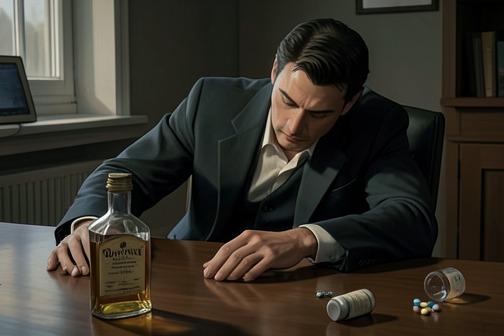
[Johnny Morrison](entity:character-recall-character-johnny-morrison-97962084106d)’s suicide is the decisive loss in the family’s early history: it ends his troubled presence in the children’s home and sets [Dorothy Milligan](entity:character-recall-character-dorothy-milligan-f474d70681be) and the children on a path of flight. The narrative places his death beside an earlier overdose crisis witnessed by young [Billy Milligan](entity:character-recall-character-billy-milligan-7ed9a40572a9), making the final discovery part of a longer sequence of illness, absence, and upheaval rather than an isolated event.
## Crisis Before the Death
In the fall of 1956, Johnny Morrison was hospitalized for acute alcoholism and depression. He was allowed home on October 19 for the birthday party of his older son, scheduled for the next day. When Dorothy Milligan returned late from work, she found Johnny slumped over the table, with half a bottle of Scotch and an empty bottle of sleeping pills on the floor. This was an earlier crisis, not the death that would later be discovered at the motel: Johnny survived and came home again. The distinction matters to the event’s chronology, because his eventual suicide follows an intervening return to family life rather than occurring during that first episode.
The earlier overdose enters the story through Billy Milligan’s childhood perspective, remembered by [The Teacher](entity:character-recall-character-the-teacher-f37b54f9229c). Four months before Billy’s fourth birthday, Billy sat alone with his toys after his older brother would not play with him and his father was occupied with a book. A silent, unnamed boy appeared and played beside him, moving a toy soldier back and forth in a truck. That night, Billy and the boy saw Johnny take yellow capsules from a bottle after going to the medicine cabinet. When Billy lay down in his crib, the boy disappeared. The account connects the father’s crisis with the first appearance of Billy’s inner companion, while keeping the child’s limited understanding at the center of the scene.
## A Return That Does Not Last
After the hospital episode, Johnny Morrison returned to the household. Dorothy Milligan worried because he could seem fine while playing with the children or working up new songs and routines for his show, yet turn to the phone to contact bookies when her back was turned. When she tried to stop him, he cursed and hit her. The contrast between his apparently ordinary moments with the children and the violence and gambling Dorothy encountered away from them gives his return a fragile quality: being home did not restore safety or stability to the family.
Johnny moved out to the Midget Mansions Motel. His departure also marked his absence from family occasions: he missed Christmas with the children and [Kathy Milligan](entity:character-recall-character-kathy-milligan-02761136a4e1)’s third birthday on New Year’s Eve. The chronology makes these missed occasions concrete measures of the separation. His suicide came after he had left the home, not as a sudden interruption of an intact family gathering, and Dorothy was left to manage the consequences with the children.
## Discovery and Final Message
On January 18, Dorothy Milligan was awakened by a call from the police department. Johnny’s body had been found in his station wagon outside the motel, with a hose running from the tailpipe into the back window. The account identifies the death through the stark particulars of the discovery: the parked car, its location, and the hose. He had left an eight-page suicide note that attacked Dorothy and instructed that some personal debts be paid from the insurance money. The note thus carried both accusation and practical directions into the aftermath, linking the death to debts that would continue to shape the family’s circumstances.
Dorothy told the children that their father had gone to heaven. The response is presented through a small, shared gesture: Billy and his older brother went to the window and looked up at the sky. The children’s action does not explain what they understood; it shows how Dorothy gave them an account of the death they could receive. The scene closes the immediate family encounter with the news while leaving the adult consequences unresolved.
## Consequences for Dorothy and the Children
The following week, loan sharks demanded repayment of Johnny’s six-thousand-dollar debt and threatened that something would happen to Dorothy and the children if she did not pay. The threat transformed the debts mentioned in his note into an immediate danger. Dorothy fled with the children, first to her sister Jo Ann Bussy’s home in Key Largo and then back to [Circleville, Ohio](entity:location-recall-location-circleville-ohio-e6fb6cbda904). There she met her former husband, Dick Jonas; after several dates and promises that he would change, she remarried him. The move was therefore not simply a return to familiar surroundings: it followed a death, a creditor threat, and the need to relocate the children.
The event’s significance lies in the chain of separations it makes visible. Johnny’s earlier hospitalization and pill-taking episode had already brought Billy into contact with an unexplained absence and the emergence of the unnamed companion. The later death made that absence permanent, while the note and the loan sharks’ threat carried its consequences into Dorothy’s decisions about where the family could live. The narrative sets a child’s silent observation of the first crisis against the police call and the family’s flight after the final one, showing how a private death reverberated through the children’s lives and the household’s circumstances.
Event 18
Billy's Final Fusion with The Teacher
[Billy Milligan](entity:character-recall-character-billy-milligan-7ed9a40572a9)’s final fusion with [The Teacher](entity:character-recall-character-the-teacher-f37b54f9229c) begins when Billy learns that the divided personalities he has known about only by report are parts of a whole whose unseen center is himself. After [Arthur](entity:character-recall-character-arthur-2e33b65bbe57) and [Ragen](entity:character-recall-character-ragen-7ec95942e9d1) agree that Billy must be told he is The Teacher, [Dr. David Caul](entity:character-recall-character-dr-david-caul-122ae399791f) shows him recorded evidence of the others. The disclosure turns belief into direct recognition; Billy then experiences the personalities coming together and emerges with their shared memories. The episode joins a therapeutic revelation to a startling change in identity, while leaving open how long the new integration will last.
## The Decision to Tell Billy
At a therapy session, Ragen reports that he and Arthur have argued at length about whether Billy should learn the truth. Arthur had feared that the shock would be more than Billy could bear, perhaps driving him insane. Their judgment changes: if Billy is to recover, they conclude, he has to know that he is The Teacher. Their decision is not presented as casual disclosure. It follows a worsening internal crisis, including conflict between Arthur and Ragen and rebellion among the personalities Arthur had tried to suppress.
Caul welcomes the change in their position. He believes Billy needs to see the others and understand that the intelligence, skills, and knowledge distributed among them belong to a deeper identity: The Teacher, who had acquired those capacities and passed them on. Caul therefore treats the revelation as a necessary step in therapy, not simply an explanation of the personalities. He asks to speak to Billy and tells him that Arthur and Ragen have agreed he should be informed.
## The Recording Makes the Inner Life Visible
Billy nods, showing both excitement and fear. Caul puts a tape cartridge into a recorder, adjusts the sound, and watches his patient’s reaction. On the monitor, Billy sees himself with his knees jiggling. Noticing that his legs continue to move in the room, he presses his hands against both knees to stop them. When he sees an image of his lips moving silently, he raises a hand to his mouth, eyes wide. His gestures register a difficult new kind of evidence: what had been described to him as an inner experience is now visible outside him, on a screen.
Then Ragen appears, looking like Billy, and speaks from the recording rather than as a voice inside Billy’s head. The recorded Ragen addresses Caul and talks about the twenty-four names on the list and the undesirables. Billy listens as Ragen describes The Teacher, the figure who taught everyone what they knew. Until this moment, Billy has accepted on faith the doctors’ account that he is a multiple personality, but has not felt that it is true. He has known voices and lost time; he has not understood how those experiences fit together. Seeing and hearing the evidence gives him, for the first time, a comprehension that mere explanation had not produced.
## Recognition and the Experience of [Fusion](entity:concept-recall-concept-fusion-844bc322b3c0)
The decisive statement in Ragen’s account is that The Teacher is Billy whole, although Billy does not know it. Caul watches Billy go limp. Sweating and looking weak, Billy leaves the medical microwave room, climbs the stairs to the third floor, passes people who greet him without responding, and crosses the nearly empty AIT lobby. Trembling, he sinks into an easy chair. The change is at once an intellectual shock and a physical crisis: he has to take in that the capacities he had understood as belonging to separate personalities are his own.
Billy tries to reconstruct the relation between the core personality and the others. The core Billy was the child who was born and had the birth certificate; later, he had broken into many parts. Yet Billy now understands that behind those divisions had been an unnamed presence: The Teacher. He sees that this presence had created the other personalities, both children and monsters, and consequently bears responsibility for their crimes. The revelation does not simply offer a reassuring account of hidden ability. It also draws Billy into the burden of the other personalities’ acts.
As he closes his eyes, warmth rises from his legs through his body and into his arms, shoulders, and head. He feels himself vibrating and pulsing, then sees the bright white spot associated with the focus of consciousness. He understands that all of them must take the spot together. The personalities move into it and, in his experience, flow, slide, and interlock. He emerges on the other side. The passage renders fusion not as a discussion or a decision but as a bodily and spatial event, following the recording that made the divided self perceptible from outside.
## Shared Memory and a New Encounter
Afterward, Billy looks at his clasped hands and understands why he had not been completely fused before: the others had not yet been revealed to him. Now he remembers their actions, thoughts, and experiences, from early childhood to the present. His recovered history includes not only the successful personalities but also the undesirables whom Arthur had tried to control and conceal. Absurdities, tragedies, and previously undisclosed crimes enter the same field of memory. The scope of the change is therefore wider than recognition of a name: Billy can now know the lives that had been divided among the personalities.
He also realizes that telling the writer what he remembers will make the other twenty-three personalities know it too. Once their amnesia is gone, they cannot remain as they were. That prospect saddens him, as though something has been lost, and his thought of how long the change will last keeps the scene from presenting integration as a settled guarantee. Fusion brings shared knowledge, but the consequences of that knowledge are still unfolding.
Caul approaches through the lobby. At first he thinks the person sitting outside the TV room is Billy; when the patient stands and turns, Caul recognizes that this is neither Billy as he knew him nor any of the personalities he has met before. He reads the open gaze and ease of the stance as signs that something has happened, and risks naming what he sees: The Teacher. The Teacher confirms it and tells Caul that the doctor has stripped away his defenses. Caul answers that it was time. Their brief exchange marks a change in the therapeutic relationship: Caul is no longer only receiving reports about an inner group but speaking directly with the integrated figure those reports described.
Asked how far back he can remember, The Teacher claims total recall. He remembers Billy being brought back to a Florida hospital at one month old, near death from an obstruction in his throat; he recalls Billy’s biological father, [Johnny Morrison](entity:character-recall-character-johnny-morrison-97962084106d), a Jewish comedian and master of ceremonies who died by suicide; and he remembers Billy’s first imaginary playmate. These memories make the new identity legible through specific points in Billy’s life, extending its reach to infancy and family history. Caul welcomes The Teacher and acknowledges that there is much still to learn. The fusion thus ends not with every question resolved, but with a new witness able to remember the whole story.
Event 19
The Milligan Brothers Enlist and Billy Is Discharged
## Background and Enlistment
Five weeks after [Billy Milligan](entity:character-recall-character-billy-milligan-7ed9a40572a9) turned seventeen, with his older brother Jim due to leave for the Air Force in a week, [Tommy](entity:character-recall-character-tommy-6e67d140947b) and [Allen](entity:character-recall-character-allen-c770d3fec6b8) joined the Navy. The decision came after Billy had been expelled from school, a change that had made conditions at home worse. Dorothy had mixed feelings about her younger son’s enlistment, but she saw it as a way to get him out of the house and away from Chalmer. Her presence at the recruiting office was practical as well as maternal: on March 23, 1972, she accompanied Allen, and when the recruiting officer worked through the paperwork and questions, she did most of the answering.
The book’s account presents the enlistment through its changing inner identities. Tommy and Allen signed the papers, but [Danny](entity:character-recall-character-danny-318bc697472f)’s uncertainty soon appeared during the General Education and Development Test. Allen had looked over the test and judged it unrelated to Tommy’s abilities or knowledge; when Danny arrived and did not know what to do, the proctor explained how to mark the answers. Danny filled in the response spaces without reading the questions and passed. The episode underscores how the apparent continuity of one recruit concealed abrupt shifts in who was directing his actions.
## Allen’s Early Success at Great Lakes
Within a week, Allen was on his way to the [Great Lakes Naval Training Center](entity:location-recall-location-great-lakes-naval-tr-336441d454f0) in Illinois. He was assigned to Company 109, Battalion 21, and his Civil Air Patrol experience led to his appointment as Recruit Petty Officer in Charge of 160 young recruits. He took the post seriously and enforced discipline. When he learned that the company most proficient in the sixteen-count manual would become the honor company, he and Tommy looked for ways to save time in the morning routine.
Allen devised a coordinated shower procedure so that recruits could wash while moving through the rows of showers rather than waiting in place. He demonstrated it himself, still wearing his uniform, and calculated that each recruit could finish in forty-five seconds. The aim was to get all 160 men showered, dressed, and onto the parade grounds in less than ten minutes. The plan worked: Company 109 was first out on the parade grounds the next morning. Allen was pleased with the result, Tommy continued looking for other efficiencies, and Allen received the Service Medal for good conduct. At this point, his organizational skill and command of routine seemed well suited to military life.
## Home Crisis and Changing Conduct
Two weeks later, Allen called home and learned that Chalmer was beating Dorothy again. The news affected Tommy, Danny, and Allen deeply. [Ragen](entity:character-recall-character-ragen-7ec95942e9d1) became angry, while [Arthur](entity:character-recall-character-arthur-2e33b65bbe57) was described as largely indifferent; the distress among the others brought on another [mix-up time](entity:expression-recall-expression-mix-up-time-e82c3d7c9db7). The immediate effects were apparent in the conduct of several identities: [Shawn](entity:character-recall-character-shawn-1e2571df8d25) wore his shoes on the wrong feet and left them untied, [David](entity:character-recall-character-david-a0465b0b2f3d) became slovenly, and [Philip](entity:character-recall-character-philip-f89be33d583c) discovered where he was without showing concern.
The changes also disrupted Allen’s performance as recruit leader. Company 109 saw a sharp contrast between the crack leader who had organized its morning routine and the man who sometimes sat talking while paperwork accumulated. At other times, he tried to boss everyone after losing the RPOC position. The shift was not presented as a gradual failure of military competence alone: it followed the call home and the inner group’s distress, and it brought the previously effective routine into conflict with increasingly erratic behavior.
## Evaluation, Discharge, and the Detour
On [April](entity:character-recall-character-april-dcf0562a76c2) 12, two weeks and four days after Tommy joined the Navy, Philip was assigned to the Recruit Evaluation Unit. The company commander’s report described the decline from the earlier RPOC: after Allen was relieved of the position, he repeatedly went to sick call, found reasons to miss classes, fell behind the rest of the company, and appeared to require watching. A Navy psychiatrist interviewed David, who did not understand what was happening. Checks of records from Ohio showed that Milligan had been in a mental hospital and had lied on the recruitment papers. The psychiatric assessment concluded that he lacked the maturity and stability needed to function effectively in the Navy and recommended discharge as temperamentally unsuitable for further training.
On May 1, a month and a day after his enlistment, [William Stanley Milligan](entity:character-recall-character-william-stanley-mil-d057ecbb22fc) was discharged from the [U.S. Navy](entity:organization-recall-organization-565c06c5764e) under honorable conditions. He received his pay and an airline ticket to [Columbus](entity:location-recall-location-columbus-a9199669be39). That discharge ended the military attempt, but the planned journey home did not proceed as expected. Traveling from Great Lakes toward O’Hare Airport in [Chicago](entity:location-recall-location-73935e623d95), Philip learned that two recruits on leave were going to [New York City](entity:location-recall-location-7a11f2949ca3). He abandoned the airline ticket and joined them on the bus, heading for a city he knew he was from but had never seen. The episode thus ends with a second departure: after the Navy sent Milligan away from service, Philip chose a different destination rather than follow the return itinerary.
Event 20
Philip's Time-Lost Trip to New York
[Philip](entity:character-recall-character-philip-f89be33d583c)’s time-lost trip to New York begins as a deliberate detour after [William Stanley Milligan](entity:character-recall-character-william-stanley-mil-d057ecbb22fc)’s discharge from the [U.S. Navy](entity:organization-recall-organization-565c06c5764e), then becomes an episode no single identity can remember or explain. Philip sets out to see a city he feels is his own; the journey instead exposes the distance between a compelling sense of belonging and the fractured continuity of the person carrying it. By the time [Allen](entity:character-recall-character-allen-c770d3fec6b8) tries to return to [Columbus, Ohio](entity:location-recall-location-columbus-ohio-78f90a1399de), several days have vanished, and the identities who might explain them are unreachable.
## Background and Departure
A month and a day after enlisting, William Stanley Milligan was discharged from the U.S. Navy under honorable conditions. The Navy’s decision followed a psychiatric interview with [David](entity:character-recall-character-david-a0465b0b2f3d) and a review of Ohio records, which showed that William Stanley Milligan had been in a mental hospital and had lied on his recruitment papers. He received his pay and an airline ticket to Columbus, Ohio. The ticket offered a direct route home, but Philip, travelling from Great Lakes toward O’Hare Airport, learned that two recruits on leave were heading to [New York City](entity:location-recall-location-7a11f2949ca3) and joined them instead.
The choice was purposeful, not a simple mistake in navigation. Philip knew New York City as the place he was from, though he had never seen it. At the terminal, he parted from the other recruits, shouldered his duffle bag, collected maps and brochures, and walked toward Times Square. The streets and voices seemed familiar to him; they confirmed his feeling that this was where he belonged. The city initially appears to answer a question of origin, but the trip provides no stable reunion with that imagined home.
## The Search in New York
Philip’s walk across a bridge turns from ease to sudden despondency. He pauses halfway over the water, admires its beauty, and then feels so depressed that he cannot continue. He turns back toward Manhattan. The reversal is striking: the landscape that had briefly held him in wonder does not resolve his distress, and he cannot identify what has gone wrong. He knows there is something he has to see, but cannot say what it is or where to find it.
He rides buses without a destination, looking at houses and people as the search continues without a clear object. At a shopping mall, he flips coins into a wishing fountain. As he prepares to throw in another quarter, a young boy tugs at his sleeve; Philip gives him the coin. The small encounter is followed by another abrupt break. The pain of depression becomes so intense that Philip shudders and leaves the spot. David is then present, burdened by the same duffle bag, but without Philip’s sense of New York or knowledge of the journey that brought him there.
## Lost Time and Changing Identities
David’s experience makes the discontinuity visible through ordinary details. The duffle bag is too heavy for an eight-year-old, almost nine, to carry; he drags it, sits on a bench to watch children playing, and wishes he could join them. Eventually he leaves the bag and wanders away. In an Army and Navy store, he activates a plastic bubble with a siren and flashing red light, drops it in terror, and runs outside, knocking over an ice-cream vendor’s bicycle and scraping his elbow. His actions have immediate consequences, but he has no understanding of the larger trip or even where he is.
Later, after eating ice cream, the identity in control is thinking about how easily children can make him give things away. He believes he is in [Chicago](entity:location-recall-location-73935e623d95) and plans to spend the night there before flying to Columbus, Ohio. Then an electronic sign gives the date as May 5. The discharge papers are dated May 1, as is the ticket. He realizes that four days have passed since his discharge without his knowing it. The duffle bag is gone; his dress-blue uniform is filthy, its elbows ripped, and his left arm scraped. These are remnants of time spent, but not a remembered account of it.
## Allen’s Return and the Meaning of the Episode
The following morning, the identity now in control tries to get to the airport. He cannot reach [Arthur](entity:character-recall-character-arthur-2e33b65bbe57) or [Ragen](entity:character-recall-character-ragen-7ec95942e9d1) and recognizes the episode as another [mix-up time](entity:expression-recall-expression-mix-up-time-e82c3d7c9db7). At the United Airlines counter, he discovers that he is in New York, not Chicago. Allen responds by improvising an explanation: he says he has been discharged, boarded the wrong plane, and must have been unconscious after someone put something in his coffee. He blames the airline and insists that the Navy should arrange proper transportation. The story is a practical attempt to secure a ticket, not an account of what actually happened; Allen has no memory that can fill the gap.
The airline agrees to issue a new ticket, and Allen flies back to Columbus, Ohio. During the flight he is frustrated that, despite being in New York for five days, he saw almost nothing beyond a taxi and Kennedy International Airport. He still does not know how he got there, who took the time, or what happened to his bags. On the bus to Lancaster, he hopes Arthur or Ragen will hear his complaint that somebody has made a mess of things. The journey ends with transportation restored but understanding still absent.
The episode sets Philip’s sense of home against the practical evidence of disorientation: a familiar-seeming city, a missing bag, a damaged uniform, and dates that expose lost days. Its shifts among Philip, David, and Allen do not supply three complementary recollections; each identity encounters only a fragment, and the links between those fragments remain unavailable to the one trying to make sense of them. The journey is therefore both a failed visit to New York and a concrete instance of lost time: the return ticket can be replaced, but the experience itself cannot be recovered.
Event 21
Circleville charges and the Zanesville juvenile-camp ruling

The [Circleville charges and the Zanesville juvenile-camp ruling](entity:event-recall-event-circleville-zanesville-9ddc4a2e17d3) mark a sharp turn in Milligan’s adolescence: an outing arranged by Sam Garrison ended in arrests, and a juvenile-court verdict led to an indefinite commitment to an [Ohio Youth Commission](entity:organization-recall-organization-45e501b8071f) facility. The sequence also altered the family’s living arrangements. While [Allen](entity:character-recall-character-allen-c770d3fec6b8) was away in Florida and then held in jail, [Dorothy Milligan](entity:character-recall-character-dorothy-milligan-f474d70681be) agreed to divorce [Chalmer Milligan](entity:character-recall-character-chalmer-milligan-d7318823b5a7); on the day Allen was taken to the [Zanesville Youth Camp](entity:location-recall-location-zanesville-youth-cam-db3b25f3ae80), the divorce became final.
## The Circleville encounter and arrest
In the account of the events leading to the charges, Garrison came to Allen’s home at the appointed time and drove him into town. They stopped outside the Hot Spot on Broad Street. Garrison told Allen to wait in the car and returned a few minutes later with two young women. One got into the front seat with Garrison; the other sat in the back with Allen. The group then drove out into the country.
The narration records that, after the group had been out for a time, Garrison called for Trina and Dolly came over to Allen. She asked whether he could do it again. The passage establishes the circumstances immediately preceding the case without settling, in that moment, how the women understood or experienced the encounter. Four days later, on July 8, 1972, Garrison and Allen went to the sheriff’s office in Circleville to answer questions. Both were arrested for kidnapping, rape, and assault with a deadly weapon.
## Pretrial decisions and a divided household
At the pretrial hearing in Pickaway County, the judge dismissed the kidnapping charge and set bond at two thousand dollars. Dorothy raised two hundred dollars for the bondsman’s fee and took her son home. Chalmer argued that Allen should be returned to jail, but Dorothy arranged for her sister to take him to [Miami](entity:location-recall-location-6c89edca0f8f), Florida, until his October hearing before the Pickaway County Juvenile Court. The disagreement over custody thus became part of a larger conflict over whether Allen could safely return to the home he shared with Chalmer.
With Allen and Jim away, [Kathy](entity:character-recall-character-kathy-cb914b1b0058) and Challa gave Dorothy an ultimatum: unless she began divorce proceedings against Chalmer, they would leave home. Dorothy finally agreed that Chalmer had to go. The family decision unfolded alongside the criminal case, rather than after it had been resolved. Allen’s temporary move to Florida protected him from an immediate return to the household, while his sisters’ demand pressed Dorothy to make a lasting break with her husband.
In Florida, Allen attended school and did well. He also found work at a paint supply store, where the owner was impressed by his organizational ability. [Samuel](entity:character-recall-character-samuel-8ae6e83fd652), the religious Jewish personality, learned that Billy’s father had been Jewish. After the killing of eleven Israeli athletes at the Munich Olympic Village, Samuel joined other Jewish residents in Miami in mourning; he attended Friday-night services and prayed for the athletes and Billy’s father. He also prayed that the court would find Allen innocent. This period therefore combined ordinary schooling and employment with the uncertainty of a pending hearing and Samuel’s religious response to both personal and public loss.
## Juvenile-court verdict and commitment
Allen returned to Pickaway County on October 20 and was turned over to the Ohio Youth Commission for evaluation. He was held at the [Pickaway County Jail](entity:location-recall-location-pickaway-county-jail-ff29aaa723bf) from November 1972 until February 16, 1973, two days after his eighteenth birthday. Although he had reached eighteen while in custody, the judge agreed that the case should be tried in juvenile court. Dorothy’s attorney, George Kellner, argued that whatever the court decided, Allen should not be sent back to the destructive home environment.
The judge found Milligan guilty and ordered him sent to an Ohio Youth Commission facility for an indefinite period. The sequence brought together two different judgments: the pretrial dismissal of the kidnapping charge and the later guilty verdict in juvenile court. The supplied account does not specify the count on which the verdict rested, so the outcome is best understood here as the court’s juvenile disposition, not as a detailed account of the charges resolved by the verdict.
On March 12, Allen was transported to the Zanesville Youth Camp. That same day, Dorothy’s divorce from Chalmer became final. The coincidence joins the legal and family consequences without making them identical: Allen entered a youth facility under an indefinite order as his mother’s marriage to Chalmer formally ended. [Ragen](entity:character-recall-character-ragen-7ec95942e9d1) mocked Samuel and told him there was no God, a stark counterpoint to Samuel’s prayers during the preceding period of uncertainty.
## The camp and the later dispute over the allegations
The camp was presented as a setting where the younger personalities might have experiences ordinarily associated with childhood. [Arthur](entity:character-recall-character-arthur-2e33b65bbe57) decided they should be on the spot there so they could hike, swim, ride horses, camp, and take part in sports. He approved of the recreation director, Dean Hughes, whom he considered sympathetic and trustworthy, and saw no apparent danger in the arrangement. Ragen agreed. This account gives the camp a double place in the episode: it was the destination specified by the court, and it was also imagined internally as a chance for the younger ones to have a fuller range of childhood activities.
The book later returns to the disputed allegations while discussing trial strategy. Arthur said that the group wanted to change its plea: Ragen was willing to plead guilty to three robberies but would not plead guilty to rape, although four counts in the ten-count indictment included rape. Arthur invoked [Adalana](entity:character-recall-character-adalana-613e361d2280)’s story to claim that the three women had cooperated, had not been injured, could have run away, and had received part of the money back so that insurance payments would leave them ahead. Judy rejected that account, and both she and Gary understood that Arthur was reporting Adalana’s perceptions rather than establishing what the women had experienced. When Gary asked whether they could speak with Adalana, Arthur said that she had been banished from the spot for what she had done and that no further exceptions would be made.
That later exchange does not resolve the disagreement in the women’s favor or in Adalana’s; it shows how sharply the internal account and the objections of Judy and Gary diverged. The legal episode consequently reaches beyond the arrest and juvenile ruling. It places a contested account beside concrete procedural outcomes, while the move to Florida, the jail detention, the indefinite commitment, and Dorothy’s divorce each changed the circumstances in which Allen and his family would face what followed.
Event 22
Stuart Moore's Fatal Motorcycle Accident
[Stuart Moore](entity:character-recall-character-stuart-moore-d49e070fc552)'s fatal motorcycle accident abruptly ends a friendship that had offered [Tommy](entity:character-recall-character-tommy-6e67d140947b) an accepting companion and a concrete plan for life after youth camp. The crash turns that anticipated future into a sudden loss, and Tommy's grief reaches [David](entity:character-recall-character-david-a0465b0b2f3d) as well.
Event 23
Establishment of the Milligan Family Code of Conduct
The [Establishment of the Milligan Family Code of Conduct](entity:event-recall-event-milligan-e83e0e591b9d) marks an attempt by [Arthur](entity:character-recall-character-arthur-2e33b65bbe57) and [Ragen](entity:character-recall-character-ragen-7ec95942e9d1) to turn a precarious inner group into a disciplined community. Arthur drew on what he had observed at [Zanesville Youth Camp](entity:location-recall-location-zanesville-youth-cam-db3b25f3ae80) and proposed rules for control of the spot, conduct toward others, self-improvement, and ownership. The code promised order and protection, but it also made continued access to consciousness conditional: a single infraction could lead to permanent exclusion.
## Background and Purpose
During the Zanesville period, Arthur watched the personalities he permitted to take the spot and concluded that survival in society depended on self-control. He had seen how the camp’s threat of losing merit and being sent back to zone 1 or 2 restrained unruly boys. He took that disciplinary structure as a model for life beyond the camp: in his view, without rules, disorder inside the group could endanger everyone.
The immediate cautionary example was an earlier accusation involving two women in Pickaway County. Arthur maintained that the group had been accused of rape because someone had become involved with women of ill repute, and he insisted that the crime had not been committed. Whatever the limits of that account, the episode shaped the rulemaking: Arthur framed the code as a way to prevent a recurrence of accusations and the consequences that had followed them.
Arthur also proposed a practical division of authority. He believed he could usually prevent someone from taking the spot, while Ragen could displace a person immediately after a vulnerable moment of switching. Arthur reasoned that they could control consciousness between them. The code therefore rested not only on shared expectations but on their distinct abilities to manage access to the foreground.
## The Rules
Arthur’s first rule was that no one should lie. The prohibition answered a recurring problem: the personalities had been accused of pathological lying when one denied knowledge of an act committed by another. The rule attempted to separate deliberate dishonesty from the group’s divided knowledge, requiring honesty without erasing the difficulty that had produced those accusations.
The second rule governed behavior toward women and children. It required proper conduct, including avoiding foul language and observing etiquette such as opening doors. Children were expected to sit properly at meals, with napkins across their laps. More consequentially, women and children were to be protected, and members were expected to come to their defense. If someone witnessed a woman or child being hurt by a man, that person was to yield the spot to Ragen. If a member of the group faced physical danger, Ragen was expected to take control automatically, so that the rule distinguished intervention on behalf of others from defense of one of their own.
The third rule required celibacy. Arthur presented abstinence as protection against being placed again in circumstances that could lead to accusations of rape. The prohibition was collective: it applied to the males as a group rather than depending on an individual’s judgment in a particular encounter.
The fourth rule directed members toward self-improvement. Comic books and television were treated as wasted time; each personality was expected to study in its own specialty. This provision made discipline more than a ban on misconduct. It assigned the group a positive use for the time and abilities of those allowed onto the spot.
The fifth rule protected each member’s private property, with particular attention to paintings. An unsigned work, or one signed Billy or Milligan, could be sold by anyone. Paintings signed by [Tommy](entity:character-recall-character-tommy-6e67d140947b), [Danny](entity:character-recall-character-danny-318bc697472f), or [Allen](entity:character-recall-character-allen-c770d3fec6b8), however, belonged to those individuals, and no one else was permitted to sell them. The distinction recognized personal authorship within a shared body and made the rules of collective life apply to material possessions as well as behavior.
## Enforcement and Exclusion
Arthur and Ragen communicated the rules to the others with exclusion as the stated penalty. Anyone who violated them could be banished forever from taking the spot and relegated to the shadows with the other undesirables. Arthur named [Philip](entity:character-recall-character-philip-f89be33d583c) and [Kevin](entity:character-recall-character-kevin-a4705189f694) as already barred, describing them as unmistakably antisocial, criminal types. The code thus combined a collective standard with a sharp internal boundary: membership in the family did not guarantee access to consciousness.
That penalty gave the code its force and its severity. Its rules addressed conduct, honesty, and property, but enforcement meant that an infraction could cost a personality any chance to act in the shared world. The camp’s demotion system had supplied Arthur with a model of discipline; his own system extended discipline into permanent banishment. Ragen’s participation mattered because the arrangement paired Arthur’s ability to prevent access with Ragen’s ability to take control at moments of switching, making governance depend on both of them.
## Significance
The code sought to make a fractured inner life legible as a family with obligations: its members were to tell the truth, protect women and children, abstain from sex, develop their abilities, and respect one another’s work. Its insistence on proper conduct and its concern with wrongful accusations show how the group tried to manage the risks that accompanied divided awareness. The family metaphor offered mutual responsibilities, but it did not mean equal standing; Arthur and Ragen set the terms, while Philip and Kevin were designated outsiders to the spot.
The code also illuminates the conflict between inner self-description and outside recognition. Allen explains that the group answers to Billy’s name so that its secret will not be exposed, while a later nursing plan instructs staff to remind Milligan that his name is Billy when he refers to himself as another personality. In the courtroom, the diagnosis of multiple personality eventually became a stated basis for treatment consistent with that diagnosis. These episodes do not establish that the code caused any institutional decision. They do show a wider struggle over whether the personalities would be treated as distinct speakers or folded back into a single public identity. The code was the group’s own answer: internal difference could be acknowledged, but only under rules intended to preserve collective order.
Event 24
Ragen's Attempted Assassination of Chalmer
[Ragen](entity:character-recall-character-ragen-7ec95942e9d1)’s Attempted Assassination of Chalmer is a turning point in the internal group’s struggle to control violence: [April](entity:character-recall-character-april-dcf0562a76c2) persuades Ragen to prepare a killing, but he stops short of firing when Chalmer appears. The episode tests the boundary between Ragen’s protective code and personal vengeance. Its outcome is not simply that Chalmer survives; April is identified as a danger to the group and loses access to the spot.
## Causes and Competing Claims
April’s plan grows from her fixation on what Chalmer had done to the children. [Arthur](entity:character-recall-character-arthur-2e33b65bbe57) had initially been impressed by April’s intelligence and appearance, but his interest changed when he learned that she was preoccupied with torturing and killing Chalmer. Her proposed violence was deliberate and sustained, not an impulsive outburst. The narrative makes the distinction important: April has formed a plan, and she begins trying to recruit someone capable of carrying it out.
Ragen becomes her target because she knows how strongly he cares about [Christene](entity:character-recall-character-christene-481e5bbf56fb) and repeatedly reminds him of the abuse Christene suffered. She presents killing Chalmer as justice for harm done to the children. Ragen refuses that framing at first. He says he is not a murderer, and insists that justice belongs to courts, while his own strength is for defending children and women. The disagreement sets two different limits on force beside one another: April treats past abuse as a reason to impose punishment herself; Ragen’s stated rule permits force in defense, not as a substitute for legal judgment.
## Preparation for the Attack
April persists until Ragen agrees to act. Her suggestion that he adapt a telescope into a sight gives his intention a practical form. Ragen takes two hairs from his head, wets them against the eyepiece, and tests the improvised crosshairs from a rooftop by dropping BBs toward a small mark on the ground. After deciding that the sight is accurate enough, he glues the crosshairs into place, mounts the eyepiece on his carbine, and tests it in the woods. He identifies a rise opposite Chalmer’s new house as a position from which he could aim at him.
The preparation shows that this is more than a threat spoken in anger. Ragen selects equipment, tests it, and chooses a location. The plan is tied to Chalmer’s predictable routine: the next morning, about an hour before Chalmer would normally leave for his foreman’s job in [Columbus](entity:location-recall-location-columbus-a9199669be39), Ragen drives to the neighborhood and enters the wooded area across from the house. He takes cover behind a tree and aims at the door Chalmer would have to use on the way to his car. By the time Arthur speaks against the plan, Ragen has reached the point of waiting for Chalmer to emerge.
## The Decision at the House
Arthur argues that killing Chalmer is not necessary for survival. Ragen answers that protecting women and children makes it necessary, because Chalmer has harmed children. The exchange returns the two men to the conflict already present in Ragen’s refusal: whether protection can justify a planned killing after the immediate danger has passed. Arthur recognizes that argument alone will not change Ragen’s mind, so he brings Christene to the edge of the spot and lets her see what Ragen is doing.
Christene cries, stamps her feet, and pleads with Ragen not to do something bad. Chalmer then comes through the door. Ragen clenches his teeth, reaches over, and removes the nine-shot clip. With the rifle’s chamber empty, he sights through the improvised eyepiece, centers Chalmer in the crosshairs, and gently pulls the trigger. He then puts the rifle over his shoulder, returns to the car, and drives home. The sequence is decisive precisely because Ragen has already taken aim: he does not abandon the plan before confronting its final moment, but ensures that the weapon cannot fire. Chalmer is not shot.
## Aftermath and Significance
That day Arthur calls April insane and a menace to everyone in the group, then banishes her from the spot. His response makes the attempted attack a crisis of internal governance as well as a threat to Chalmer. April’s campaign has pushed Ragen toward an act that conflicts with his own stated limits, and Arthur responds by removing her ability to influence events through the shared point of control. The banishment is the consequence of her conduct, not a resolution of the history that prompted it.
Christene’s intervention also gives the scene its personal counterweight. April has invoked the harm Christene endured to urge Ragen toward violence; when Christene herself appears, her plea makes the consequences immediate in a different way. The account does not say that Ragen explains his final choice or abandons his protective beliefs. Instead, his emptied rifle and departure leave the decision visible in action. The episode therefore preserves the tension between protection and revenge: Ragen prepares to kill in the name of the former, but does not fire, and Arthur draws a firm boundary by excluding the advocate who urged him on.
Event 25
Ragen Hired to Escort Foley's Weapons and Drugs

[Ragen](entity:character-recall-character-ragen-7ec95942e9d1)’s hiring by [Brian Foley](entity:character-recall-character-brian-foley-30a80effc1b0) turns a meeting arranged for [Kevin](entity:character-recall-character-kevin-a4705189f694) into a test of force, then into a job: Ragen becomes armed protection for secretive drug deliveries. The episode links the abrupt changes in who occupies consciousness to a practical criminal enterprise, and shows Ragen applying his own idea of himself as a protector in the service of a business whose cargo and destinations are deliberately concealed.
## The Meeting at Blacklick Woods
When the [mix-up time](entity:expression-recall-expression-mix-up-time-e82c3d7c9db7) reached its peak, Kevin asked [Gordy Kane](entity:character-recall-character-gordy-kane-377484e4b439) to introduce him to a drug connection because he was ready to deal full-time. Kane called an hour later with instructions to go to Blacklick Woods, near Reynoldsburg, east of [Columbus](entity:location-recall-location-columbus-a9199669be39). He explained that the contact, Brian Foley, wanted to meet Kevin alone and assess him. The encounter was therefore framed as an opportunity, but its isolation and the demand that Kevin arrive by himself also left him exposed.
Kevin followed the directions carefully and arrived ten minutes early at a location near a culvert. He had never been in the area. He waited in his car; nearly half an hour later, a Mercedes arrived with two men, while someone remained in the back of the vehicle. One of the newcomers was tall, with a pitted face and a brown leather jacket; the other was of medium height, bearded, and dressed in a pinstriped suit. The tall man’s jacket showed a bulge beneath his left arm. Kevin was already uneasy, sweating behind the wheel and wondering whether he should leave, before the meeting’s danger became explicit.
When Kevin got out, Foley emerged from the Mercedes’s back seat, appearing about eighteen, with shoulder-length blond hair, a camel-hair coat, and a matching muffler. Kevin began walking toward him. The tall man spun Kevin around and held him against his car at gunpoint while the bearded man started to frisk him. At that point Kevin disappeared from the scene: Ragen took over. The planned assessment of a prospective dealer had become an armed confrontation, and the new arrival reversed who controlled it.
## Ragen Turns the Test Around
Ragen caught the bearded man’s hand, spun him, and flipped him toward the tall gunman. He then jumped the armed man, took the gun, and held him as a shield while aiming at Foley. Foley, who had been watching from the Mercedes, raised his hands. Ragen’s intervention was not simply a show of strength: by using one attacker as cover, he made the other man at the meeting—the employer with the power to decide whether Kevin had a job—answer to him instead.
Foley tested Ragen’s ability with a firearm, and Ragen asked for a gun to demonstrate. Foley reached beneath the seat and handed him a .45. Ragen weighed and balanced it, noting his preference for a nine-millimeter weapon but accepting the available pistol. When Foley began to identify a beer can across the road as a target, Ragen fired before the description was finished. The can fell, and he hit it twice more as it bounced away. The sequence gives Foley a direct demonstration of the qualities the work requires: composure with a weapon, speed, and accuracy. Foley responded by saying he could use a man like him, though Ragen had not arrived under his own name or as the person Kane expected.
## Terms of the Job
Ragen told Foley that he needed money and would do the work. When Foley addressed him as Mr. Milligan, Ragen said that people called him Billy and that he did not like the name Milligan. Foley accepted the name Billy and described the qualities he wanted: speed, intelligence, strength, and skill with a gun. The position was to ride shotgun for drivers in Foley’s shipping business. Ragen did not initially understand the phrase; Foley explained that his drivers needed protection. Ragen identified himself as a protector, making the assignment fit the role he claimed for himself even as it placed that protective capacity at the service of illegal trade.
The arrangement depended on compartmentalization. Foley asked for a number where he could reach Ragen and said that Ragen should sleep at the premises a day or two before each delivery. He would not be told what was being shipped or where it was going until he was already on the road with the driver; Foley presented this as a way to reduce the chance of a leak. Ragen agreed. On the journey back to Lancaster, he slept while [Allen](entity:character-recall-character-allen-c770d3fec6b8) drove, unaware of where Ragen had been or what he had done. The job thus began with sharply unequal knowledge: Foley controlled the schedule and information, while Ragen supplied armed protection without knowing the route or cargo in advance.
## Deliveries and Their Consequences
In the following weeks, Ragen rode shotgun on narcotics deliveries to dealers and customers around Columbus. He was amused to discover that marijuana and cocaine were being shipped to prominent people whose names he had repeatedly seen in newspapers. His work therefore brought him into contact not only with the mechanics of a criminal delivery system but with its unexpected social reach. The surprise was Ragen’s; the account does not identify those customers or specify their actions beyond receiving the drugs.
One particular assignment involved a shipment of M-1s to a group of Black men in West Virginia. Ragen wondered what they wanted them for, but the account supplies no answer. The episode extends the job beyond narcotics and makes Ragen’s ignorance of the cargo more consequential: Foley’s secrecy keeps the hired protector from understanding the purposes of what he guards. Meanwhile, at the apartment, Ragen sometimes found open containers of barbiturates and amphetamines and once discovered one of his guns left out on a dresser. He suspected that [Philip](entity:character-recall-character-philip-f89be33d583c) or Kevin had experimented with LSD, and feared that carelessness could put the children in danger. These discoveries sharpen the contrast within the arrangement: Ragen rejects hard drugs and objects to unsecured weapons at home, yet he continues to escort Foley’s narcotics shipments. His hiring is both a new source of work and a collision between his stated protective rules and the enterprise he has agreed to serve.
Event 26
Arthur Travels to London and Allen Returns to the United States

[Arthur](entity:character-recall-character-arthur-2e33b65bbe57)’s journey to [London](entity:location-recall-location-1bfd335cdd1b) and [Allen](entity:character-recall-character-allen-c770d3fec6b8)’s unexpected return turn a planned escape into another episode of lost time: Arthur reaches the city he has long imagined as home, but Allen wakes there without knowing how he arrived or how he can get back. Their opposed responses make the journey consequential in two ways. London briefly offers Arthur belonging; for Allen, the same destination becomes a frightening proof that he cannot control where he wakes.
## The escape from Ohio
Arthur decides that he needs to get away from Ohio. The opportunity depends on passports [Ragen](entity:character-recall-character-ragen-7ec95942e9d1) has acquired through Foley and underworld connections: one bears the name [Ragen Vadascovinich](entity:character-recall-character-ragen-vadascovinich-fcdca11a3fe5), the other Arthur Smith. Arthur examines them and judges that they are either stolen and altered or exceptionally convincing forgeries, capable of withstanding close scrutiny. The false identities turn escape into a practical possibility, while also linking Arthur’s departure to the criminal contacts surrounding Ragen.
Arthur calls Pan American Airlines, books a one-way ticket to London, gathers whatever money he can find in closets, drawers, and books, and packs his bags. He is not planning a short visit: he thinks of the destination as home. His flight first takes him to Kennedy and then across the Atlantic. The journey is uneventful, and at Heathrow the customs official waves him through. Nothing in the passage interrupts Arthur’s progress; the rupture comes only after he has arrived and another personality takes over.
## Arthur in London
Arthur checks into a small hotel above a pub in Hopewell Place, a name he takes as potentially prophetic. He eats alone at a small, select restaurant and takes a taxi to Buckingham Palace. He has missed the changing of the guard, but expects to see it another day. Wandering through the streets feels easy to him. He greets passers-by in familiar English expressions and imagines buying a bowler hat and an umbrella.
The comfort is specific: for the first time in his memory, people around him speak as he does. The traffic moves on the side he considers correct, and the bobbies make him feel secure. He visits the Tower of London and the British Museum, eats fish and chips with warm English beer, and plans to visit 221b Baker Street the next day, inspired by his favorite Sherlock Holmes films. He means to inspect the address and ensure that it is maintained as a fitting memorial to the detective. These small plans give his sense of arrival a future tense: Arthur is not merely passing through London but imagining himself at home there.
## Allen wakes in Arthur’s place
The next morning, Allen wakes to a loudly ticking wall clock in an old-fashioned hotel room. Its iron bedstead, curlicue-patterned wallpaper, and threadbare rug make clear that it is not the kind of hotel he expects. Finding no bathroom, he goes into the hallway and then downstairs, trying to identify where he is. A man carrying a tray addresses him in a Cockney manner. Allen runs outside and recognizes the black taxis, pub sign, and traffic moving on the wrong side of the street. He understands that he is in London, but not why.
The discovery turns confusion into panic. Allen runs up and down the street, shouting and attracting attention. He is angry at himself for repeatedly waking in unfamiliar places and for being unable to control what happens. The episode reaches a crisis when he drops to his knees and beats his fists against the curb, crying and wanting to die. Then he realizes that a passing policeman might take him to a mental institution. Fear of that consequence makes him get up and return to the hotel.
In his suitcase, Allen finds the passport in Arthur Smith’s name and a receipt for a one-way ticket to London. The documents disclose the cause of his predicament: Arthur has arranged the journey, but Allen has inherited its consequences without knowing the plan. Allen calls Arthur a crazy bastard in anger, searches his pockets, and finds only seventy-five dollars. A return ticket might cost three or four hundred. He begins packing Arthur’s clothes to check out, then deliberately leaves the luggage and clothes behind, deciding that Arthur can suffer the loss.
## The improvised return
Allen takes the passport and one-way ticket to Heathrow, trying to work out how to get home on the way. At the airport he adopts a hurried explanation: he claims that he got off a plane at the wrong time, was drugged, and left his ticket, luggage, and traveler’s checks aboard. He repeats the story to the staff, presenting himself as stranded rather than as someone who knowingly arrived in London on a one-way ticket. A guard calms him and takes him to the passport-control office, where Allen continues pleading for help and insists that he has money at home and will repay the fare.
An official offers to put him on standby for a return flight to the States, with payment due after he gets home. Allen agrees. He keeps talking until the staff, apparently eager to get him off their hands, put him on a 747. He is relieved when he reaches his seat, fastens his safety belt, and stays awake reading every magazine on board because he does not trust himself to sleep. On arrival in [Columbus](entity:location-recall-location-columbus-a9199669be39), a security official drives him to Lancaster, where Allen retrieves money from paintings he had sold. It is hidden behind a loose board in a broom closet. He uses it to pay for the return ticket and thanks his escort, praising Pan Am’s understanding and promising to write to the company president.
## Return without resolution
Back alone in the apartment, Allen becomes very depressed and tries to communicate with Arthur. It takes a long time before Arthur comes out. When he sees that he is no longer in London, he refuses to have anything to do with anyone. The return has therefore restored Allen to familiar surroundings without repairing the division between them. Arthur’s imagined home and Allen’s desperate journey back remain sharply opposed: one has crossed an ocean toward belonging, while the other has crossed it merely to regain a place from which he still cannot control his own life.
Event 27
Roadside Rest-Stop Assaults and Robberies
[Roadside Rest-Stop Assaults and Robberies](entity:event-recall-event-6110be7c42e7) comprises two attacks linked by the same setting and by [Philip](entity:character-recall-character-philip-f89be33d583c)’s retelling of the first: at a stop near Lancaster, [Ragen Vadascovinich](entity:character-recall-character-ragen-vadascovinich-fcdca11a3fe5) takes control when [Danny](entity:character-recall-character-danny-318bc697472f) is threatened, then robs the men who confronted him; a week later, Philip and [Wayne Luft](entity:character-recall-character-wayne-luft-71175832b645) target two strangers at another rest stop. Together, the episodes expose a sharp contrast between an intervention prompted by danger to Danny and a later raid driven by Philip’s hostility and suspicion.
## The First Encounter
Driving back to Lancaster at night, [Allen](entity:character-recall-character-allen-c770d3fec6b8) feels groggy and pulls off the road to rest. When Danny looks up, he is behind the wheel and does not know how he got there. Following [Arthur](entity:character-recall-character-arthur-2e33b65bbe57)’s instructions, he moves to the passenger seat to wait for someone else to drive. He recognizes the stop as one he has used before and notices two cars occupied by people, including a person wearing a floppy hat. Tired and needing the bathroom, he gets out; the person in the hat also leaves a car.
Inside the men’s room, Danny encounters the person at the low urinal. A second man comes in, and the pair make an unwanted sexual advance and prevent Danny from leaving. The apparent woman is, as Danny realizes, a man dressed in women’s clothing. Danny’s fear and the physical threat mark the point at which [Ragen](entity:character-recall-character-ragen-7ec95942e9d1) takes control. The scene’s shift is sudden: the person who had been unable to get away is replaced by a personality able to confront the attackers.
## Ragen’s Intervention and Its Aftermath
Ragen restrains the men and orders them to the floor. He takes their wallets and identification cards. When the person dressed as a woman gets up and grabs at Ragen’s belt, Ragen knocks him down again. He then checks the other man, judging that neither will die from the blows he has dealt. The episode thus joins protection with punishment: Ragen stops the immediate threat to Danny, but the encounter does not end with escape or a call for help.
Ragen also takes a Seiko watch from one man. Outside, he sees the two cars left at the stop and smashes their headlights with a rock so their owners cannot follow him on the highway with the lights out. He drives home, checks that the apartment is safe, and leaves the spot. The stolen property and the effort to prevent pursuit make the encounter a robbery as well as an act of defense; Ragen’s response extends beyond neutralizing the danger in the restroom.
## Philip Retells the Incident
The following week, while Philip is on the spot, he tells Wayne Luft about what happened at the Lancaster rest stop. Luft responds by claiming that roadside rest areas are full of gay men, and Philip echoes the hostility. This exchange links the first episode to the second, but it also changes the meaning of the link: the later attack is not simply a repetition of Ragen’s intervention. Philip turns the earlier encounter into a grievance and approaches strangers through a prejudiced assumption about who they are.
Philip and Luft take a fast car and a decorative sword from the apartment. At a rest stop near Rockbridge in Hocking County, they see a Volkswagen Beetle with two occupants parked in front of the men’s room. Philip drives the [Blue Pontiac Grand Prix](entity:object-recall-object-grand-prix-0602b1b44c6f) to the opposite side of the highway, facing the other direction. Luft gives him two Preludins, and they watch the Volkswagen for half an hour. Their suspicion rests on the occupants’ presence by the restroom at two in the morning; they have no evidence that the men are the people Philip assumes them to be.
## A Planned Second Robbery
Philip says he will go in first with the sword concealed under his coat, and Luft is to follow with a gun if the two men come after him. They do. Philip grabs one man, while Luft threatens the other with the gun. Philip takes a wallet, ring, and watch from one occupant; Luft takes belongings from the other. The pair then drive away from the highway onto a deserted country road and leave the men there.
Afterward, Luft calls the operation easy, and Philip describes it as a perfect crime. The confidence of that exchange contrasts with the uncertainty behind their target selection: they have treated a parked car and a late hour as proof of their suspicion, then used that suspicion to justify a planned robbery. The two episodes therefore form a recurrence with a consequential reversal. Ragen’s first attack begins when Danny is under immediate threat, although Ragen also steals from the attackers; Philip’s later operation begins with surveillance, weapons, and an assumption about strangers. The roadside setting, first a place where Danny is exposed and Ragen intervenes, becomes a place Philip and Luft deliberately use to select and rob their victims.
Event 28
Christmas Eve Confrontation with Jim and Exposure of Robbery Evidence
The [Christmas Eve](entity:time-recall-time-christmas-eve-4c9949af68dd) confrontation with [Jim Milligan](entity:character-recall-character-jim-milligan-a6b4474ea307) turns scattered suspicions into material evidence of robbery. A wallet and identification found in the car, followed by credit cards and a map marked with roadside stops, make the crime legible to the family. The discovery sets off an argument that draws in Jim, [Kathy](entity:character-recall-character-kathy-cb914b1b0058), [Del Moore](entity:character-recall-character-del-moore-e2ff0346185d), [Dorothy Milligan](entity:character-recall-character-dorothy-milligan-f474d70681be), [Kevin](entity:character-recall-character-kevin-a4705189f694), and [Ragen Vadascovinich](entity:character-recall-character-ragen-vadascovinich-fcdca11a3fe5); it ends with police on the way and the family facing the consequences of the evidence in their possession.
## Discovery and Decision
When Del Moore and Dorothy Milligan came in, Kathy excused herself and went to the hall closet, looking first in the new leather jacket. Finding nothing there, she checked the car. Its glove compartment held a wallet, credit cards, a driver’s license, and identification belonging to a male nurse. The contents confirmed that Kevin’s earlier remark about what he might be was not a joke. Kathy sat in the car for a while, uncertain what to do, then put the wallet in her purse and decided she needed to speak to someone.
Her next step was to urge that Jim Milligan be called home. Kathy argued that he had to see what he could do to straighten [Billy Milligan](entity:character-recall-character-billy-milligan-7ed9a40572a9) out, and offered to pay his plane fare from money in her bank account. She also said she was going with him. The decision gives the discovery an immediate family consequence: Kathy does not treat the objects as an isolated mystery, but as a problem that demands Jim’s involvement and a response from the household.
## Confrontation and Escalation
Jim’s return brings the evidence into the open. After Kevin comes back downstairs, Jim shows him the credit cards and says they connect Billy to the robberies. The confrontation places two identities in the same exchange: Jim addresses Kevin as Billy, while the narration describes Kevin’s actions. The evidence is no longer only something Kathy has found and hidden in her purse; Jim presents it directly as proof that the robberies have reached into their own apartment.
Kevin responds by grabbing his leather coat and saying he will leave. The argument then shifts into physical danger. As [Ragen](entity:character-recall-character-ragen-7ec95942e9d1) hits the bar, he quickly sees that someone is attacking him, though he does not understand why. His hostility toward Jim is tied to an older grievance: he has never forgiven Jim for leaving home while the women and Billy had to face [Chalmer Milligan](entity:character-recall-character-chalmer-milligan-d7318823b5a7) alone. With Jim blocking the doorway, Ragen takes a knife from the top of the bar and throws it with enough force for it to stick in the wall beside Jim’s head. The act brings the old family resentment into the present confrontation, but the evidence does not establish that Jim is struck or injured.
## Police and the Trunk Evidence
Kathy has been waiting in the car. She rushes back inside with the news that the police are coming, turning the argument from a private family dispute into an imminent encounter with law enforcement. While Kevin is gone, Del Moore searches the jacket pockets and finds the car keys. Del, Kathy, Jim, and Dorothy then go outside together to inspect the trunk.
The trunk contains credit cards, driver’s licenses, and a highway map. The map makes the evidence more specific: roadside rest areas along Route 33 have been marked with X’s. These are not just more personal documents; together with the wallet and cards, the marked stops connect the car and its contents to the robbery trail. The family’s search thus expands the discovery from an incriminating item in the glove compartment to a collection of objects and locations that point beyond the apartment.
## Consequences and Significance
Del makes the chain of exposure explicit: Jim has called the man whose wallet was stolen, and that man saw Kevin in town. Del blames Kevin for drawing the whole family into what had been treated as a perfect crime. The detail about the stolen wallet links the physical evidence to a witness, while the police warning makes the risk immediate. The episode’s reversal is sharp: what might have remained a private suspicion becomes a family-wide crisis once the stolen property, the witness, and the marked map converge.
The objects drive the scene’s change in direction. At first, the wallet and identification are concealed clues that Kathy finds alone; Jim later uses the credit cards in direct confrontation, and the trunk search reveals the marked map to the group. Each discovery narrows the distance between the robberies and the family’s present circumstances. The confrontation does not resolve the underlying conflict or establish what the police will do, but it ends the family’s ability to regard the crime as safely hidden: the evidence is visible, the police are coming, and Del declares that the supposed perfect crime has implicated them all.
Event 29
Gray Drug Store Robbery
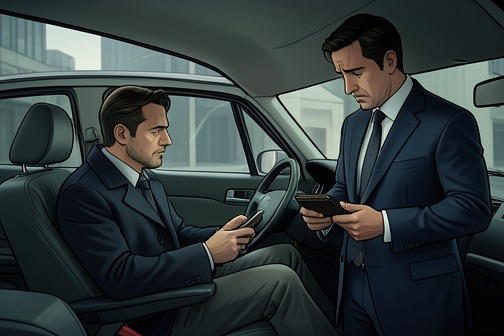
The [Gray Drug Store Robbery](entity:event-recall-event-gray-drug-store-007fb5f47009) is a planned armed theft whose apparent division of labor conceals a second crime: [Kevin](entity:character-recall-character-kevin-a4705189f694) arranges for [Wayne Luft](entity:character-recall-character-wayne-luft-71175832b645) and Roy Bailey to rob the store, then leaves them unconscious and takes the proceeds alone. Its decisive turn comes when the robbery’s supposed planner mistakes the absence of a direct link for safety; a fence’s report about the stolen drugs ultimately leads to a warrant for [Billy Milligan](entity:character-recall-character-billy-milligan-7ed9a40572a9)’s arrest.
## The Delivery and the Plan
On Wednesday, January 8, [Tommy](entity:character-recall-character-tommy-6e67d140947b) was having lunch with [Marlene](entity:character-recall-character-marlene-7bd79d7ae38e) at the Memorial Plaza Shopping Center when he saw a delivery van pull up to the Gray Drug Store. As the delivery man carried a large box inside, Tommy remarked that it was a narcotics delivery and that the pharmacist would be working late. Marlene looked at him curiously. Tommy himself did not know why he had said it. The moment places the robbery’s target in view before its execution, while making Tommy’s knowledge an unsettling fact that neither he nor Marlene can explain at the time.
Kevin, meanwhile, had already planned to rob the store. He recruited Wayne Luft and Roy Bailey, assigning them the work of carrying out the robbery while promising that they would receive most of the money and drugs. Kevin expected 20 percent for arranging the job. The division looked like a practical agreement, but it also positioned Kevin to benefit without being among the men who would enter the store. The contrast between the apparent partners’ roles and Kevin’s actual plan becomes central to the event’s outcome.
## The Armed Robbery
At one-thirty in the morning, Luft and Bailey followed Kevin’s instructions. They forced the pharmacist back into the store at gunpoint, then robbed the safe and the narcotics cabinet. The pharmacist was therefore directly confronted by the two men who carried out the robbery, while Kevin remained outside the store’s immediate scene. That separation would later underpin his belief that investigators could not connect him to the crime.
Afterward, the men drove into the woods. They spray-painted their white Dodge station wagon black and then drove to pick Kevin up. At Bailey’s place, Kevin examined the drugs taken from the cabinet, including Ritalin, Preludin, Demerol, Seconal, Quaalude, and Delaudid. He estimated that the drugs could bring thirty to thirty-five thousand dollars on the street. The transformed car and the inventory of narcotics show the operation moving from the forced entry at the store to the handling and prospective sale of its proceeds.
## The Partnership Turns on Itself
As the night wore on, the men got high. The promised division of spoils did not hold: Luft and Bailey each approached Kevin privately with the suggestion that the two of them should join forces to rob the third partner. Their proposals turned the arrangement’s underlying distrust into an immediate contest over who would control the money and drugs. Kevin, already aware of their fear of him, did not wait for either proposal to become action.
By morning, Bailey and Luft were unconscious. Kevin put the money and drugs into two suitcases and left for [Columbus](entity:location-recall-location-columbus-a9199669be39) alone. He judged that neither man would have the nerve to stand up to him, a confidence reinforced by their repeated talk about how crazy he was. They had discussed his having put his fist through a door and used a Thompson machine gun to shoot up a man’s car. The robbery’s planned partnership thus ends not in a shared division of the proceeds but in Kevin’s unilateral escape with the entire cache.
## A False Sense of Distance
Kevin expected Luft and Bailey to inform the police, but believed a tip would not be enough to implicate him. In his calculation, the pharmacist had seen the two robbers, not Kevin; once Kevin had disposed of the drugs, he assumed there would be nothing to connect him to the store. His apparent protection rested on a distinction between planning a robbery and physically entering the premises. The account exposes the weakness in that distinction: the stolen narcotics could still be traced after the men who took them had left the store.
The next day, Marlene read about the Gray Drug Store robbery in the Lancaster Eagle-Gazette and felt a sinking apprehension. Her reaction followed Tommy’s inexplicable remark about the delivery and the pharmacist’s late shift. She suspected that Tommy had been involved, although he had not understood why he had recognized the shipment. The newspaper report therefore turns the earlier lunch-table exchange into a warning, without resolving the gap between Tommy’s observation and Kevin’s plan.
## The Inquiry and the Warrant
After Tommy told [Arthur](entity:character-recall-character-arthur-2e33b65bbe57) about Marlene’s suspicions and his earlier observation of the drug shipment, Arthur questioned the people inside. Kevin admitted that he had planned the robbery, while maintaining that he had not been there: he said he had arranged it and then robbed the two men who carried it out. He called the operation a sting and believed the police could not tie him to the store. Arthur then asked [Allen](entity:character-recall-character-allen-c770d3fec6b8) and [Ragen](entity:character-recall-character-ragen-7ec95942e9d1) whether there was anything that could connect them to an arrest; as far as they knew, there was not. Kevin’s confession within the group and his confidence about the external evidence thus coexist with the assumption that no usable link exists.
Several days later, that assumption failed. A Columbus fence who owed a narcotics detective a favor reported that Milligan had sold him drugs matching the description of those stolen from the Gray Drug Store. The information reached the Lancaster police department, and a warrant was issued for Billy Milligan’s arrest. The report does not describe an arrest taking place at that moment, but it establishes the consequence of the attempted concealment: Kevin’s decision to take the drugs alone gave investigators a route from the stolen property back to Milligan. The event’s final reversal is not an eyewitness identification of the planner, but the circulation of the narcotics he believed he could dispose of without consequence.
Event 30
Conviction for the Gray Drug Store Robbery and Transfer to Lebanon Prison
The conviction for the Gray Drug Store robbery turned an anticipated probation deal into a prison sentence, and the transfer that followed became an internal turning point as well as a change of institution. [William Stanley Milligan](entity:character-recall-character-william-stanley-mil-d057ecbb22fc) pleaded guilty to robbery and aggravated robbery on March 27, [1975](entity:time-recall-time-1975-d9a6c04f95c4). When the terms of the deal became clear, [Allen](entity:character-recall-character-allen-c770d3fec6b8) faced a two-to-five-year sentence for the Gray robbery, and, on the journey to [Lebanon Correctional Institution](entity:location-recall-location-lebanon-correctional-5a9f367c8e5e), [Ragen](entity:character-recall-character-ragen-7ec95942e9d1) took control where Allen could not continue.
## Background and Competing Accounts
The route to the guilty plea ran through competing accounts of the offenses and uncertainty about how to defend them. [Arthur](entity:character-recall-character-arthur-2e33b65bbe57) wanted to handle the Gray Drug Store case himself and establish that he had not been near the store on the night of the robbery. Allen, by contrast, wanted to testify in his own defense. When roadside-rest-area assaults and robberies also came into discussion, Allen attributed the assaults to Ragen and characterized them as self-defense, while Ragen denied robbing other motorists. The accounts therefore did not settle into a single, shared version of events even within the internal group.
The disagreement over sexual-assault charges offers a related but distinct example of how accounts within the group could clash with victims’ descriptions. Arthur argued that, according to [Adalana](entity:character-recall-character-adalana-613e361d2280)’s story, the three women had cooperated, had not been injured, could have run away, and had received some money back. [Judy Stevenson](entity:character-recall-character-judy-stevenson-d6ee40291eb6) rejected that account, and neither she nor [Gary Schweickart](entity:character-recall-character-gary-schweickart-dca91f26dd6e) accepted the claim that the victims had cooperated. They understood, however, that Arthur was describing Adalana’s perceptions of what had happened, not personal eyewitness knowledge. Arthur said Adalana had been permanently banished from the spot and could not be consulted. This dispute illuminates the limits and conflicts among the personalities’ accounts; it should not be confused with the later plea and conviction for the Gray Drug Store robbery.
## Plea and Unexpected Sentence
The lawyer’s proposed bargain seemed to offer a way to avoid imprisonment. Allen understood that pleading guilty to the Gray robbery would bring shock probation, which he thought meant a period of confinement followed by an unexpectedly early release intended to encourage good behavior. On that understanding, the group agreed to plead guilty in exchange for probation. The decision rested not simply on accepting responsibility but on the expectation that the bargain would keep the sentence from becoming a lengthy prison term.
On March 27, 1975, William Stanley Milligan pleaded guilty to robbery and aggravated robbery and was convicted. Two months later, Allen learned that shock probation had been granted for the roadside-rest assaults, but not for the lesser Gray Drug Store robbery charge. The distinction overturned the group’s expectation: he would have to serve two to five years for the Gray robbery. They were stunned. The outcome exposed how sharply the practical result differed from the deal as Allen had understood it, and it converted a plea intended to secure release into the beginning of a custodial sentence.
The Gray case unfolded amid additional charges. While Milligan awaited trial, two victims identified him as one of the assailants in a roadside-rest-area robbery. On January 27, 1975, the state highway patrol filed additional aggravated-robbery charges concerning motorists in Fairfield and Hocking counties. He was taken back to [Fairfield County Jail](entity:location-recall-location-fairfield-county-jai-246f6a05e143), two years to the day after he had been sent to [Zanesville Youth Camp](entity:location-recall-location-zanesville-youth-cam-db3b25f3ae80). These proceedings formed part of the uncertain legal situation surrounding the plea, but the later conviction and sentence for the Gray robbery remained a distinct consequence: probation on the roadside-rest matters did not remove the prison term attached to the drug-store case.
## Transfer and Change of Control
After forty-five days at [Mansfield Reformatory](entity:location-recall-location-mansfield-reformator-15c6f1b55e60), Allen was placed on a blue [Ohio State](entity:organization-recall-organization-2a796f26ae37) Reformatory bus with fifty-nine other inmates. The prisoners were handcuffed in pairs for the transport to Lebanon Correctional Institution. Allen avoided the armed guard seated in the cage at the front of the bus and feared what the two-to-five-year sentence would mean. The prospect of confinement sharpened as the bus approached the prison, with its barbed-wire fence and watchtowers.
At the receiving entrance, the first of two remote-controlled doors opened and closed behind Allen. Its hiss recalled Chalmer’s hiss, and Allen’s fear overwhelmed him; he did not make it through the second door. When that door opened, Ragen was present instead. He continued with the line of handcuffed prisoners toward the cell block, recognizing that Arthur no longer dominated and that prison would give him control over who came onto and left the spot. The iron door closed behind the prisoners. The transfer thus marks both the physical consequence of the failed probation expectation and a change in the internal balance of power: Allen’s fear gave way to Ragen’s conviction that he would rule during the sentence.
## Significance
The event binds a legal reversal to a shift in the narrative’s point of control. The plea was meant to turn charges into probation, yet the division between the roadside-rest offenses and the Gray robbery left Milligan with a prison term. The institution’s procedures then coincide with an abrupt change among the personalities: Allen falters at the first door, while Ragen proceeds through the second and claims authority. The transition does not erase the legal consequence; it shows how the sentence is experienced through distinct internal responses, with the prison threshold making the change visible.
Event 31
Lee Is Expelled from Consciousness and Disappears
[Lee](entity:character-recall-character-lee-13e62d55242f)’s expulsion from consciousness and disappearance mark the end of the prison’s comic interlude: a personality whose jokes had been treated as a safety valve becomes a danger to himself and others, is barred from the spot, and then vanishes rather than remain in the darkness around it. The sequence turns on a sharp reversal. Lee expects [Ragen](entity:character-recall-character-ragen-7ec95942e9d1) to protect him when a practical joke provokes a violent pursuit, but Ragen initially withholds help at [Arthur](entity:character-recall-character-arthur-2e33b65bbe57)’s urging; later, when Ragen judges the threat too great, he steps in. The eventual banishment is more final than the chase: Lee does not return, and for a long time no one laughs.
## Lee’s Role in Lebanon
Lee first took the spot in Lebanon as a comedian, wit, and practical joker. His humor appeared to fit Arthur’s view that laughter could serve as a safety valve, something most inmates appreciated. The teasing that had once frightened [Danny](entity:character-recall-character-danny-318bc697472f) and angered Ragen became, in Lee’s hands, a routine way of provoking other prisoners. Ragen had heard about [Billy Milligan](entity:character-recall-character-billy-milligan-7ed9a40572a9)’s father, a stand-up comic and master of ceremonies who billed himself as half music and half wit; he decided that Lee, too, had a role to play in prison.
Lee’s comedy did not remain verbal. He altered [Allen](entity:character-recall-character-allen-c770d3fec6b8)’s cigarettes by scraping sulfur from matches, soaking a matchstick in sugar water, rolling it in sulfur, and hiding the result in Allen’s tobacco. When another inmate asked for a cigarette, Lee could hand over one of these loaded cigarettes and hear the victim’s angry shout farther down the corridor or on leaving the cafeteria. Some exploded in Allen’s face. The prank’s mechanics made its humor dependent on a delayed reaction: Lee could be gone before the target discovered what had happened.
On another occasion, after Arthur left the spot following blood work, Lee found himself with nothing to do and turned to mischief in the laboratory. He opened a jar of onion-oil extract, dipped a swab into it, and lined the eyepiece rims of the microscope. These episodes establish the pattern behind the later crisis: Lee treated the institutional setting and its routines as material for jokes, while the consequences fell on people who had not chosen to participate.
## The Flask and the Pursuit
The confrontation developed around Stormy’s illicit liquor business. Stormy told Lee that he made white lightning for sale and offered him a dollar if he would handle a customer in his absence. Lee agreed. Later, Stormy asked Lee to straighten the first-aid cabinet while he took care of something else. As Lee rearranged the supplies, Stormy emptied the alcohol from Flask 11-C, replaced it with water, and lined its rim with bittersweet concentrate. He then left Lee to mind the store.
A prisoner arrived asking for Flask 11-C, saying that he had paid Stormy for two hits and had been told Lee would know where it was. Lee handed it over. The man drank, spat, and gagged at the taste. His anger rapidly became a physical threat: he smashed the flask against a desk, scattering liquid over Lee’s hospital greens, then brandished the jagged glass and threatened to cut him.
Lee backed toward the door and whispered for Ragen. He expected Ragen to come to his defense, but no one appeared. Terrified, Lee ran out of the room and down the hall, with the prisoner in pursuit, shouting for Ragen as he fled. What had begun as Lee’s agreement to help with Stormy’s business had become a chase involving a broken bottle and an attacker who believed he had been cheated. Lee’s usual ability to turn a situation into a joke offered no protection once the other man’s anger became immediate and dangerous.
## Ragen’s Delayed Intervention
Ragen started to take the spot, but Arthur stopped him, arguing that Lee needed to be taught a lesson. Ragen objected that he could not let Lee be cut. Arthur’s answer was prospective: without proper restraint, Lee might become a greater danger in the future. Ragen accepted the suggestion and did not intervene as Lee continued down the hall, frightened and calling for him.
The delay makes the scene a conflict not only between Lee and his pursuer but between protection and discipline inside the group. Arthur treats the danger Lee has brought upon himself as a reason to let the pursuit continue; Ragen recognizes that the threat may become intolerable but initially accepts Arthur’s judgment. When Ragen decides Lee has had enough and the situation has become too dangerous, he bumps Lee off the spot and takes control.
Ragen then uses the hospital environment to stop the pursuer. As the man came alongside a gurney, Ragen spun the bed directly into his path. The man fell with it onto the broken flask and cut his arm. Ragen declared the encounter finished, grabbed him, threw him into the X-ray room, and slammed him against the wall. The intervention ends Lee’s immediate exposure to the attacker, but it does not undo the breach of judgment that Arthur and Ragen will later identify in Lee’s behavior.
## Banishment and Disappearance
Afterward, Arthur asked Ragen what should happen to Lee and left the decision to him. Ragen called Lee an undesirable. Arthur agreed with that assessment, describing a person whose life consisted of practical jokes as useless. The decision converts the earlier argument about restraint into a ruling about Lee’s place in the inner group: his comic behavior is no longer treated as a useful safety valve but as a reason to exclude him.
Lee was banished. Rather than remain in the limbo of darkness around the spot, unable to face an existence without practical jokes and comic behavior, he made himself disappear completely. The ending distinguishes banishment from disappearance: the group bars Lee from taking the spot, while Lee’s response removes him altogether. The change is registered in the silence that follows. For a long time, no one laughed.
The episode therefore closes the role Ragen had once assigned Lee. The comic personality who could make a cigarette flare in another inmate’s face and turn laboratory equipment into a prank becomes, in the group’s judgment, impossible to contain. His disappearance gives that judgment an irreversible consequence and leaves the prison without the laughter that had seemed to make its pressures bearable.
Event 32
Lebanon prison cocaine incident and protective isolation
The [Lebanon prison cocaine incident and protective isolation](entity:event-recall-event-lebanon-11b1b0853633) marks a sharp collision between the inner group’s separate roles and the prison’s control over Milligan’s daily life. A dispute over a hidden package brings [Arthur](entity:character-recall-character-arthur-2e33b65bbe57)’s work in the laboratory into direct physical danger; [Ragen](entity:character-recall-character-ragen-7ec95942e9d1) intervenes, and Arthur’s decision to destroy the cocaine is followed by segregation, the loss of possessions, and a medical crisis. The episode’s consequences extend well beyond the laboratory: Milligan is isolated, treated for an ulcer, and left facing a long delay before parole eligibility.
## The confrontation in the laboratory
Arthur had captured four mice and kept them as pets. He was studying their behavior and drafting a long report about the possibility of grafting mouse skin onto human burn victims. One afternoon, while he was making notes in the laboratory, three inmates entered. One remained outside as a lookout while the other two confronted Arthur and demanded a package they believed he had.
Arthur shook his head and returned to his writing. The two inmates came around the desk and grabbed him. Ragen then took control and pulled both men down, kicking them in turn. When the third inmate came at him with a knife, Ragen broke his wrist. The three attackers fled, one threatening Milligan as he left. The scene makes the division of roles concrete: Arthur remains absorbed in observation and writing, while Ragen answers the physical assault with force.
Afterward, Ragen asked Arthur what had happened. Arthur inferred from the men’s behavior that the package was probably drugs. He searched the laboratory and dispensary, then found a plastic bag containing white powder behind books and papers on a high shelf. Its hiding place, rather than any account of how it got there, is what the narrative establishes; the episode does not identify its owner.
## The cocaine and Arthur’s decision
[Allen](entity:character-recall-character-allen-c770d3fec6b8) asked whether the substance was heroin. Arthur said he would need to test it, weighed the package, and found that it contained half a kilogram. He then discovered that the powder was cocaine. The quantity and concealment turn the inmates’ demand into more than a passing disturbance, but the account leaves the package’s history unresolved.
Arthur tore open the bag and dumped the cocaine down the toilet. Allen observed that someone would be angry, but Arthur returned to his skin-graft report. That abrupt return is central to the episode’s contrast: the violence and the discovery have immediate consequences for the people around him, while Arthur’s attention settles again on his scientific work. Ragen’s intervention has defended Arthur from the attackers; Arthur’s destruction of the drugs, in turn, removes the package that had prompted their confrontation.
## Segregation and medical consequences
On October 4, following the cocaine episode, Milligan was transferred to C block and placed in protective isolation. His medical books and portable television were taken away. Ragen ripped the steel bed rails from the wall and jammed them against the cell door; workmen had to remove the door to get him out. The act shows the isolation not as a neutral change of location but as a confinement that provokes resistance and further restricts Milligan’s access to his surroundings.
Milligan had difficulty sleeping and complained of frequent vomiting and blurred vision. [Dr. Steinberg](entity:character-recall-character-dr-steinberg-9853d7fa1cc0) saw him periodically and administered mild sedatives and antispasmodics. Although Dr. Steinberg considered the problems essentially psychological, on October 13 he ordered that Milligan be taken from Lebanon to [Central Medical Center, Columbus](entity:location-recall-location-central-medical-cent-e6b965b59326), for treatment. After ten days there, staff discovered that Milligan had a peptic ulcer. He was placed on a Sippy ulcer diet and returned to protective isolation at [Lebanon prison](entity:location-recall-location-lebanon-prison-b1cce25a49ed).
While in [Columbus](entity:location-recall-location-columbus-a9199669be39), Allen wrote to the American Civil Liberties Union seeking help, but the appeal produced no result. On returning to Lebanon, Milligan learned that he would not be eligible for parole until [April](entity:character-recall-character-april-dcf0562a76c2) 1977, a year and a half away. The medical transfer therefore offered treatment without ending the confinement or shortening the wait he faced.
## Prison pressure and the episode’s wider significance
The cocaine incident unfolded amid the strains of becoming institutionalized. The account describes the loss of independence and identity, and the pressure to accept suppression, as capable of producing depression and emotional breakdown. For Milligan, this process brought a [mix-up time](entity:expression-recall-expression-mix-up-time-e82c3d7c9db7). His letters to [Marlene](entity:character-recall-character-marlene-7bd79d7ae38e) changed in tone: [Philip](entity:character-recall-character-philip-f89be33d583c) and [Kevin](entity:character-recall-character-kevin-a4705189f694) stopped sending obscenities and pornographic drawings, while the letters increasingly conveyed fear of insanity. [Tommy](entity:character-recall-character-tommy-6e67d140947b) described strange hallucinations and wrote of studying medical books, imagining a future in which he would study medicine after parole.
These changes do not make the cocaine episode a simple explanation for Milligan’s condition; the narrative places it within a wider period of prison strain. What the episode does show in concentrated form is how quickly the competing demands of safety, discipline, and treatment converge. A concealed package leads to a fight; Ragen’s defense and Arthur’s disposal of the cocaine are followed by restrictions imposed on Milligan as a whole. [Protective isolation](entity:state-recall-state-2cc4d9d69a47) removes ordinary possessions and contact, and the ensuing symptoms lead to hospital treatment without releasing him from segregation. The episode thus links the inner group’s actions to an institutional response whose reach extends across Milligan’s body, identity, and prospects for release.
Event 33
Lebanon Prison Hunger Strike
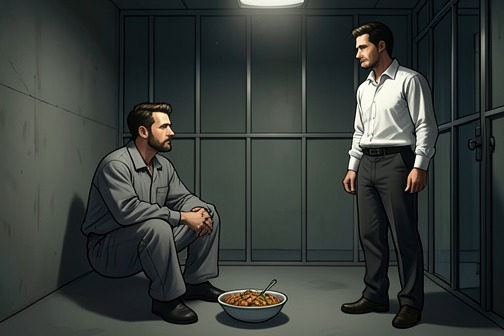
The [Lebanon Prison Hunger Strike](entity:event-recall-event-lebanon-a1bd49103b1f) was a collective inmate protest that became, in the book’s account, both a public appeal and an inward struggle over who could control the body. On January 27, 1976, [Allen](entity:character-recall-character-allen-c770d3fec6b8) joined other prisoners in a hunger strike. Letters sent from the prison convey the participants’ fear, their appeal for outside support, and the divergent response of [Bobby](entity:character-recall-character-bobby-7cd7d55e806b), who continued fasting after the collective action had ended.
## Background and Outbreak
The strike followed a period of confinement and uncertainty for Allen. After spending ten days in [Columbus](entity:location-recall-location-columbus-a9199669be39), he was found to have a peptic ulcer, placed on a Sippy ulcer diet, and returned to protective isolation in Lebanon. He had also learned that he would not be eligible for parole until [April](entity:character-recall-character-april-dcf0562a76c2) 1977, a year and a half away. The account does not identify these conditions as the strike’s cause, but they frame the confined, prolonged wait in which the protest took place.
Christmas and New Year’s passed before the strike began. On January 27, Allen joined the other inmates. The narrative gives no detailed account of the prisoners’ demands or of negotiations with the authorities; its record of the event instead comes chiefly through letters, which show how inmates tried to make the protest legible beyond the prison walls.
## Letters from the Prison
Allen wrote to his brother, [Jim Milligan](entity:character-recall-character-jim-milligan-a6b4474ea307), recalling their childhood and describing a growing despair about life. He apologized for the shame and disruption he believed he had brought on the family, and urged Jim not to squander the future available to him. At the same time, he insisted that he had not committed the offense he was accused of. His letter holds remorse and denial together: he expressed regret about the family’s situation while maintaining his innocence.
A separate letter, attributed in the account to [Tommy](entity:character-recall-character-tommy-6e67d140947b) and addressed to [Marlene](entity:character-recall-character-marlene-7bd79d7ae38e), presents the disturbance as escalating. Tommy reported loud screaming and breaking glass, a fire that was put out, and guards removing inmates. He feared that inmates might take over the prison and described armed guards outside. These details belong to the letter’s report and predictions; the passage does not establish that the anticipated takeover occurred. The letter’s urgency conveys how uncertain the situation seemed to its writer.
Tommy asked Marlene to send the message to the inmates’ hometown radio station, W.H.O.K., so that the prisoners could gain public support for what they wanted. The request makes the letter more than a private message: it was also an attempt to carry the protest beyond the institution’s boundaries. It closes with an expression of affection and a small domestic request that Marlene bring cocoa if circumstances allowed. The signature reads Bill, even though the narrative identifies Tommy as the writer, leaving the difference between the attributed personality and the signed name visible in the document.
## Bobby Continues the Fast
Bobby’s response set him apart from the collective action. When he first heard about the strike, he imagined himself leading it and setting an example for the other prisoners, in the manner of Mahatma Gandhi. The imagined role offered him a kind of authority he otherwise lacked: he had little confidence in his ability to carry out plans and tended to take up other people’s ideas as his own. But when the inmates’ strike ended a week later, Bobby chose not to stop fasting. He lost a great deal of weight.
His persistence turned the protest into a personal risk that the others could no longer treat as only a matter of resolve. One evening, when a guard opened his cell to bring a food tray, Bobby pushed it back and threw the food at the guard. The moment marks a shift from imagined leadership to a direct refusal of food, but the account does not say that Bobby’s action changed the prison’s response or advanced the inmates’ demands.
## Consequences and Significance
[Arthur](entity:character-recall-character-arthur-2e33b65bbe57) and [Ragen](entity:character-recall-character-ragen-7ec95942e9d1) recognized that Bobby’s fantasies had helped them endure the long months in prison, yet they judged that continued fasting was weakening his body. Ragen therefore declared Bobby undesirable. The ending is not a report of the strike’s political success; it is a decision within the group about the cost of one member’s continued protest. Bobby had first pictured fasting as a way to lead others, but after the collective action ended, the same act separated him from them and brought him under the group’s exclusionary rule.
The episode is recorded through different kinds of evidence: Allen’s appeal to his brother, Tommy’s urgent effort to enlist Marlene and a radio station, and the account of Bobby’s prolonged fast. Together, these perspectives distinguish the collective strike from the individual act that outlasted it. The letters also preserve the prison’s competing realities: a protest that sought public attention, a family addressed from confinement, and an internal judgment that survival had to take precedence over Bobby’s imagined example.
Event 34
Billy Milligan’s 1977 parole and release from Lebanon

[Allen](entity:character-recall-character-allen-c770d3fec6b8)’s parole and release from [Lebanon prison](entity:location-recall-location-lebanon-prison-b1cce25a49ed) on [April 25, 1977](entity:time-recall-time-1977-4-25-3abd0cfad442), marked a transition from confinement to the unsettled prospect of life outside. His release followed months of study and strong performance, but freedom did not resolve the inner group’s struggle over authority or instantly settle the practical questions of work, identity, and readjustment. The episode turns on a contrast: a parole letter becomes a paper airplane, while the actual passage through the prison doors remains slow, negotiated, and emotionally fraught.
## Preparation and Parole
At [Arthur](entity:character-recall-character-arthur-2e33b65bbe57)’s urging, Allen applied for courses taught at the prison by instructors from the Shaker Valley branch campus of the community college. He enrolled in English, industrial design, basic math, and industrial advertising. His results were strong: he earned As in the art classes and B-plus grades in English and math. His graphic-arts evaluations described him as exceptional, highly productive, a rapid learner, highly reliable, excellent in his relations with others, and highly motivated. These details give the release a concrete prehistory: Allen had pursued structured study inside prison and received consistently favorable assessments of his work.
On [April](entity:character-recall-character-april-dcf0562a76c2) 5, 1977, Allen appeared before the parole board and learned that he would be released within three weeks. When the release letter finally arrived, his excitement became restless movement. He paced in his cell, then folded the official letter into a paper airplane. The day before his scheduled departure, he passed Captain Leach’s office, whistled to attract attention, and sent the paper airplane sailing past him before walking away with a smile. The gesture turns a formal decision into a small performance of anticipation: the document authorizing release is made to fly, although Allen still has to wait for the appointed day.
## The Last Day Inside
April 25, the final day at Lebanon, seemed to Allen to last indefinitely. He had stayed awake pacing until three in the morning. As departure approached, he raised a concern with Arthur about how decisions would be made once they were outside. Allen argued that he would be the one dealing with people, talking them through difficult situations, and trying to find work; on that basis, he wanted a greater say over who occupied the spot. His request was not simply a claim to status. It was tied to the responsibilities he expected to face beyond the prison walls.
Arthur acknowledged that Allen’s request was reasonable and offered support, but he could not promise [Ragen](entity:character-recall-character-ragen-7ec95942e9d1)’s agreement. Arthur anticipated that Ragen, after two years of absolute control, would be reluctant to yield authority and might intend to keep ruling. The anticipated freedom therefore carried an internal political problem with it: the group was leaving prison, but the authority formed under confinement did not automatically change with the setting. Allen wanted influence because he expected to handle the outside world; Arthur recognized the logic of that claim while warning that Ragen might resist it.
## Leaving Lebanon
Before Allen went out, a guard handed him a new suit. He was surprised by its quality and fit, and the guard explained that his mother had sent it in and that it was one of his own suits. Allen pretended that he remembered it. The exchange makes the clothing both a practical provision for departure and a reminder that his mother had prepared for his return, even though he did not openly acknowledge that familiarity in the moment.
The departure itself did not feel like an uncomplicated release. Allen became increasingly impatient while his mother talked. He told her he was leaving and that she could stay if she wished; after thanking [Dr. Steinberg](entity:character-recall-character-dr-steinberg-9853d7fa1cc0) for what he had done for Billy, he headed for the door, with his mother following. Only as the steel door closed behind him did Allen realize that he had not noticed the second door closing when he entered. The detail marks how thoroughly the prison’s physical routine had structured his experience: the threshold out made him newly aware of the layered doors he had passed through on the way in.
[Kathy](entity:character-recall-character-kathy-cb914b1b0058) brought the car around, but Allen remained angry and sulked in the car. He resented the delay of conversation when he wanted to be moving away from the institution. Then he asked to stop at a bank in Lebanon to cash his prison check rather than cashing it in Lancaster, where people might know that he had just been released from jail. His first hours outside thus involved not only departure but also the management of how that departure would be seen. Freedom began with a practical transaction and a wish to control the story attached to his return.
## The Meaning and Limits of Release
The episode presents parole as a change in legal and physical circumstances, not as an instant resolution of the conditions shaping Allen’s life. Coursework, favorable evaluations, and the parole board’s decision establish a record of preparation; the delay, family irritation, concern over public knowledge, and dispute about internal leadership show how much remained unsettled. The paper airplane briefly converts official permission into play, but the final day’s pacing and impatience restore the weight of waiting and transition.
The wider sequence also shows why release could not be treated as a simple endpoint. In October, when money was difficult and no income was coming from a job, Ragen decided that the young ones needed clothes for winter and food and prepared to rob someone. That later action belongs to a distinct episode, not to the act of parole itself, but it underscores the vulnerability of the outside life Allen had anticipated: work and financial stability were not assured. The release opened a door; it did not guarantee that the needs, conflicts, and pressures waiting beyond it would be easily managed.
Event 35
Carrie Dryer abduction and robbery

[Carrie Dryer](entity:character-recall-character-carrie-dryer-133610000af6)’s abduction and robbery turns a planned theft into an episode of lost time, as [Ragen Vadascovinich](entity:character-recall-character-ragen-vadascovinich-fcdca11a3fe5) sets out to find money but [Adalana](entity:character-recall-character-adalana-613e361d2280) takes control and chooses Carrie as her target. The account traces the consequences for Carrie through her forced withdrawal of money, and for [Ragen](entity:character-recall-character-ragen-7ec95942e9d1) through his bewildered return to awareness without a memory of what happened. Later disagreement about whether the women cooperated makes the gap between an offender’s interpretation and a victim’s circumstances part of the event’s significance.
## Background and the Shift in Control
In the early hours of Friday, October 14, Ragen Vadascovinich realizes that money is urgently needed for food and winter clothing for the young ones, with no income coming from the job. He decides to commit a robbery. Before dawn, he leaves carrying a [Smith & Wesson 9mm pistol](entity:object-recall-object-smith-wesson-9mm-pisto-b934e0833288), having taken Biphetamine and drunk vodka, and jogs west toward the [Ohio State University](entity:location-recall-location-ohio-state-universit-dacbff6636b2) campus. By seven-thirty, after running eleven miles across [Columbus](entity:location-recall-location-columbus-a9199669be39), he reaches the East Belmont parking lot. He has no particular target in mind, only the intention to find someone to rob.
When Ragen sees a young woman park a gold Toyota, he turns away. She is wearing a maroon pants suit and an open buckskin coat, and he does not intend to rob a woman. Adalana, however, has been watching and understands why he came. She also registers his exhaustion and the effects of the drugs and alcohol. As the woman leans across the passenger seat to collect books and papers, Adalana takes the gun from Ragen’s holster and approaches her. The intended robbery has not simply continued according to Ragen’s plan: another personality has redirected it toward a person he had deliberately declined to target.
## Abduction and Encounter
The woman is Carrie Dryer. At first she mistakes the armed stranger for one of her friends, but when she turns and sees that she does not recognize him, she understands the danger. He directs her into the passenger seat, takes her keys, and drives her car away. Carrie notices his appearance closely, including reddish-brown hair, a neat mustache, a mole on his right cheek, and his approximate height and build. Her careful observation becomes one of the few means of preserving information about the person controlling the car.
The drive takes them west along King Avenue and north on Olentangy River Road, away from the city and into the country. The account records him talking to himself as they travel. In a wooded area beyond a roadway barricade, he parks among fields and junked cars. Carrie remembers sharp scissors kept between the seat and the shift console and considers using them, but he notices her attention and produces a switchblade. He removes handcuffs from the car door while leaving them attached to her wrist, and spreads her coat on the ground.
At this point the narrative shifts to Adalana’s experience. She speaks to Carrie about loneliness and a long absence of affection, and attempts intimacy. Carrie’s body spasms, preventing the attempt from proceeding; the account describes Adalana as confused and frightened by the response, then losing the spot. Carrie explains that she has a physical problem and is seeing a gynecologist. The person in control reacts with anger at having chosen someone with whom he cannot proceed. The scene therefore contains not evidence of cooperation, but a kidnapping in which Carrie is under armed control and attempts to manage a dangerous situation.
## Forced Withdrawal and Release
Carrie says she has no money with her. The assailant searches her purse and finds her checkbook, which shows a balance of $460. When she asks to keep enough to live on for the week, he directs her to leave $60 and write a check for $400. Her effort to protect her family is explicit in her plea that they not be bothered and that he take her money instead. The exchange is not a voluntary financial arrangement: the account places it within an abduction enforced by a weapon and threats.
At an Ohio National Bank drive-in window at 770 West Broad Street, the gun remains concealed between them but pointed at Carrie. She presents her identification with the check. She considers writing a request for help on its reverse, but he warns her not to add anything. The teller cashes the check. He then tells Carrie that she can report a robbery and stop payment, shifting the financial loss onto the bank. This instruction does not undo the coercion that secured the money; it is part of his attempt to manage the consequences of the forced transaction.
As the car reaches the intersection of Broad and High streets, heavy traffic brings it to a halt. He tells Carrie to take over driving and threatens that someone will harm her or her family if she gives police his description. He gets out and quickly disappears into the crowd. Carrie is left with the car and the immediate burden of deciding what to report under the threat she has just received.
## Lost Time and Disputed Accounts
Ragen expects to find himself back in the Ohio State University parking lot, but instead becomes aware of himself walking past Lazarus’ Department Store in the middle of the afternoon. He cannot account for the intervening hours. Finding a roll of money in his pocket, he concludes that he must have robbed someone, though he does not remember doing so. He takes an eastbound bus to Reynoldsburg. The robbery thus has a second consequence beyond the loss imposed on Carrie: it demonstrates the division between Ragen’s intention and Adalana’s actions, while Ragen remains without a continuous memory of the event.
The later discussion of trial strategy gives this split an ethical and evidentiary consequence. [Arthur](entity:character-recall-character-arthur-2e33b65bbe57) argues that, according to Adalana’s story, the three women cooperated, were not injured, had opportunities to escape, and received some money back so that insurance payments would leave them ahead. [Judy Stevenson](entity:character-recall-character-judy-stevenson-d6ee40291eb6) and [Gary Schweickart](entity:character-recall-character-gary-schweickart-dca91f26dd6e) do not accept that account. They understand that Arthur is describing Adalana’s perception of what happened, rather than a version confirmed by the women. Arthur says Adalana cannot be consulted because she has been banished from the spot. The dispute is especially important when set beside Carrie’s account: she was abducted, controlled at gunpoint, compelled to cash a check, and threatened against reporting the assailant’s description. The event’s later retelling therefore does not make the question of consent or cooperation neutral; it reveals how sharply the personalities’ account of an encounter can diverge from the circumstances the victim describes.
Event 36
Polly Newton abduction and attempted rape

Polly Newton’s abduction and attempted rape began as [Ragen](entity:character-recall-character-ragen-7ec95942e9d1)’s third armed search for money and became an episode in which [Adalana](entity:character-recall-character-adalana-613e361d2280) commandeered his time. The sequence exposes the distance between Ragen’s stated purpose and the danger Polly faced, while showing how control of the shared consciousness could alter the course of an unfolding crime.
## The Abduction and Change of Control
In the early hours of October 26, Ragen set out across [Columbus](entity:location-recall-location-columbus-a9199669be39) toward [Ohio State University](entity:location-recall-location-ohio-state-universit-dacbff6636b2), believing he had to obtain money for the children. At an intersection he noticed a police cruiser and briefly considered approaching the officers, but they drove away when the light changed. On East Woodruff Avenue, he saw Polly Newton arriving in a blue Corvette at a brick apartment building marked Gemini. Desperate for money, he followed her toward the rear parking area and ordered her to take him somewhere, displaying guns after getting into the passenger seat.
The encounter changed when Adalana pushed Ragen away from the consciousness’s foreground. She feared [Arthur](entity:character-recall-character-arthur-2e33b65bbe57) would discover that she had been taking Ragen’s time, and reasoned that if Ragen were caught, his visible weapons and intention to rob someone would make him appear responsible for the whole episode. Adalana then identified the driver as Polly Newton and directed her to stop for gasoline. She paid for five gallons, told Polly to take Interstate 71 north, and continued with her to Worthington, where they stopped at a Friendly ice cream store. What had begun as an armed demand for transportation was now being directed by a different personality, while Polly remained under the control of the person carrying the guns.
## The Attempt and Its Abrupt Reversal
On a deserted country road, Adalana directed Polly across a ditch and through an overgrown field near a pond, then said she wanted to wait before being dropped off. She next told Polly that she intended to have sex with her. Polly began to cry. Adalana claimed that she would not hurt her, but also made clear that Polly had no choice. The contradiction was central to the episode: assurances of gentleness did not make the encounter consensual or remove the threat created by the guns and the abduction.
As the assault began, Polly pleaded with Adalana not to rape her. The word brought to mind what had happened to [David](entity:character-recall-character-david-a0465b0b2f3d), [Danny](entity:character-recall-character-danny-318bc697472f), and Billy. Adalana stopped, moved away, and spoke aloud to Bill, asking what was wrong with him and urging him to get himself together. The attempted rape ended at that point. The sudden reversal did not undo Polly’s captivity, but it interrupted the sexual assault and exposed the conflict between Adalana’s conduct and the memories she had just recalled.
Adalana then put the towels back in the car and tried to fire one of the guns at a beer bottle in the pond, missing. As they drove away, she fired twice toward a telephone pole and searched Polly’s handbag for money, explaining that she needed about two hundred dollars for someone else. She directed Polly through a series of attempts to cash checks: a Kroger office cashed one for $150, while the State Savings Bank and several drive-in bank windows refused. At the Union store at Graceland Shopping Center, Polly was able to cash another check for $50. Adalana suggested that they could cash one more and that Polly could keep the money, but this offer came within an encounter Polly had not freely chosen and did not change its coercive character.
The episode shifted briefly into an apparently personal gesture when Adalana began writing Polly a poem on a check. She then refused to give it to her, concerned that police might match the handwriting, destroyed it, and tore a page from Polly’s address book. Adalana kept the page and threatened to send it to the Weathermen group if Polly reported her or gave the police an accurate description, saying Polly’s family would be killed. When Adalana noticed a police car passing, she slipped away. The threat turned a stolen address-book page into leverage against both Polly and her family; the passing patrol car, rather than any resolution between the two women, marked the abrupt end of Adalana’s control of the scene.
## Disputed Testimony and the Larger Case
The Polly Newton episode later entered a larger dispute over what the women had experienced and how the events should be characterized. When Arthur discussed trial strategy, he said Ragen would accept punishment for three robberies but would not plead guilty to rape, even though four of the ten indictment counts included rape. Arthur relied on what he called Adalana’s account: that each woman had cooperated, none had been injured, each could have escaped, and each had received some of the money back so she would benefit from an insurance payment. These were claims about the women’s conduct, not evidence that Polly had freely agreed to the abduction or the sexual threat; the account of her episode instead records that she was taken at gunpoint and told she had no choice.
Judy rejected Arthur’s version, and neither she nor Gary accepted the suggestion that the victims had cooperated. They understood, however, that Arthur was describing Adalana’s perception of events. When Gary asked whether they could speak with her, Arthur said she had been banished from [The spot](entity:expression-recall-expression-the-spot-63eb3864518a) forever because of what she had done, with no further exceptions. The exchange left a consequential gap: the personality whose viewpoint Arthur invoked could not be questioned, while the victims’ accounts contradicted his interpretation. In the wider case, the episode thus stands not only as an interrupted assault and coerced robbery, but also as part of a contested effort to distinguish an offender’s account of apparent cooperation from the circumstances of threat and control in which Polly was placed.
## Public Narrative and Institutional Consequences
The episode also belonged to a larger public and legal controversy over the offenses attributed to [William Stanley Milligan](entity:character-recall-character-william-stanley-mil-d057ecbb22fc) and the conditions of his treatment. On March 30, the Columbus Dispatch reported that Milligan, described in the headline as a rapist, could leave the [Athens Mental Health Center](entity:location-recall-location-athens-mental-health-c612e89b1dc0) without supervision and take weekend visits. The article cited concern from Athens’s police chief and [Judge Jay Flowers](entity:character-recall-character-judge-jay-flowers-05c6b41465c8); follow-up coverage repeatedly criticized his freedom to leave. These reports presented the October attacks as a public-safety issue and turned the question of his treatment into a dispute involving the hospital, local officials, and the press.
The coverage intensified after an [April](entity:character-recall-character-april-dcf0562a76c2) 7 headline reported that Milligan had been placed in a security ward following a drug overdose the newspaper characterized as faked. Its criticism extended to the Athens Mental Health Center and [Dr. David Caul](entity:character-recall-character-dr-david-caul-122ae399791f), who received threatening calls. Superintendent Sue Foster later said that press attention had compromised treatment, while [Mike Stinziano](entity:character-recall-character-mike-stinziano-a52e991ab73a) objected to blaming reporters for publishing the facts. After Stinziano and [Claire “Buzz” Ball, Jr.](entity:character-recall-character-claire-buzz-ball-jr-3f9f8e103d3a) sought an outside evaluation, [Cornelia Wilbur](entity:character-recall-character-cornelia-wilbur-8f8ac694f977) reviewed the program and praised Caul’s treatment, noting that setbacks could occur with multiple personalities. The controversy formed part of the political climate surrounding [Ohio Senate Bill 297](entity:rule-recall-rule-ohio-senate-bill-297-b82a7ee88387), passed in [1980](entity:time-recall-time-1980-87083d7775fd) after legislators considered changes to the law governing people found not guilty by reason of insanity. The available account connects the legislation to public outcry over Milligan’s situation, not to Polly Newton’s episode alone; the case’s wider significance lay in how accounts of the attacks became entangled with arguments about treatment, liberty, and public risk.
Event 37
Milligan’s arrest after David’s call to police
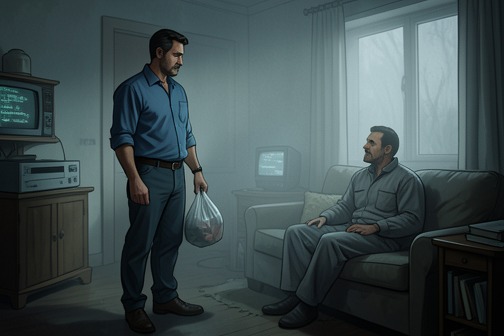
The arrest following [David](entity:character-recall-character-david-a0465b0b2f3d)’s call to police is the moment the concealed crisis at the [Channingway Apartments](entity:location-recall-location-channingway-apartmen-3a3c32549bf7) becomes an external emergency. David recognizes that [Ragen](entity:character-recall-character-ragen-7ec95942e9d1)’s guns are no longer secured, remembers [Arthur](entity:character-recall-character-arthur-2e33b65bbe57)’s instruction to seek help from the police if something is wrong, and makes a secret call. When officers arrive, [Danny](entity:character-recall-character-danny-318bc697472f) is taken into custody in the apartment’s fog-bound confusion, unaware of the events that brought them there. The scene links the inner group’s disordered actions to their immediate consequences in the outside world.
## The discovery and the call
The sequence begins after a relatively calm evening. [Tommy](entity:character-recall-character-tommy-6e67d140947b) has dinner with [Dorothy Moore](entity:character-recall-character-dorothy-moore-88d5e8025dad) and [Del Moore](entity:character-recall-character-del-moore-e2ff0346185d), then makes a quiet visit with [Kathy](entity:character-recall-character-kathy-cb914b1b0058). He waits in the car for [Allen](entity:character-recall-character-allen-c770d3fec6b8) to drive him back to the Channingway Apartments. Allen returns to the apartment and goes to bed; David then wakes feeling that something is wrong, though he cannot initially identify the cause.
As David wanders through the apartment, he tries to reach Arthur, Allen, and Ragen. No one answers, and he senses that the personalities are in conflict with one another. The decisive clue is material and specific: a plastic bag of bullets from Ragen’s gun lies beneath the couch, while the gun itself is under a red chair. David knows this arrangement is alarming because Ragen ordinarily keeps his weapons locked away. The gun’s presence outside its usual security is not merely a hidden sign of trouble; it is what allows David to recognize that the situation has crossed a threshold.
David recalls Arthur’s standing advice that, if trouble arose and he could not reach anyone for help, he should call the police. Arthur had written the telephone number on a piece of paper beside the telephone. David uses that instruction, identifies the Old Livingston Avenue address at the Channingway Apartments, and asks that the caller not be identified. He cannot explain the whole situation, but he can communicate that something is seriously wrong. The call is an act of help-seeking rather than an attempt to take control of the apartment’s wider crisis.
## The arrival and arrest
After making the call, David leaves the spot. Danny comes forward and begins painting, then sits in the living room to watch television. The knock at the door surprises him. Through the peephole he sees a man holding a Domino’s pizza box, and opens the door to explain that no pizza was ordered. The scene’s mistaken expectation gives way quickly to force: while Danny is trying to help the man who is looking for Billy, the man pushes him against a wall and holds a gun to his head.
Police officers enter through the door with guns. A woman tells Danny that he has the right to remain silent; Danny does so. Two men then put him into a car and drive him slowly through the thick fog to the police station. The account offers no indication that Danny understands why the officers have come or what David has reported. The arrest therefore separates the person physically present at the door from the knowledge and intentions that led to the call: David recognized the danger, while Danny experiences the police response as inexplicable.
## Context of the danger
The weapons David finds matter against the earlier account of Ragen’s conduct. With no money coming in from work and concern that the young ones would need food and clothes, Ragen decides to commit robbery. Before dawn on Friday, October 14, he puts on a shoulder holster and several layers of clothing, takes a [Smith & Wesson 9mm pistol](entity:object-recall-object-smith-wesson-9mm-pisto-b934e0833288), uses stimulants and vodka, and jogs west toward the [Ohio State University](entity:location-recall-location-ohio-state-universit-dacbff6636b2) campus. The arrest episode does not itself narrate those earlier actions, but the gun and ammunition in the apartment connect the domestic emergency to the dangerous conduct that has preceded it.
The wider narrative also establishes that accounts of the offenses are disputed within the group. Arthur presents [Adalana](entity:character-recall-character-adalana-613e361d2280)’s account as one in which the women cooperated, but Judy rejects that version, and Arthur and Gary recognize that he is describing Adalana’s perceptions rather than independently verified events. Arthur says Adalana has been banished from the spot and will not be allowed back. That conflict makes the discovery of the gun especially consequential: the group’s disagreement about what happened does not make the physical evidence David sees less alarming, and David acts on the warning available to him rather than resolving the competing accounts.
## Jail and consequence
Danny remains in a jail cell without knowing why he has been arrested. David later comes to watch cockroaches running in circles, and expects Arthur, Ragen, or Allen to arrive and get Danny out. David believes Danny has not behaved badly and has done nothing wrong. His expectation underscores the distance between the group’s internal understanding and the legal process now acting upon them: David has called the police because he thinks something is wrong, yet Danny is the one taken away and held.
The event’s central reversal is therefore not simply that the police arrive. A protective rule supplied by Arthur prompts David to disclose the apartment’s danger, but the intervention does not immediately bring David an explanation or Danny an understanding of his arrest. The call makes the crisis visible to outsiders while leaving the personalities divided over what has happened. The fog outside the apartment and on the slow drive to the station accompanies a more consequential obscurity: Danny does not know why he is in custody, and David expects an internal authority figure to restore the order that the police have disrupted.
Event 38
Milligan’s March 1979 recommitment
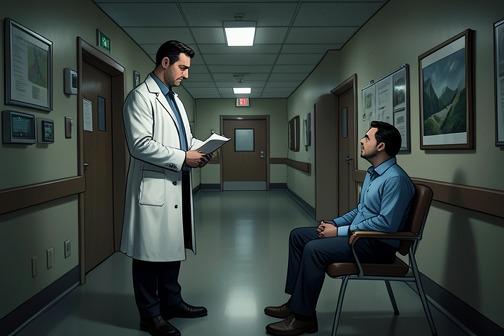
[Billy Milligan](entity:character-recall-character-billy-milligan-7ed9a40572a9)’s March [1979](entity:time-recall-time-1979-e4dd6858fb61) recommitment extended his stay at the [Athens Mental Health Center](entity:location-recall-location-athens-mental-health-c612e89b1dc0) for another six months, placing treatment and legal jeopardy on the same timeline. Although his earlier trial had ended with findings of not guilty by reason of insanity on most counts, that ruling had not erased other convictions or settled whether he could safely be discharged. The review therefore marked not a release from the criminal system but a new interval inside it, with his future dependent on both clinical recovery and challenges to the pleas he had entered years earlier.
## Background and the Questions Before the Law
The recommitment followed a long dispute over which legal question a psychiatric diagnosis could answer. In January [1978](entity:time-recall-time-1978-9747f157067f), the public defenders’ office funded a psychological evaluation by clinical psychologist Dr. [Willis C. Driscoll](entity:character-recall-character-willis-c-driscoll-2c641a575251). Tests administered on January 8 and 13 yielded an IQ score of 68, which Dr. Driscoll attributed in part to depression, and his report diagnosed acute schizophrenia. He concluded that Billy Milligan was then unable to understand events or assist in his defense and urged hospitalization. That assessment concerned Milligan’s ability to participate in the proceedings at that time; it was not itself a determination of his responsibility for the earlier offenses.
On January 19, [Judy Stevenson](entity:character-recall-character-judy-stevenson-d6ee40291eb6) and [Gary Schweickart](entity:character-recall-character-gary-schweickart-dca91f26dd6e) presented the report to [Judge Jay Flowers](entity:character-recall-character-judge-jay-flowers-05c6b41465c8) in support of their claim that Milligan could not assist in his defense. The judge ordered an examination by the forensic psychiatry unit of [Southwest Community Mental Health Center](entity:organization-recall-organization-f5971c42288a). The defense worried that information obtained in the examination might be used by the prosecution. After a dispute over confidentiality, the parties agreed that prosecutors could question Milligan about incriminating statements made to the court-appointed examiners only if he testified in his own defense. This earlier argument over competence and privileged information formed part of the legal background to the later review, but it did not predetermine the separate question of what should happen after the trial.
At trial, Judge Flowers dismissed the first rape count for lack of corroborating evidence and a similar modus operandi. On the remaining counts, the medical evidence was stipulated: the doctors testified that Milligan had been mentally ill at the time of the offenses, could not distinguish right from wrong, and could not refrain from the acts. The court found him not guilty by reason of insanity on counts two through ten. That outcome addressed criminal responsibility for those charges; it did not cancel his separate conviction for the Gray Drug Store robbery or guarantee that discharge from a hospital would leave him free.
## The March Review and Its Immediate Result
The day before the review, on February 28, Milligan called his attorney and asked that his mother not be present at the hearing the following morning. On March 1, 1979, after the review, he was recommitted to the Athens Mental Health Center for another six months. The decision maintained his treatment in Athens, but the account does not present it as a resolution of the questions raised by his earlier pleas or his future under parole and probation rules.
The consequences of discharge made the order feel less like a pause than a conditional reprieve. Those working with Milligan knew that, once he was considered cured and released, the [Adult Parole Authority](entity:organization-recall-organization-adult-parole-aut-6a791a656eac) of Fairfield County could arrest him for violating parole and return him to prison to serve the remaining three years of his two-to-five-year sentence for the Gray Drug Store robbery. He also faced the possibility of being declared a probation violator and required to serve a consecutive sentence of six to twenty-five years for the roadside-rest assaults. Continued hospitalization thus protected him from immediate return to prison without removing the prospect that recovery and discharge could bring that prospect closer.
## The Challenge to His Earlier Pleas
While Milligan remained at the hospital, his Athens attorneys, L. [Alan Goldsberry](entity:character-recall-character-alan-goldsberry-493fd4a214c3) and [Steve Thompson](entity:character-recall-character-steve-thompson-d712a4dac2d3), filed motions in [Fairfield County Court of Common Pleas](entity:organization-recall-organization-13d8c38db811) to have his guilty pleas dismissed. They argued that when he pleaded guilty in [1975](entity:time-recall-time-1975-d9a6c04f95c4), the court did not know he had multiple personality and that, because he had been insane and unable to assist in his defense, leaving the pleas in place would amount to manifest injustice. Their argument did not simply repeat the insanity finding from the later trial. It challenged whether the earlier pleas could stand given Milligan’s condition and his inability, as the attorneys described it, to participate meaningfully in his defense at the time.
The motions gave the six-month period a practical and emotional purpose beyond treatment: the possibility that a judge in Lancaster might vacate the guilty plea, allowing Milligan to be free after he was cured. The book states that he lived on this hope. It remained a hope rather than an outcome; the March recommitment did not itself overturn the pleas, settle the parole issue, or promise release.
## Hope, Treatment, and the Limits of the Order
Milligan’s life during the period was not defined solely by hearings and sentences. He was delighted to learn that his sister [Kathy](entity:character-recall-character-kathy-cb914b1b0058) and her longtime sweetheart, Rob Baumgardt, planned to marry in the fall, and he began planning for the wedding. As spring appeared on the hospital grounds, he felt that the worst period might be passing. During weekend leave at Kathy’s house, he started painting a mural on her wall. These ordinary plans sat beside the uncertainty of his legal position: he could imagine a future while the conditions of discharge remained unsettled.
The recommitment’s significance lies in that unresolved overlap. A psychiatric finding about Milligan’s condition, a verdict about his mental state when offenses occurred, a decision about his ability to assist in court, and the institutional decision to continue hospitalization were related but not interchangeable. The six-month order kept him at the Athens Mental Health Center; the pending motions offered a possible route out of the convictions that threatened him after treatment. Neither the order nor the hope of success removed the other pressure. For Milligan, getting better could open the way forward, yet discharge without legal relief could also return him to prison.
Event 39
The 1979 controversy over Milligan’s unsupervised furloughs

[The 1979 controversy over Milligan’s unsupervised furloughs](entity:event-recall-event-the-1979-controversy-ov-5f03b3b46076) began when public attention shifted from [Billy Milligan](entity:character-recall-character-billy-milligan-7ed9a40572a9)’s treatment to the possibility that he could leave the [Athens Mental Health Center](entity:location-recall-location-athens-mental-health-c612e89b1dc0) without supervision. A newspaper campaign framed those leaves as a danger to the public; community concern and political pressure followed. The resulting restrictions damaged Milligan’s trust in the treatment process, unsettled the hospital’s therapeutic arrangements, and helped drive a wider debate over Ohio’s rules for people found not guilty by reason of insanity.
## Treatment and the opening to public scrutiny
After Milligan’s trial, [Dr. David Caul](entity:character-recall-character-dr-david-caul-122ae399791f) presented his stay at Athens as the beginning of a different life: Milligan was no longer to be treated as a criminal, but was expected to work toward getting well and bringing himself together. That therapeutic outlook included privileges that would later become the focus of the controversy. By March [1979](entity:time-recall-time-1979-e4dd6858fb61), Milligan was permitted to leave hospital grounds and take weekend visits with relatives. The arrangement made a practical and symbolic distinction between treatment in an open setting and confinement under constant observation.
The contrast with Milligan’s earlier admission was substantial. At [Harding Hospital](entity:location-recall-location-harding-hospital-cb8626b12e1f) he had been placed in [Wakefield Cottage](entity:location-recall-location-wakefield-cottage-30b4060d2291), a locked unit for difficult patients needing constant observation, with special-care rooms watched through peepholes. Athens represented a less restrictive environment and a chance to make progress outside that form of close supervision. The later press coverage would largely recast this change in terms of public risk, rather than as part of a treatment plan.
## Headlines, alarm, and political pressure
On March 30, while Milligan was back on the ward, a fellow patient handed him the afternoon paper. The front page announced that a doctor said a rapist was being allowed to roam from the center. The report described Milligan as able to leave the hospital grounds and visit relatives on weekends, and quoted Athens police chief Ted Jones describing community concern. It also quoted [Judge Jay Flowers](entity:character-recall-character-judge-jay-flowers-05c6b41465c8), who had found Milligan not guilty, as opposing his freedom to roam at will. The story ended by recalling the terror associated with the late-1977 attacks near [Ohio State University](entity:location-recall-location-ohio-state-universit-dacbff6636b2).
The [Columbus](entity:location-recall-location-columbus-a9199669be39) Dispatch followed with almost daily articles criticizing the arrangement. An [April](entity:character-recall-character-april-dcf0562a76c2) 5 editorial called for legislation to protect society. Alarm spread beyond the paper: readers in Columbus and parents of students at [Ohio University](entity:location-recall-location-ohio-university-c9cba7ad608d) called university president Charles Ping, who sought clarification from the hospital. The controversy thus grew through a chain of amplification, from a report about specific leave privileges to broader public and political demands about the safety of the community.
Two legislators, [Claire “Buzz” Ball, Jr.](entity:character-recall-character-claire-buzz-ball-jr-3f9f8e103d3a), of Athens and [Mike Stinziano](entity:character-recall-character-mike-stinziano-a52e991ab73a) of Columbus, criticized the hospital and Dr. Caul and pressed for hearings and changes to the laws governing not-guilty-by-reason-of-insanity cases. Meanwhile, staff members hostile to Milligan’s ability to earn money from his paintings leaked reports about his finances to several newspapers. When he used money from the sale of [The Grace of Cathleen](entity:object-recall-object-the-grace-of-cathleen-d4573a40c498) to buy a compact Mazda to transport his paintings, that purchase also became headline material. The focus had widened from the conditions of his leaves to his spending and the hospital’s broader handling of him.
## Restrictions and the cost to treatment
Under mounting attacks, Dr. Caul and Superintendent Sue Foster asked Milligan to give up his furloughs and his permission to leave the grounds unattended until the uproar subsided. Milligan had followed hospital rules, kept his word, and broken no laws since his illness had been diagnosed and treated. The withdrawal of privileges nevertheless made him feel that compliance had not protected him from punishment. [The Teacher](entity:character-recall-character-the-teacher-f37b54f9229c), who had been occupying the spot, gave up control and left it; the political dispute had registered inside the system of personalities as a personal defeat.
The pressure did not end with the March coverage. On April 7, the Dispatch declared that Milligan was in a security ward after a supposedly faked drug overdose. Its attacks now reached the Athens Mental Health Center and Dr. Caul as well as Milligan. Caul received abusive calls and death threats, and began checking around his car before getting in; he kept a loaded revolver beside his bed. When Ball and Stinziano sought an outside evaluation of the treatment, [Dr. Cornelia Wilbur](entity:character-recall-character-dr-cornelia-wilbur-53c5b32908c4) reviewed the program and praised Caul’s approach. She explained that setbacks could occur in cases of multiple personalities, and her recommendation supported keeping Milligan in Athens.
The hospital’s internal response also tightened control. Staff on the Admissions and Intensive Treatment ward, distressed by publicity and Milligan’s reaction to it, demanded changes to his plan and threatened to strike. They sought day-to-day authority for the staff team and a narrower role for Caul. A written contract restricted Milligan’s access to objects, visitors, telephone calls, money, and painting supplies; even painting was to take place only under supervision. Privileges would return in stages only after two weeks of compliance. These conditions made the consequences concrete: a dispute over unsupervised leave reshaped ordinary contact, creative work, and treatment authority inside the ward.
## Institutional and legal aftermath
The controversy formed part of the pressure surrounding Milligan’s eventual removal from Athens. After a hearing, he was handcuffed and belt-shackled and taken 180 miles to [Lima State Hospital](entity:location-recall-location-lima-state-hospital-9bcc092ced20) for the Criminally Insane on October 4, 1979, with no time to say goodbye except to Dr. Caul. The transfer marked a sharp reversal from the promise of an open treatment setting. It also left Milligan hoping that he could return to Athens and resume treatment with Caul.
The dispute had consequences beyond Milligan’s placement. During 1979, Ohio legislators considered changes to the laws governing people found not guilty by reason of insanity. The resulting Senate Bill 297 gave county prosecutors the right to demand a hearing before a patient could be transferred to a less restrictive setting, lengthened the review interval from 90 to 180 days, and opened reviews to the public, press, and television. It became known to some as the Columbus Dispatch law or the Milligan law. Judge Flowers later said the law had been passed because of Billy. The controversy therefore became more than a fight over one patient’s furloughs: it helped transform public fear, institutional conflict, and press scrutiny into a lasting change in the rules governing treatment and release.
Event 40
Milligan’s transfer to Ward 5
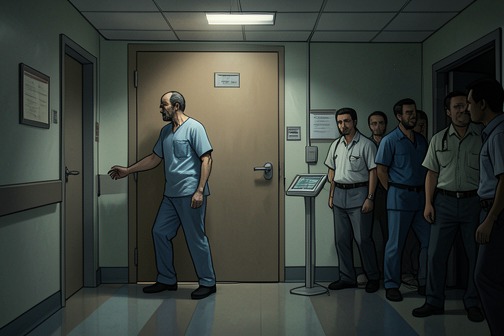
[Milligan’s transfer to Ward 5](entity:event-recall-event-milligan-s-transfer-to-0e55cfc7f8a0), the men’s locked ward, turned a disputed medication scare into a sharp confrontation between institutional security and the internal system the hospital was treating. Milligan did not understand why the transfer had been ordered and knew nothing of the alleged overdose or the hospital trip. When staff came to move him, [Ragen](entity:character-recall-character-ragen-7ec95942e9d1) resisted; after the transfer, the other personalities surfaced amid the disruption of the locked ward. [Dr. David Caul](entity:character-recall-character-dr-david-caul-122ae399791f)’s intervention the following day brought partial fusion, but not a return to wholeness: [Arthur](entity:character-recall-character-arthur-2e33b65bbe57) and Ragen remained apart, leaving Billy frightened and incomplete.
## Background and Immediate Trigger
The transfer came against a background of disagreement over whether the hospital should recognize Milligan’s distinct personalities. Earlier, [Allen](entity:character-recall-character-allen-c770d3fec6b8) had explained that everyone answered to Billy’s name to keep the secret from getting out, even though Billy had been asleep for a long time. Staff had taken a different approach: a nursing plan instructed them to remind Milligan that his name was Billy when he referred to himself as another personality. The contrast matters to the Ward 5 episode. The institution’s ordinary language treated the patient as one person, while the crisis played out through personalities with different knowledge, fears, and responses.
The immediate trigger was a possible overdose. [Danny](entity:character-recall-character-danny-318bc697472f) appeared groggy and said he thought he had taken too many pills; a few minutes later staff found him in bed and saw spilled pills beside a bottle. He denied taking any. The hospital arranged to have Milligan checked at O’Bleness Memorial Hospital, explaining that staff could not know how much medication he might have saved from his leave. At the hospital, Ragen took control when he believed [Mike Rupe](entity:character-recall-character-mike-rupe-52e407264d99) was going to hurt [David](entity:character-recall-character-david-a0465b0b2f3d). He grappled with Rupe, then both men let go and moved away. Dr. David Caul directed staff to proceed with the assessment; Ragen disputed the need for it, but Danny was taken to hospital. After Danny vomited, the doctor had it checked, and no signs of medication were found. The assessment therefore did not confirm the suspected overdose, but it did not prevent the next day’s transfer decision.
## Resistance and Transfer
The following day, the therapy team told Billy he would be moved to Ward 5. He did not understand the decision because he knew nothing of the preceding events. When male attendants began entering his room, Ragen took the spot, broke a drinking glass against the wall, and warned them not to approach. The gesture made the disagreement physical: the team saw a security matter requiring a move, while Ragen understood the action as a betrayal of Billy.
Dr. David Caul came to the doorway and spoke with Ragen. Ragen accused the staff of having betrayed Billy and rejected Ward 5, while Caul said the decision was no longer his to change. Guards then restrained Ragen and carried out the transfer. During the restraint, Arthur tried to prevent the use of Thorazine, recalling [Dr. Cornelia Wilbur](entity:character-recall-character-dr-cornelia-wilbur-53c5b32908c4)’s warning that antipsychotic drugs could worsen splitting in people with multiple personalities. The medication was given despite his objection. The episode thus placed a treatment concern and a security response in direct conflict: the staff sought to manage immediate danger, while Arthur’s resistance reflected a fear that the intervention itself would intensify the fragmentation they were meant to treat.
## Ward 5 and the Internal Crisis
The locked ward was not simply a new location. Its unfamiliar attendants, restricted room, and security procedures confronted personalities who had not agreed to the move and did not share the same information. Once Ragen was stopped, the spot passed among them. [Samuel](entity:character-recall-character-samuel-8ae6e83fd652) prayed in distress; [Philip](entity:character-recall-character-philip-f89be33d583c) cursed; David felt pain; [Christene](entity:character-recall-character-christene-481e5bbf56fb) wept; [Adalana](entity:character-recall-character-adalana-613e361d2280) felt the tears on her face. Other personalities reacted in their own ways: [Tommy](entity:character-recall-character-tommy-6e67d140947b) tested the door, Allen called for his lawyer, and [Jason](entity:character-recall-character-jason-907de5833184) threw a tantrum. Arthur could no longer control the personalities he regarded as undesirables. The scene shows the limits of his internal authority under pressure as clearly as the transfer shows the limits of Billy’s understanding of events happening to him.
From the observation window, Ward 5 attendants saw Milligan move between voices and behaviors, and concluded that they were witnessing a raving lunatic. Their view contrasted with the treatment team’s earlier decision to address him as Billy rather than discuss the other names. In one setting, the multiplicity was institutionally suppressed; in the other, it became visible as an apparent crisis. The transfer therefore altered not only where Milligan was held but how his behavior was interpreted by the people responsible for his care.
## Aftermath and Significance
The next day, Dr. David Caul administered Amytal, which the narrative identifies as having a calming and restorative effect. Billy felt himself coming together into partial fusion. The improvement had a limit: Arthur and Ragen remained apart, as they had before the trial, and Billy experienced himself as unfused, frightened, and lost. He asked to return to the open ward, but was told that staff there were now afraid of him. The transfer’s consequence was therefore not a simple change of accommodation: it deepened the divide between the open treatment setting he wanted and the locked setting the institution considered necessary.
The episode also sits within a larger conflict over diagnosis and treatment. The multiple-personality diagnosis had earlier been kept from the public, and the court later formally found Milligan mentally ill, identified the condition as multiple personality, and ordered hospitalization and treatment consistent with that diagnosis. Those later findings do not erase the immediate contradiction of Ward 5: a diagnosis could be formally recognized while a particular crisis was still managed through containment, medication, and the suppression of the personalities’ names. The transfer makes that contradiction concrete. It is both an institutional decision about risk and a rupture in the fragile internal arrangements that had allowed Milligan’s personalities to coexist.
Event 41
Attempted shooting of Milligan near Athens hospital

The attempted shooting of Milligan near Athens hospital turns an ordinary trip for cigarettes into a sudden threat to life, and makes the distinction between [Billy Milligan](entity:character-recall-character-billy-milligan-7ed9a40572a9) and the personalities who take control of his body consequential in the open landscape outside the hospital. As the car returns to his path, Billy freezes; [Ragen](entity:character-recall-character-ragen-7ec95942e9d1) takes the spot, evades the shots, and acts against the fleeing vehicle. The immediate aftermath is not simply escape: it is a dispute over who can protect the group, where they can be safe, and what they should reveal.
## The approach to the footbridge
On Saturday morning, Billy set out jogging toward the [Ohio University](entity:location-recall-location-ohio-university-c9cba7ad608d) Inn, next to the hospital grounds, to buy cigarettes. He knew he should not smoke, but regarded the habit as something he could give up later. The trip began as a small act of ordinary life beyond the hospital entrance, not as a planned confrontation. On the way, however, he noticed two men in a car parked across from the entrance. He initially assumed they were visiting someone.
The car passed him as he crossed the road. When he came around the building onto a secondary road, he saw it again. He then cut across a freshly mowed field and headed for the footbridge over the creek bordering the hospital property. From there he saw the same car for a fourth time, turning onto Dairy Lane, the road between the creek and the inn that he would have to cross after the bridge. The repeated appearances change the meaning of the first sighting: what seemed incidental has become a pattern of pursuit. The narrative lays out this route step by step, so the bridge becomes not just a crossing but the point at which Billy’s attempt to leave the hospital grounds meets an approaching danger.
## The attack and the change of control
As Billy stepped onto the bridge, the car window rolled down. A hand held a gun, and someone called out to him by name. He froze. The account then marks an abrupt change: he defused, and Ragen took the spot. The shift is presented in the midst of the threat, rather than as a later explanation. Billy’s paralysis and Ragen’s response are successive parts of one crisis, sharply contrasting an inability to act with rapid action under fire.
Ragen turned and jumped into the creek as the first shot missed him; two further shots also missed. He grabbed a broken branch from the creek bed, scrambled up the bank, and used it as a club to shatter the car’s rear window. The car sped away. The sequence establishes both the immediate danger and the limits of what can be known about the assailants: two men were in the car, a gun was fired, and the vehicle escaped, but the passage does not identify the men or explain their motive. Ragen’s action does not resolve that uncertainty. It ends the encounter without an injury being reported, while leaving the threat itself unanswered.
Afterward, Ragen stood trembling with rage. He judged the Teacher’s response as weakness and indecision, and believed that without his own quick action on the spot, everyone would have died. That assessment makes the incident an internal contest as well as an attempted attack from outside: the danger forces a transfer of control, and the personality who takes over claims that his intervention saved the others. The episode does not show the Teacher recovering control or confirm the attackers’ fate; it records Ragen’s judgment and the group’s subsequent decisions.
## Security, disclosure, and immediate consequences
Ragen walked back slowly to the hospital and discussed what to do with [Allen](entity:character-recall-character-allen-c770d3fec6b8) and [Arthur](entity:character-recall-character-arthur-2e33b65bbe57). Their concern was no longer limited to the bridge. They concluded that the hospital made them an easy target and that they could be found and killed there. Allen took the account to [Dr. David Caul](entity:character-recall-character-dr-david-caul-122ae399791f). He argued that furloughs had become more important because he needed to find somewhere safe before a hearing in [Lancaster, Ohio](entity:location-recall-location-lancaster-ohio-9a12d927ce75), where he hoped to vacate his guilty plea. He also described a plan to leave Ohio and receive treatment from [Dr. Cornelia Wilbur](entity:character-recall-character-dr-cornelia-wilbur-53c5b32908c4) in Kentucky. These were plans and requests prompted by the attack, not outcomes the passage says were granted.
Arthur’s proposed response addressed another kind of exposure. He considered it important not to let news of the attack reach the newspapers: if the men read nothing about it, Arthur reasoned, they would be left uncertain about what Billy was doing. The strategy turns silence into a form of protection and counterpressure. Allen asked whether they should tell the writer, but the evidence here ends before an answer establishes what they decided about that disclosure. The incident therefore produces an immediate practical agenda—seek a safer place and press for furlough—alongside a deliberate effort to control who learns that the shooting occurred.
## Diagnosis and institutional context
The group’s handling of the attack belongs to a larger conflict over whether Billy’s distinct personalities would be acknowledged or suppressed. Earlier, Allen explained that the personalities all answered to Billy’s name to keep their secret from getting out, and said Billy had been asleep for a long time. At [Harding Hospital](entity:location-recall-location-harding-hospital-cb8626b12e1f), a nursing plan instead directed staff to remind him that his name was Billy when he referred to himself as another personality, and to respond matter-of-factly when he denied actions staff had observed. These details show competing approaches to naming and responsibility; they do not establish that those earlier practices caused the shooting or determined how the hospital handled its aftermath.
The diagnosis also moved through clinical, legal, and public channels during this period. Before the multiple-personality diagnosis became public, the defense and prosecutor had reasons to keep it out of the press while treatment and the case were ongoing. Later, on December 10, [1979](entity:time-recall-time-1979-e4dd6858fb61), a court described Milligan’s condition as a substantial disorder impairing judgment and recognition of reality, diagnosed it as multiple personality, and ordered hospitalization and treatment consistent with that diagnosis. The court also found him dangerous to himself and others. The shooting scene itself does not cite that order as its result or name it as a consequence of the attack. Read alongside it, however, the episode makes clear why safety, supervision, treatment, and the public handling of the diagnosis remain entangled: the threat is immediate, while the institutions around Milligan are still deciding how to describe and manage his condition.